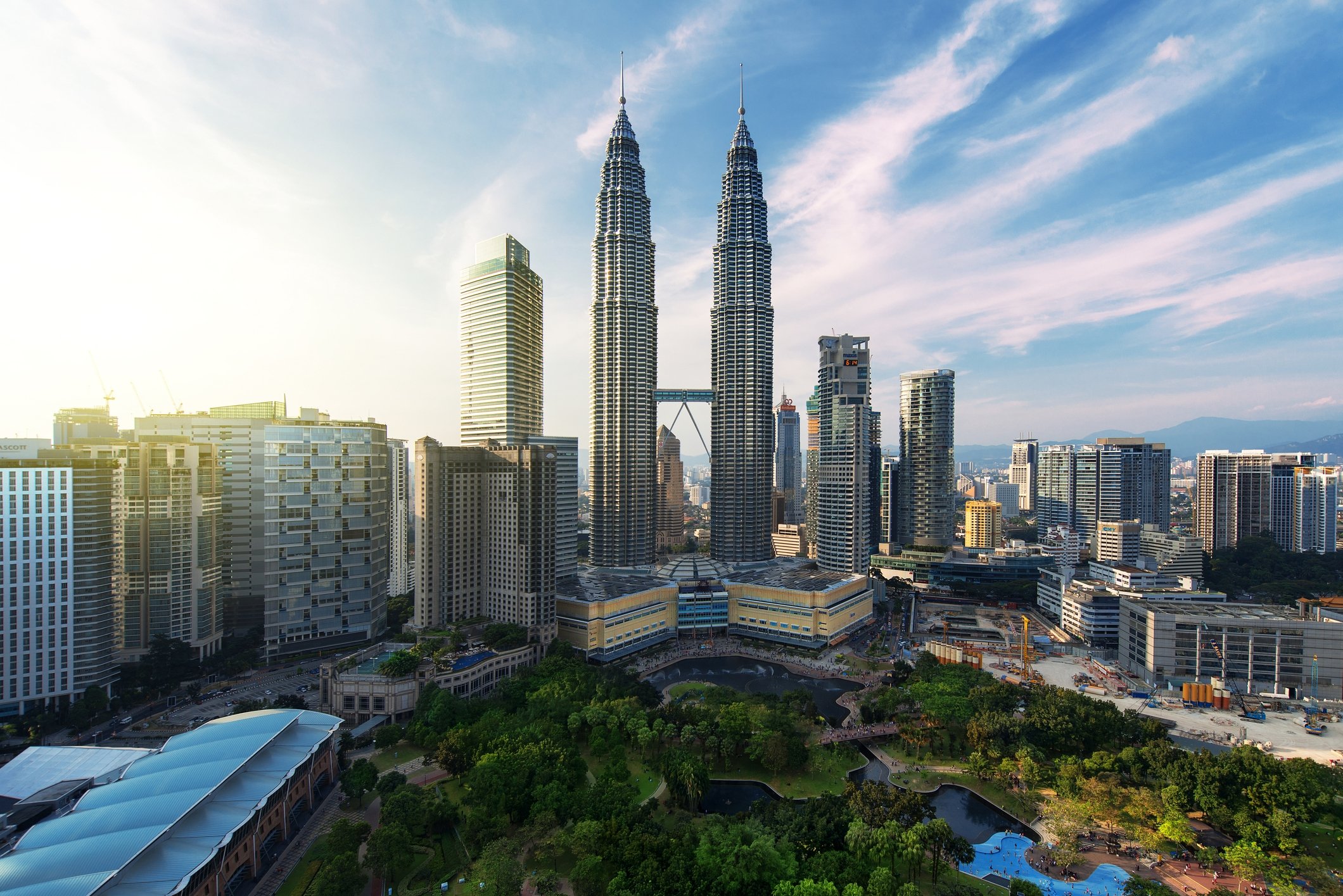
From its humble beginnings as a tin mining outpost in the mid-19th century to a global financial and tourism hub, Kuala Lumpur’s transformation has been nothing short of a miracle.
In Malay, Kuala means "estuary" or "confluence," and Lumpur means "mud." The city was founded in 1857 at the exact point where the Gombak and Klang rivers meet, likely giving it the “muddy confluence” moniker.
Today, KL is a city of futuristic glass skyscrapers – some of the world’s tallest – that stand directly alongside century-old rainforests and colonial-era shop houses. It’s Malaysia’s beating heart and one of the most culturally diverse cities in Southeast Asia, home to Malay, Chinese, Indian and other communities, living side by side. KL is an amalgamation of the best Malaysia has to offer – the people, culture, cuisine and of course, architecture.
There’s no better place to start your visit to the city than the iconic Petronas Twin Towers. Once the tallest buildings in the world, and still the tallest twin towers today. Their gleaming, geometric facade represents Malaysia’s Islamic heritage and modern ambitions. You can head up to the SkyBridge on the 41st floor and the observation deck on the 86th floor for some magnificent views of the skyline and the green patches of rainforest that cling to the edges of the concrete.
Due to its location near the equator, KL has a tropical rainforest climate, keeping the weather remarkably consistent year-round – hot, humid, and prone to sudden rain.
However, if you’re craving cooler temperatures and a little adventure, the Genting Highlands await just an hour from the city. Perched among cloud-covered mountains, this resort destination offers theme parks, a casino, and shopping outlets in a climate nearly 10 degrees cooler than the capital. The gondola ride up – one of the longest cable car systems in Southeast Asia – reveals lush rainforest stretching endlessly below. It can be a refreshing break from the tropical heat of the city.
For the more spiritual traveler, a short trip north leads to one of Malaysia’s most revered cultural icons: Batu Caves. Here, a towering golden statue of the Hindu god Lord Murugan welcomes visitors and faithful alike to a limestone hill estimated to be around 400 million years old.
Climb the 272, steep, rainbow-painted steps to reach the cathedral-like cave temple inside, where religious rituals echo through chambers of ancient rock, towered by a natural oculus.
Back to the city, Bukit Bintang is KL’s entertainment and retail heart with Pavilion Kuala Lumpur, a temple of fashion and indulgence, at its center. Step outside, and you’re immediately in Jalan Alor, KL’s most famous food street, where open-air stalls serve smoky satay, chili crab, and Malaysia’s unofficial national dish: nasi lemak – coconut rice topped with sambal, peanuts and anchovies.
The city’s cuisine is a delicious reminder of its multicultural story. In a single day you can savor Malay spices, Chinese dim sum and rich Indian curries, all within a few blocks.
For a contrast to the city streets, head to the leafy calm of KL Bird Park, a sprawling sanctuary where hornbills, peacocks, storks, and parrots glide overhead in an open-flight aviary, one of the world’s largest covered bird parks. It sits within the Lake Gardens, a green space that reminds you that KL is still, beneath the concrete, a rainforest city.
Before you go, end your trip at KL’s Central Market – a heritage building turned cultural bazaar – it’s a treasure trove of hand-painted batik, miniatures, souvenirs, as well as traditional food and drinks from across the Malay Peninsula.
Then step outside and walk a few minutes to Independence Square (Merdeka Square), where Malaysia first raised its flag in 1957. A towering flagpole rises above a field framed by colonial facades and glass towers. It feels like the city in a single view – past, present and future sharing the same sky.