Daily Sabah logo

Politics
Diplomacy Legislation War On Terror EU Affairs Elections News Analysis
TÜRKİYE
Istanbul Education Investigations Minorities Expat Corner Diaspora
World
Mid-East Europe Americas Asia Pacific Africa Syrian Crisis Islamophobia
Business
Automotive Economy Energy Finance Tourism Tech Defense Transportation News Analysis
Lifestyle
Health Environment Travel Food Fashion Science Religion History Feature Expat Corner
Arts
Cinema Music Events Portrait Reviews Performing Arts
Sports
Football Basketball Motorsports Tennis
Opinion
Columns Op-Ed Reader's Corner Editorial
PHOTO GALLERY
JOBS ABOUT US RSS PRIVACY CONTACT US
© Turkuvaz Haberleşme ve Yayıncılık 2025

Daily Sabah - Latest & Breaking News from Turkey | Istanbul

  • Politics
    • Diplomacy
    • Legislation
    • War On Terror
    • EU Affairs
    • Elections
    • News Analysis
  • TÜRKİYE
    • Istanbul
    • Education
    • Investigations
    • Minorities
    • Expat Corner
    • Diaspora
  • World
    • Mid-East
    • Europe
    • Americas
    • Asia Pacific
    • Africa
    • Syrian Crisis
    • Islamophobia
  • Business
    • Automotive
    • Economy
    • Energy
    • Finance
    • Tourism
    • Tech
    • Defense
    • Transportation
    • News Analysis
  • Lifestyle
    • Health
    • Environment
    • Travel
    • Food
    • Fashion
    • Science
    • Religion
    • History
    • Feature
    • Expat Corner
  • Arts
    • Cinema
    • Music
    • Events
    • Portrait
    • Reviews
    • Performing Arts
  • Sports
    • Football
    • Basketball
    • Motorsports
    • Tennis
  • Gallery
  • Opinion
    • Columns
    • Op-Ed
    • Reader's Corner
    • Editorial
  • TV
  • Life
  • Health
  • Environment
  • Travel
  • Food
  • Fashion
  • Science
  • Religion
  • History
  • Feature
  • Expat Corner

Wait, but what is a ‘second’?

by Deutsche Presse-Agentur - dpa

BERLIN Nov 21, 2023 - 12:36 pm GMT+3
Edited By Buse Keskin
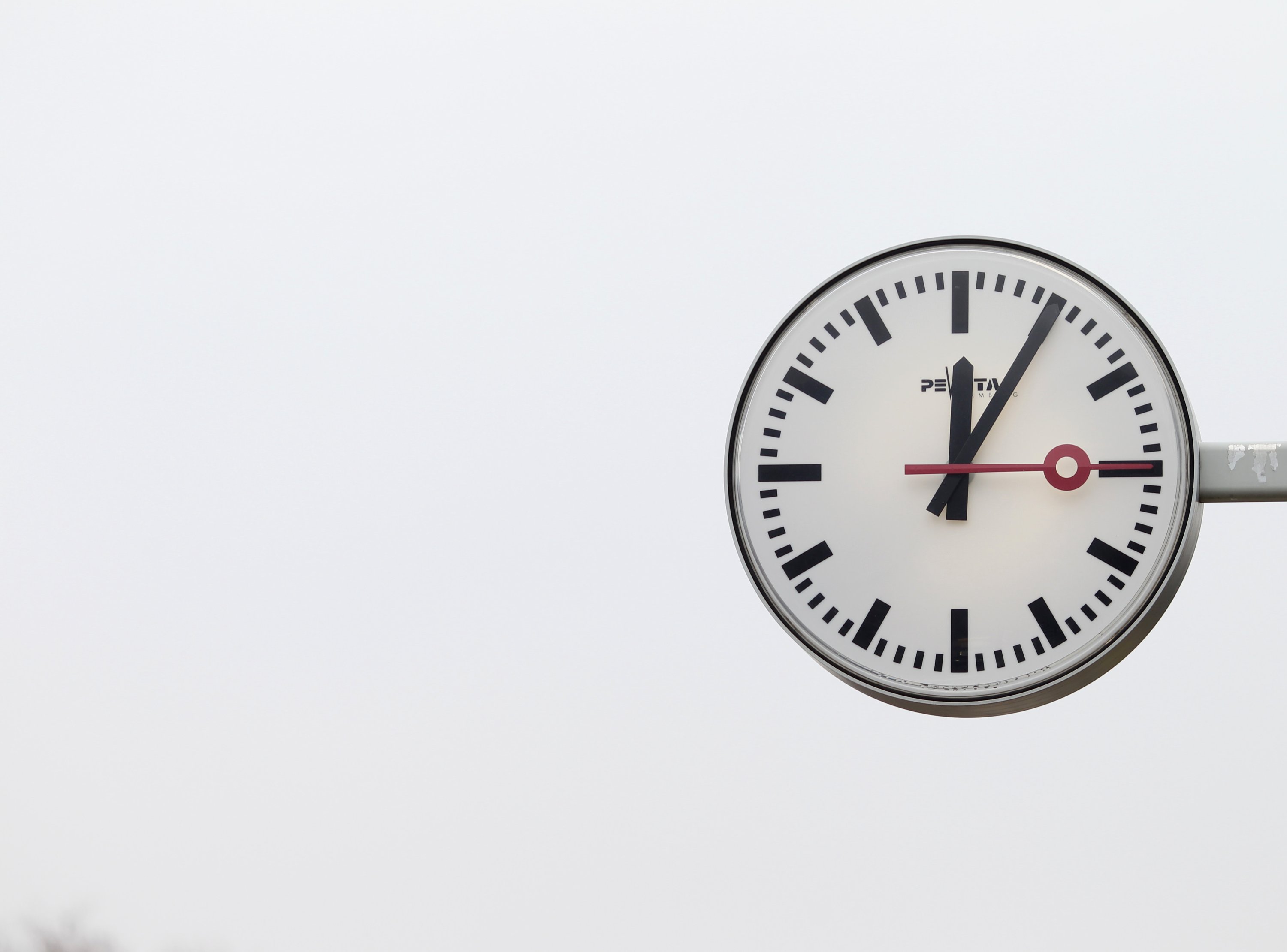
The definition of how long a second lasts has been changed more than once over the past century in an effort to be ever more precise. Now the exact length of a second is set to change again. (dpa Photo)
by Deutsche Presse-Agentur - dpa Nov 21, 2023 12:36 pm
Edited By Buse Keskin

The way we measure a second has been changed multiple times throughout the last century in pursuit of greater accuracy. Currently, the precise length of a second is on the brink of experiencing another modification.

The next time someone responds with "just a second" to a request, they may not only be encouraged to respond more quickly but also face an inspection of their level of understanding.

In fairness, the same applies to most people: time, like the sand in
an hourglass, is hard to grasp or define. Saint Augustine of Hippo
famously described it as beyond definition or description, perhaps
even an extension of human consciousness.

Painter Salvador Dali arguably took the idea further, with
his half-melted timepieces, drooped and flaccid, suggesting a time to
be something without meaning, even ineffable.

Albert Einstein theorized accurately, as it turned out, that
time slows down as the pull of gravity increases, the mind-bending
counter-intuitive implications of which were depicted in Christopher
Nolan's film "Interstellar."

Even the second has "undergone multiple redefinitions," as the U.S.
National Institute of Standards & Technology (NIST) has explained.

Listed since 1960 as "an international standard unit of measurement
for time," the second was at first defined or measured by the
rotation of the Earth relative to the cosmos.

But that was changed in 1967 to a definition based on energy levels
in atoms – the so-called "atomic clock" – as the Earth's rotation can
slow down and speed up depending on movements of its outer shell and
the pull of the Moon, posing "a challenge for accurate timekeeping,"
according to NIST.

Old pendulum clocks from the 1500s lost 15 seconds per day, and even
the latest quartz oscillator-based models, which are used in
computers and mobile phones, lose about a second every 24 hours.

But the atomic clock by which the second is defined now and to which
these other, less-punctual technologies align – that only loses a
second every 150 million years. And in case that's not on-point
enough for you, the latest "optical" atom-based timepieces are
thought likely to lose a second only every 15 billion years.

The idea, according to NIST, is that by 2030 or thereabouts, the
world will switch to lining up, as best it can, with the optical
version.

So after 2030, everyone will be in sync, with no more showing up late
for work or meetings? The bride no longer parading fashionably
late down the aisle on her wedding day?

Probably not – at least when it comes to time itself. "When the
definition does change, you are not likely to notice," NIST said.

But the tech upgrades needed to facilitate the changeover could see
spin-offs. "Your GPS may be able to pinpoint your location even more
accurately," NIST predicted, speculating in turn about related
improvements in advanced communications and computing.

  • shortlink copied
  • Last Update: Nov 21, 2023 3:14 pm
    KEYWORDS
    time time management hours durations
    The Daily Sabah Newsletter
    Keep up to date with what’s happening in Turkey, it’s region and the world.
    You can unsubscribe at any time. By signing up you are agreeing to our Terms of Use and Privacy Policy. This site is protected by reCAPTCHA and the Google Privacy Policy and Terms of Service apply.
    Derinkuyu
    Underground cities in Turkey
    PHOTOGALLERY
    • POLITICS
    • Diplomacy
    • Legislation
    • War On Terror
    • EU Affairs
    • News Analysis
    • TÜRKİYE
    • Istanbul
    • Education
    • Investigations
    • Minorities
    • Diaspora
    • World
    • Mid-East
    • Europe
    • Americas
    • Asia Pacific
    • Africa
    • Syrian Crisis
    • İslamophobia
    • Business
    • Automotive
    • Economy
    • Energy
    • Finance
    • Tourism
    • Tech
    • Defense
    • Transportation
    • News Analysis
    • Lifestyle
    • Health
    • Environment
    • Travel
    • Food
    • Fashion
    • Science
    • Religion
    • History
    • Feature
    • Expat Corner
    • Arts
    • Cinema
    • Music
    • Events
    • Portrait
    • Performing Arts
    • Reviews
    • Sports
    • Football
    • Basketball
    • Motorsports
    • Tennis
    • Opinion
    • Columns
    • Op-Ed
    • Reader's Corner
    • Editorial
    • Photo gallery
    • DS TV
    • Jobs
    • privacy
    • about us
    • contact us
    • RSS
    © Turkuvaz Haberleşme ve Yayıncılık 2021