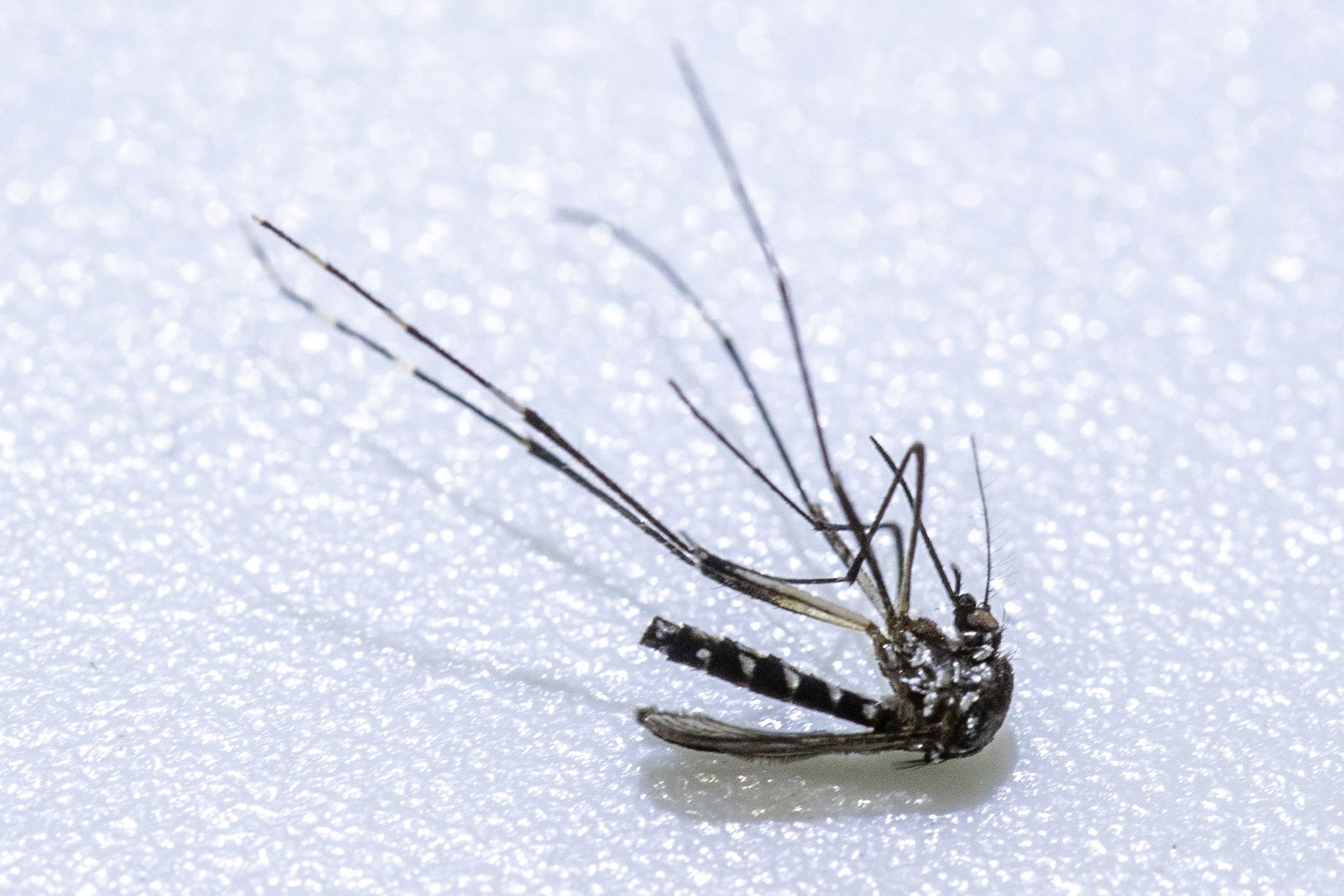
Zika, a virus that gained notoriety nine years ago due to numerous travel advisories in South America highlighting its potential dangers, may have unexpected benefits.
A recent study conducted by Nemours’ Children’s Health on mice reveals that the virus holds promise in reducing tumors associated with neuroblastoma, a rare and lethal form of childhood cancer.
Each year, neuroblastoma accounts for only 6% of childhood cancer diagnoses, but high-risk neuroblastoma causes 15% of childhood cancer deaths. Fewer than half of neuroblastoma patients respond to traditional treatments such as chemotherapy and radiation, and families are desperate for an alternative.
In the study, published Jan. 9 in the journal Cancer Research Communications, Nemours scientists injected Zika virus into human neuroblastoma tumors grown in mice. The tumors shrunk and, in mice given the highest dose of the virus, went away completely. The tumors didn’t grow back during four weeks of follow-up monitoring.
More research is underway to see if the treatment could be effective and safe for humans. The finding is a hopeful step forward, said the study’s senior author Dr. Tamarah Westmoreland, a pediatric surgeon and associate professor of surgery at Nemours Children’s Health in Orlando.
”When you sit with families and talk with them and their children about cancer and surgery, it can all be very scary,” Westmoreland said. “It’s research like this that ... gives families hope.”
The study builds off several others that have explored Zika’s potential to treat cancer, including a 2018 Nemours study that found Zika could destroy neuroblastoma cells in a lab.
Neuroblastoma tumors appear to be vulnerable to the Zika virus in part because of their association with a protein called CD24, which has been connected to other cancers, too.
Washington University neuro-oncologist Dr. Milan G. Chheda, who was not involved in this study, praised its findings. Chheda has researched Zika’s potential to treat a highly aggressive brain cancer, glioblastoma. His current work involves working on ways to genetically modify the virus to make it safer.
”The most exciting thing is it shows the relevance of the Zika virus across different types of cancers,” Chheda said.
Chheda and other experts cautioned that much more research is needed before this could be considered a viable treatment.
This mosquito-borne virus doesn’t typically cause symptoms in children and adults but can cause devastating deformities in developing fetuses. A major outbreak in 2015 and 2016 across the Americas and Caribbean infected millions and was responsible for at least 2,500 cases of a life-threatening brain deformity known as Zika-associated microcephaly, according to the World Health Organization.
Though this particular outbreak is over, there are still tens of thousands of cases recorded each year worldwide, and pregnant people are told not to travel to areas experiencing active outbreaks.
”It’s still to be seen whether or not this can be safely used in humans,” Chheda said.
It’s not unusual for cancer treatments to show promising results in mouse studies but fail to work on humans in clinical trials, said Dr. Patrick Grogan, a neuro-oncologist at the Moffitt Cancer Center.
”I think what they’ve done is very exciting, but I would also say it is very early on,” Grogan said.
Nemours Children’s research scientist and the current study’s first author, Joseph Mazar, expressed optimism about the treatment’s safety.
”The disease itself is far more innocuous than people think,” he said. “In South America, most of the cases of individuals who had Zika were completely asymptomatic.”
Nemours researchers are now examining whether Zika can shrink neuroblastoma tumors in a mouse with a fully intact immune system, similar to a human immune system, and with tumors in the same location where children typically get them.
”We are very hopeful that when we get this work complete, we will be moving toward a human clinical trial in the near future,” Westmoreland said.