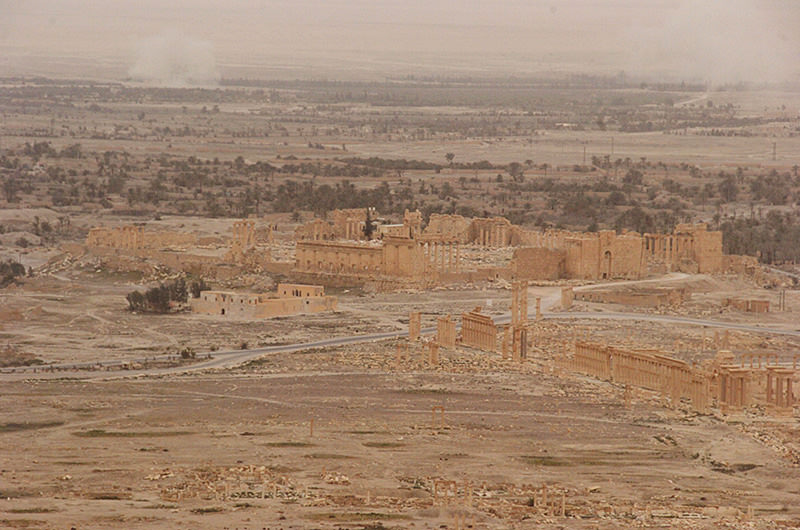
The Syrian army has captured the ancient city of Palmyra from DAESH, which has been pounded by the U.S.-led coalition and Russia. The next target will be Raqqa, one of DAESH's strongholds
Syrian government forces backed by heavy Russian air support drove DAESH out of Palmyra on Sunday, inflicting what the army called a 'mortal blow' to militants who seized the city last year and dynamited its ancient temples. The loss of Palmyra represents one of the biggest setbacks for DAESH since it overran several cities in Iraq and Syria in 2014. The army general command said that its forces took over the city with support from Russian and Syrian air strikes, opening up the huge expanse of desert leading east to DAESH strongholds of Raqqa and Deir al-Zor. Palmyra would become "a launchpad to expand military operations" against the group in those two provinces, it said, promising to "tighten the noose on the terrorist group and cut supply routes ... ahead of their complete recapture."
The Syrian Observatory for Human Rights said there were still clashes on the eastern edge of Palmyra on Sunday morning, around the prison and inside the airport, but the bulk of the DAESH force had withdrawn and retreated east, leaving the city under the regime's control. Amaq, a news agency close to DAESH, said its fighters launched a twin suicide attack against government forces in west Palmyra, without giving details. Syrian state-run television broadcast from inside the city on Sunday morning, showing largely deserted streets and several badly damaged buildings. It quoted a military source saying Syrian and Russian jets were targeting DAESH fighters as they fled, hitting dozens of vehicles on the roads leading east from the city.
Observatory director Rami Abdulrahman said 400 DAESH fighters died in the battle for Palmyra, which he described as the biggest single defeat for the group since it announced its cross-border caliphate nearly two years ago. The loss of Palmyra comes three months after DAESH fighters were driven out of the city of Ramadi in neighboring Iraq, the first major victory for Iraq's army. DAESH has lost ground elsewhere, including the Iraqi city of Tikrit last year and the Syrian town of al-Shadadi in February. The United States said the fall of Shadadi was part of efforts to cut DAESH's links between its two main power centers of Mosul in Iraq and Raqqa in Syria. The Observatory said around 180 government soldiers and allied fighters were killed in the campaign to retake Palmyra, which is home to some of the most extensive ruins of the Roman empire.
DAESH militants dynamited several monuments last year, and Syrian television broadcast footage from inside Palmyra museum on Sunday showing toppled and damaged statues, as well as several smashed display cases. Syria's antiquities chief said other ancient landmarks were still standing and pledged to restore the damaged monuments.
Syrian Culture Minister Issam Khalil hailed the recapture of Palmyra as a "victory for humanity and right over all projects of darkness." Maamoun Abdulkarim, director of the museums and antiquities department in Damascus, said Palmyra's Great Colonnade had suffered only minor damage. "We will rebuild what you have destroyed," he said, addressing DAESH. The Syrian opposition, which blames the government for the country's devastating civil war and the rise of DAESH, rejected that narrative. "The government wants through this operation to win the favor of Western nations by fighting against terrorism, while obscuring its responsibility as providing the reasons for the spread of terror," said Khaled Nasser, a member of the opposition coalition that has been negotiating with the government in Geneva.
DAESH has carried out a sustained campaign of destruction against heritage sites in areas under its control in Syria and Iraq. News of the demolition of the tower tombs, which date back to the first century AD, comes after the militants' destruction of the ancient shrine of Baal Shamin and the 2,000-year-old Temple of Bel, regarded as Palmyra's masterpiece.
Keep up to date with what’s happening in Turkey,
it’s region and the world.
You can unsubscribe at any time. By signing up you are agreeing to our Terms of Use and Privacy Policy.
This site is protected by reCAPTCHA and the Google Privacy Policy and Terms of Service apply.