

While many experts and commentators focus on the military and political dimensions of the war against Iran, the narrative dimension may prove even more consequential. Wars are not fought only with missiles, intelligence and air power. They are also fought through language, imagery and political framing. The way a war is narrated shapes how it is justified, how it is normalized and, most importantly, how far it is allowed to go.
This is precisely what we are seeing in the U.S.-Israeli framing of the war against Iran.
U.S. President Donald Trump’s remark, “Any time I want it to end, it will end,” together with his demand for Iran’s “unconditional surrender,” captures the tone from Washington.
Israeli Prime Minister Benjamin Netanyahu’s language does the same from the Israeli side. He has spoken of “two existential threats,” described the conflict as a struggle between “the children of light and the children of darkness,” and cast Israel’s war in the language of civilization versus barbarism.
The White House presented the campaign under the slogan “Peace Through Strength” to “Crush Iranian Regime, End Nuclear Threat.” At the same time, Defense Secretary Pete Hegseth described Tehran as a “death cult” driven by “prophetic Islamist delusions.”
Taken together, these are not simply emotional wartime remarks. They reflect a broader institutional discourse repeated across the White House, the Pentagon, the Israeli political and diplomatic establishment, and the media in both countries.
That discourse does not present Iran as a strategic rival within a harsh regional power struggle. It presents Iran as something beyond normal politics: a uniquely dangerous, irrational and morally illegitimate actor. Once that framing takes hold, domination begins to sound like order, escalation begins to sound like necessity, and war begins to look like the only reasonable response.
The first step in this narrative strategy is to remove Iran from the realm of ordinary statecraft. Official U.S. language does not mainly describe Iran as one actor among many in a region already marked by intervention, rivalry and instability. Instead, it portrays Iran as the main source of disorder itself.
White House rhetoric speaks of an “imminent nuclear threat” after “47 years of Iranian aggression.” Israeli official statements similarly describe the moment as the “11th hour” and Iran as an “existential and imminent threat.”
This matters because it changes the terms of debate. Iran is no longer treated as a state that can be deterred, negotiated with or contained. It is treated as an exceptional threat that lies outside the normal rules of politics and therefore justifies exceptional measures. The repetition of this language across policy documents, briefings and speeches gives it power. When the same message is echoed by presidents, ministers, military officials and diplomatic missions, it stops sounding like propaganda and begins to resemble common sense.
A second element of this discourse is more subtle, but equally important. The U.S. and Israeli officials constantly distinguish between the Iranian regime and the Iranian people. On the surface, that sounds humane. The White House says the regime spends its resources on missiles and nuclear programs while “its infrastructure and people struggle” and that it “brutally represses its own people.” Israeli rhetoric follows the same line, insisting that the war is against the regime, not the nation.
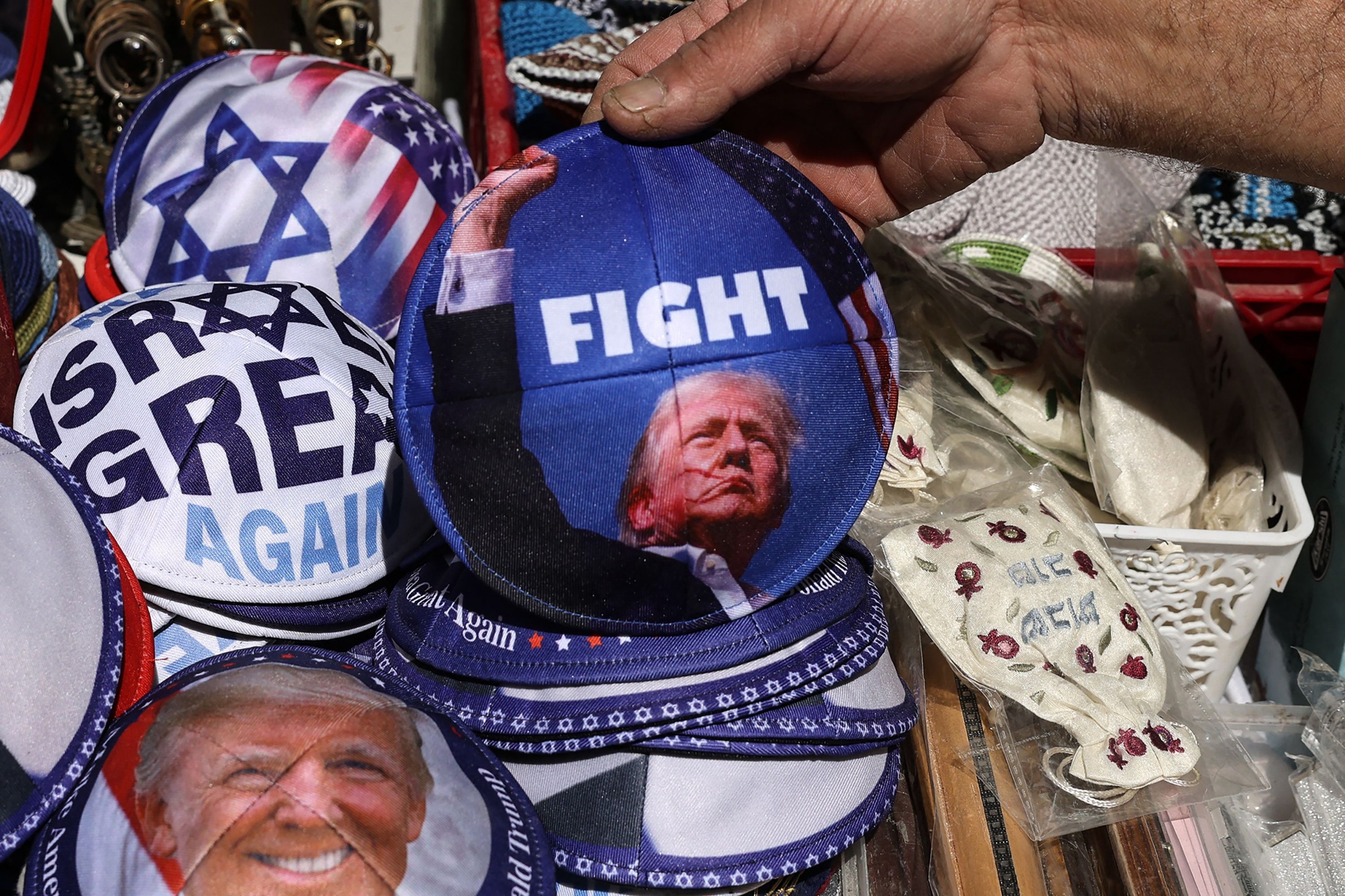
But this distinction is not as innocent as it seems. In practice, it serves a political purpose. One Iran is demonized so that war can be justified, the other is humanized so that war can be moralized. The regime is portrayed as fanatical, repressive and irredeemable. The people are portrayed as suffering, passive and waiting for deliverance. The result is not a restoration of Iranian agency, but its management. Iranian society is not treated as a political actor with its own internal dynamics and choices. It is turned into an object of rhetorical rescue.
This becomes even clearer when the question of regime change enters the discussion. As Netanyahu frames it, Israel is trying to create favorable conditions for the collapse of the Iranian government, even while insisting that any actual overthrow would have to come “from the inside.” That contradiction is telling. Washington and Tel Aviv speak as if Iran’s future belongs to the Iranian people, while simultaneously admitting that military violence is being used to shape the conditions under which that future is supposed to emerge. In other words, they present themselves as supporters of liberation while acting as external engineers of political transformation.
The war is also being framed in a way that gives it a religious and apocalyptic charge. Netanyahu’s language has gone far beyond conventional security rhetoric. His references to light and darkness, good and evil, and civilization against barbarism are not simply colorful political phrases. They elevate the conflict into a larger moral and historical struggle.
Reuters also reported that the operation’s name, “Rising Lion,” was drawn from a biblical verse and reinforced by the note Netanyahu placed at the Western Wall before the strikes. In Netanyahu’s March 12 press conference, which was circulated through his own official messaging ecosystem, he is quoted as saying Israel will “reach the kingdom” and “make it to the Messiah’s return. The broader point is already clear: the war is being narrated in a redemptive and providential register, not just a strategic one.
That matters because sacralized wars are harder to limit. Once a war is framed as part of a civilizational or historical mission, compromise begins to look like weakness and de-escalation begins to look like betrayal. The conflict is no longer simply about interests or security. It becomes a struggle with a moral destiny attached to it.
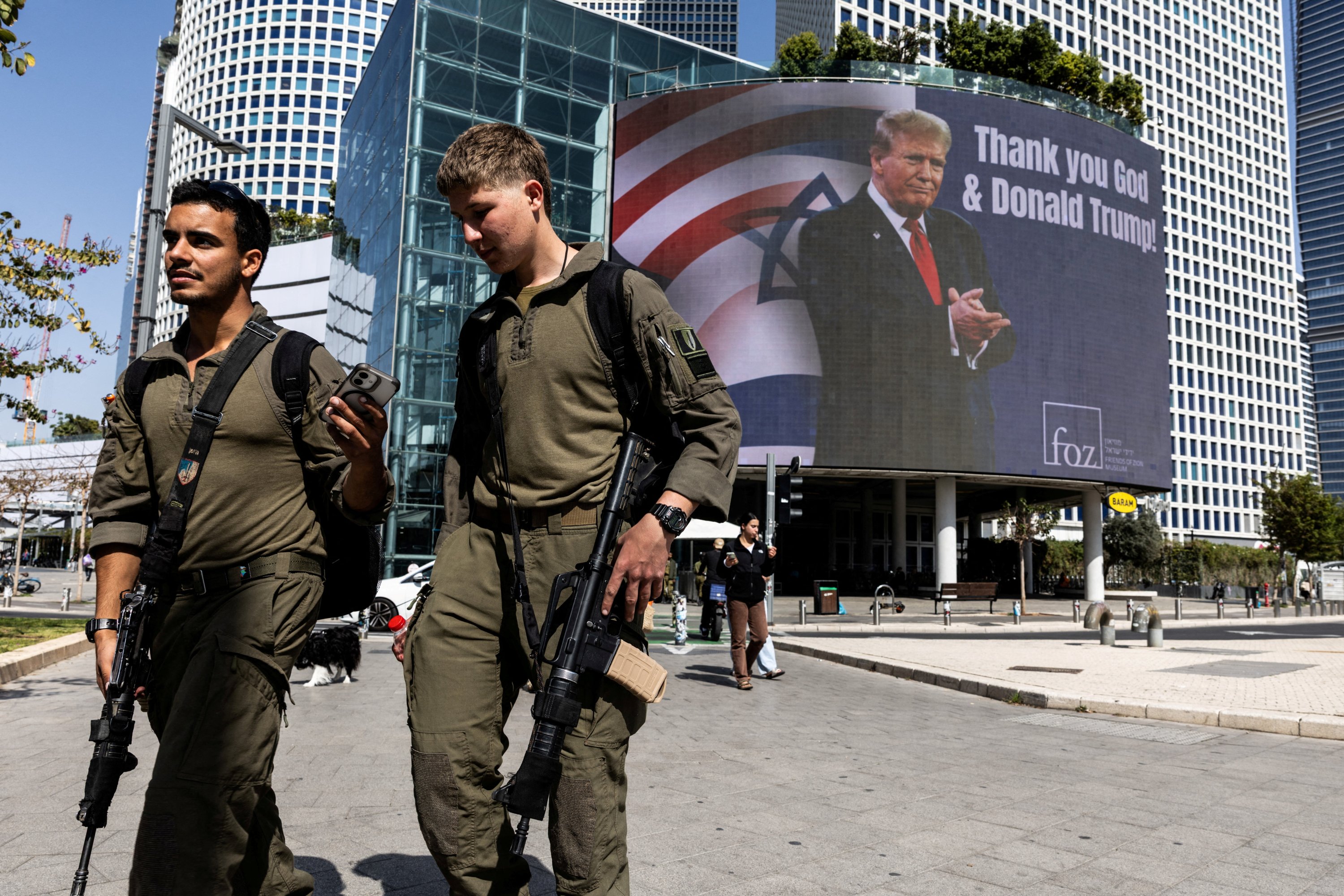
A third major element of the narrative is spatial. Iran is not only portrayed as evil, but it is also portrayed as a space of concealment, secrecy and buried danger. Official U.S. and Israeli language repeatedly emphasize hidden facilities, underground sites, hardened infrastructure and mountain-protected programs. In this framing, geography itself becomes suspicious. Mountains, tunnels and underground installations are no longer neutral terrain. They are presented as proof of deception. Iran is transformed from a sovereign political space into a subterranean threat-space that must be penetrated, exposed and mastered.
The reverse of this image is domination from above. American military rhetoric repeatedly casts U.S. power as the force that sees, reaches and controls. That vertical imagery is revealing. What is hidden below is framed as deceit, what comes from above is framed as visibility, truth and rightful force. In this way, sovereignty is subtly redefined. Iran is no longer treated as a state with territorial integrity, but as a targetable space whose boundaries can be overridden in the name of security.
The same logic is extended to the region. Iran is depicted as the center of instability radiating disorder across allies, sea lanes and the broader Middle East. The U.S. and Israel, by contrast, present themselves as managers of a threatened security architecture. Once that map is accepted, the intervention no longer appears as an intervention, but it appears as an administration.
Even the visual language of the war follows this pattern. The official White House social media videos mixed real Iran-war footage with video game imagery, action heroes, sports clips and slogans such as “JUSTICE THE AMERICAN WAY,” while officials said they would continue showing Iranian missiles and facilities being destroyed “in real time.”
This is not a trivial detail. It shows how war is not only narrated but also aestheticized. In speeches, the regime is demonized and the people are paternalized. In images, both disappear into a flat world of explosions, impacts and visual spectacle. Iran is reduced from a complex society into a target environment.
In the end, the deeper issue is not one Trump quote or one biblical phrase from Netanyahu. It is the convergence of institutions around the same narrative structure.
Iran is framed as exceptional evil. The regime is separated from the people only to make the latter available for rhetorical rescue. War is lifted into a civilizational and partially sacralized register. Iranian territory is turned into legitimate target space.
What emerges is not simply propaganda in the narrow sense. It is a full political framing strategy that decides in advance whose violence will be understood as order and whose very existence will be understood as a threat.
For that reason, the narrative dimension of this war may prove more dangerous than its military dimension alone. Military campaigns end. Narratives, once normalized, can endure much longer. And when they do, they make the next war easier to justify.


