In his book "Leadership: Six Lessons in World Strategy," famous American diplomat Henry Kissinger discusses leaders who emerge during transitional periods and demonstrate the courage and determination to guide their nations from uncertainty and chaos to calmer harbors. He also highlights the common traits of such leaders. However, Kissinger focuses solely on political leaders of transitional periods. In reality, there are also significant intellectuals during such transitions. These intellectuals construct the framework of thought that clarifies the uncertainties and confusion of transitional periods, reduces tensions and thereby facilitates the flow of life. In fulfilling these functions, intellectuals of transitional periods also serve as guides for leaders.
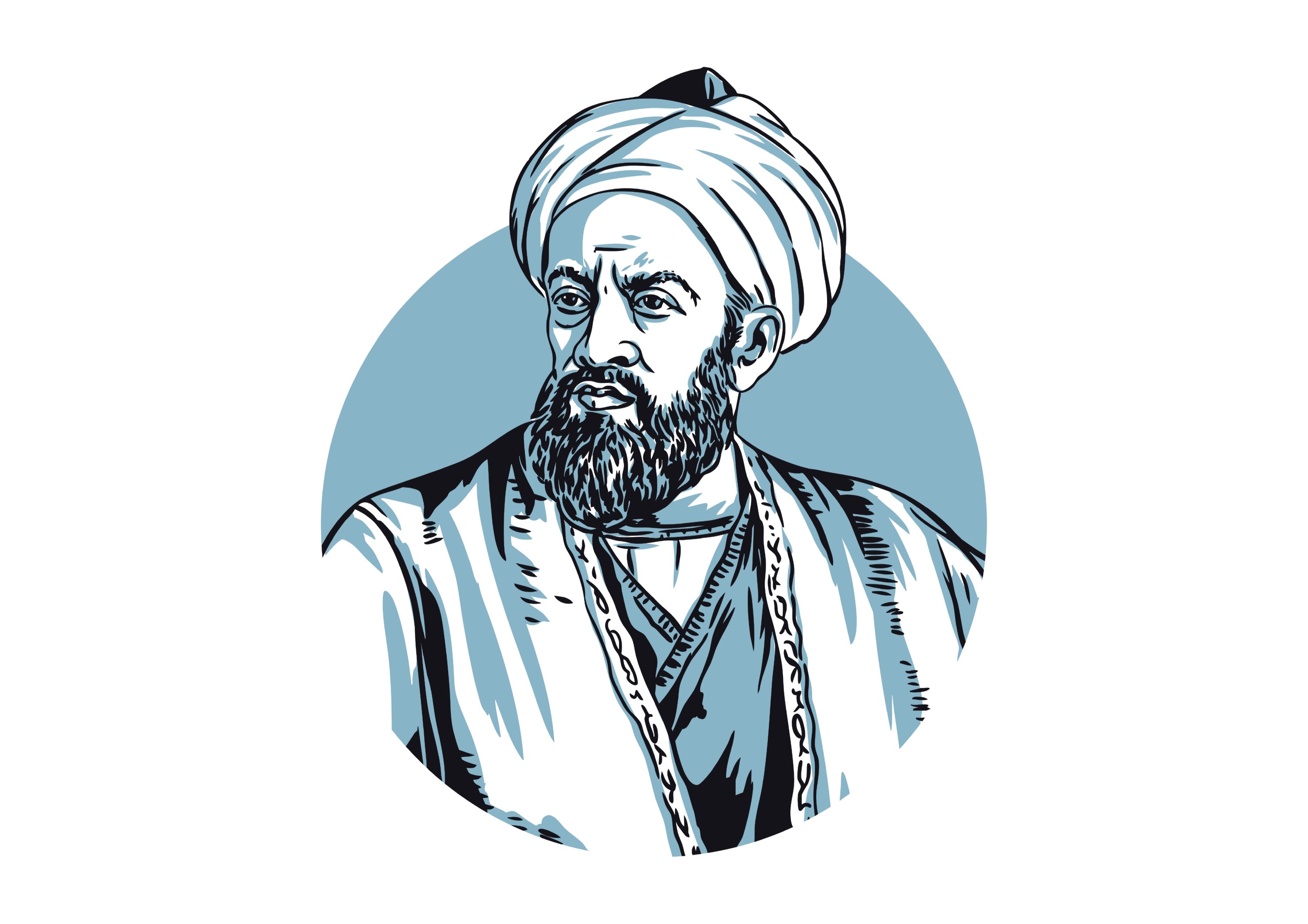
Al-Ghazali is one such intellectual. The period in which he lived was marked by uncertainty, turmoil and widespread political strife. W. Montgomery Watt, in his book "The Muslim Intellectual: A Study of al-Ghazali," evaluates al-Ghazali’s contributions in this context. During al-Ghazali’s lifetime, Muslim societies were under the pressure of philosophical thought movements and the Batıni-Ismaili movements, while politically they were experiencing a period in which state structures could not achieve stability. Therefore, as a Muslim intellectual in the era outlined by Watt, al-Ghazali endured the full pain and hardship of constructing a systematic way of thinking that would reduce these tensions and lead to societal integration. Al-Ghazali’s greatest characteristic was his willingness to personally shoulder all the tensions of the Muslim society of his time and his tireless efforts to find solutions.
The period in question was one of territorial expansion through conquests and increasing contact with diverse cultures. As a result, it was also a time when the intricate dynamics between the state and society were being carefully considered, and when the sociological foundations for building a shared Muslim society began to emerge. In this context, four major intellectual currents stood out as centers of influence on society: the philosophers, the Batınis or Ismailis, the theologians (mutakallimun), and the Sufis. Born in 1058 and passing away at the age of 53 in 1111, al-Ghazali’s entire intellectual journey as a thinker revolved around immersing himself in each of these four currents – understanding them, resolving their tensions, and building a systematic framework of thought that could overcome these conflicts for the benefit of Muslim society. His lifelong endeavor was to construct and expand such a framework in response to the challenges posed by these competing traditions.
The famous Seljuk vizier Nizam al-Mulk established Nizamiya madrassas across a vast region stretching from Mosul to Herat and devoted his life to ensuring that these institutions would form the mainstream foundation for the construction of Muslim society. Al-Ghazali’s own educational journey began at one such institution – the Nizamiyya madrassa in Nishapur – in 1077, where his teacher was the renowned theologian of the time, al-Juwayni. Al-Ghazali completed his studies in Tus, Gurgan and Nishapur. Al-Ghazali remained in Nishapur for eight years until the death of his teacher in 1085, after which he went to the headquarters of Nizam al-Mulk, where he was received with high regard by the vizier. In 1091, al-Ghazali was appointed chief professor at the Nizamiyya madrassa in Baghdad, a position he held until 1095. Beginning in 1095, he withdrew from his official duties and focused on writing his most critical work, "The Revival of the Religious Sciences" ("İhya-u Ulum-id-Din"), while residing in Damascus, Jerusalem, Mecca and surrounding areas. In 1099, he returned to his birthplace, Tus. In 1106, al-Ghazali resumed teaching as chief professor at the madrassa in Nishapur, a period that lasted more than three years. He then returned again to Tus, continuing his writing without interruption. He completed his final book less than two weeks before his death.
While the traditional educational institutions in Muslim society – particularly the Nizamiyya madrassas – promoted a jurisprudence-based (fiqh-Islamic law) educational system, there also existed a vibrant philosophical current, even though it was not as institutionalized as the madrassas. The visibility of philosophers would rise or fall depending on the attitude of the ruling sultans. However, there was significant tension between jurists (fuqaha) and philosophers. This tension extended beyond the realm of ideas and was also tied to positions of influence within governance.
One of the most important traits of intellectuals in transitional periods – alongside their courage – is their patience and determination in self-education. Although philosophy had no place in al-Ghazali’s formal traditional education, he spent two patient years during this period reading and analyzing philosophical texts without establishing direct contact with philosophers. He then dedicated another full year to reflection to decide which elements of philosophy could be incorporated into theology (kalam) and which should be rejected. In other words, much of the four years al-Ghazali spent at the Nizamiyya madrassa in Baghdad was devoted to reading and writing about philosophy. During this time, he produced two significant and controversial works: "The Intentions of the Philosophers" ("Maqasid al-Falasifa") and "The Incoherence of the Philosophers" ("Tahafut al-Falasifa"). The central focus of al-Ghazali’s philosophical work was the conviction that “reason alone is not sufficient” and that “a perfect worldview cannot be constructed solely on the basis of reason”. In this, he erected a strong barrier against the philosophers' rejection of the necessity of divine revelation and of the role of legal scholars (fuqaha) as interpreters of that revelation for Muslim social life. In al-Ghazali’s view, a sound system for Muslim society cannot be built on reason alone, without a divine source. His evaluations of philosophy not only undermined the standing of philosophers in the eyes of Muslim society but also constituted a significant defensive move against Ismailism, which had a high degree of engagement with philosophy.
Al-Ghazali’s engagement with each source of tension and his effort to create a middle path for Muslim society not only provided a significant opportunity for defense in that specific field but also allowed him to transfer insights gained from one area into others, thereby contributing to their development and expansion. For example, “al-Ghazali’s success in his encounter with philosophy left a lasting mark on the subsequent course of Islamic thought. He provided theology (kalam) with a philosophical foundation, and at the same time, made possible its excessive intellectualization.”
On the other hand, a partial infusion of Greek thought into Islamic theology (kalam) had occurred – albeit to a limited extent – and according to Watt, this synthesis was introduced by the Mutazilites during the reign of Caliph al-Mamun. While Islamic jurisprudence (fiqh) primarily established the framework for the internal social life of the Muslim community, Islamic theology played a crucial role in preserving the unity of the community by confronting threats to Islamic belief. As Watt explains, the theologian has two major responsibilities: “First, it is his duty to clearly articulate the aims of the society and the conception of truth (including values) associated with those aims. Second, he must systematize the intellectual structure of the society by softening conflicts that cause tension – whether these conflicts are inherent or arise from new circumstances. In doing so, he adapts the intellectual structure of the society to the external changes affecting it.”
Thus, kalam functions like the immune system of the Muslim society. When it is weak, intellectual and doctrinal "illnesses" spread throughout the community. Therefore, resolving the crisis of thought and the disputes between theologians and philosophers was directly related to the survival and integrity of the Muslim society. What deeply concerned al-Ghazali was the relatively weak rational foundation of kalam compared to philosophy. According to Watt, a comprehensive engagement with philosophical developments by a theologian began with al-Ghazali. Among al-Ghazali’s most significant contributions were grounding arguments in syllogistic reasoning and taking seriously the objections rooted in Neoplatonic thought.
In other words, a resolution was achieved in the long-standing tension between philosophy and kalam. As a result, kalam within Muslim society remained dynamic and continued to evolve. The transformation initiated by al-Ghazali ultimately led, as Turkish academic Ihsan Fazlıoğlu points out, to a situation where kalam came to encompass all the issues once discussed exclusively by philosophy, even though it originated from a different starting point: “Before al-Ghazali, the subject of kalam was God; after al-Ghazali, it became malum – that which is known – including both the existent (mawjud) and the non-existent (madum). Al-Ghazali's transformation of logic (ilm al-mantiq) from merely a tool of peripatetic philosophy (mashshai) into a general law of human reason, and the subsequent developments – particularly the works of thinkers like Fakhr al-Din al-Razi, Sayf al-Din al-Amidi, and the systematizing efforts of Nasir al-Din al-Tusi, as well as logical studies by scholars such as Shams al-Din al-Samarqandi, Najm al-Din al-Kazvini, and Siraj al-Din al-Urmawi, culminating in the works of Qutb al-Din al-Razi – turned kalam into a full-fledged philosophical-scientific system. As Shams al-Din al-Samarqandi notes in his al-Sahaif al-Ilahiyya, kalam ultimately took on all the problems philosophy once addressed, but did so on the foundational principle of "ala qanun al-Islam" – that is, based on the axiom of the one and only God, who is intrinsically autonomous.”
During the Seljuk period, one of the most pressing internal threats and pressures facing Muslim society – outside the realm of philosophy – came from the Batinis, whose influence touched upon values that Muslims held especially dear. Rooted in the notion of the infallible imam and charismatic leadership, Batinism displaced traditional jurists (fuqaha) from their positions of authority, thereby posing a direct challenge to the charismatic social structure of Sunni Islam, which was based on a balance between rulers, scholars, and the public. As Watt explains: “In classical Sunni Islam, the ruler never had control over intellectual foundations; indeed, he could not fully legislate, because all possible laws were, in principle, already contained in the Quran and Hadiths, and the scholars – the fuqaha – were their guardians.” With the Batini doctrine that sacred texts possessed hidden meanings accessible only through the imam, the role of jurists who were trained in the apparent (zahir) meanings of texts was rendered meaningless: “The authoritarian teaching doctrine was complemented by the concept of "hidden meaning" (batin). According to this view, everything in the Quran (as well as in Hadiths and religious institutions) had a hidden meaning, one that bore no necessary resemblance to its literal (zahir) interpretation and could only be learned from the imam.”
Al-Ghazali first authored "The Just Balance" ("al-Qistas al-Mustaqim) and later, at the request of Caliph al-Mustazhir, wrote "al-Mustazhiri," in which he offered profound critiques of Batini doctrines. As Watt repeatedly emphasizes throughout his book, such works serve a vital purpose not merely in destabilizing the opposing camp but, more importantly, in dispelling doubts within the Muslim community itself. Moreover, al-Ghazali’s articulation of jurisprudence-based Sufi experience as a new source of knowledge effectively dismantled the monopoly of the infallible imam. As Watt notes: “The Imamis must have been seriously alarmed by the development of this Sunni form of mysticism (as exemplified in the figure of Hallaj); for its teaching that "anyone may ascend to sanctity and attain supernatural charisma" undermined their doctrine that charisma is a special privilege reserved for the descendants of Ali."
Jurists are among the most essential pillars of the Sunni Muslim community. Any corruption within this group directly triggers broader societal deterioration. For this reason, al-Ghazali directs some of his harshest criticisms at jurists who have become worldly, pursuing status and power. Just as he engaged with philosophy and other fields marked by tension and deviation to understand them and seek a middle path, al-Ghazali also personally experienced the nature of political life during his tenure as a professor at the Nizamiyya madrassa. Through this role, he closely observed how jurists had become deformed within the existing structure. As a result, his language toward jurists is particularly severe: “In such cases, the entire professional life of these individuals is based on worldly political calculations of benefit and harm. It is also difficult for them to fully immerse themselves in such a life and adopt the values of this segment of society. Therefore, al-Ghazali’s critique of the fuqaha is largely rooted in this kind of personal life experience. Similarly, his advice to avoid any association with rulers likely stems from a deep disappointment regarding reliance on government support.”
After struggling across all external domains that caused concern and doubt within the Muslim community, al-Ghazali wrote his greatest work, "The Revival of the Religious Sciences" ("Ihya Ulum al-Din"), which serves as a guide for the Muslim society and is distinguished by its remarkably clear and accessible language. With this work, he called upon all individuals in the Muslim community to remember their responsibilities and to become actively engaged in society within that framework.
In summary, the conquests and territorial expansion of the Islamic world brought about increasing intercultural interactions, making encounters with new ideas inevitable. In these encounters, al-Ghazali stands as one of the most significant intellectuals who reconstructed and expanded the framework of Islamic thought in response to the new challenges that emerged on the Muslim community’s agenda. A defining characteristic of transitional period intellectuals is their commitment to building systems. Accordingly, their works often contain conceptual transitions and repetitions. To truly understand such thinkers, all of their writings must be evaluated within this broader context. Their intellectual labor is directed toward strengthening the Muslim society – a charismatic society – and enhancing its resilience. By systematically confronting and dispelling the doubts and tensions arising across a wide intellectual front – from philosophers to Batinis and Ismailis, from theologians to Sufis – al-Ghazali developed a solid intellectual foundation and a coherent system of thought.