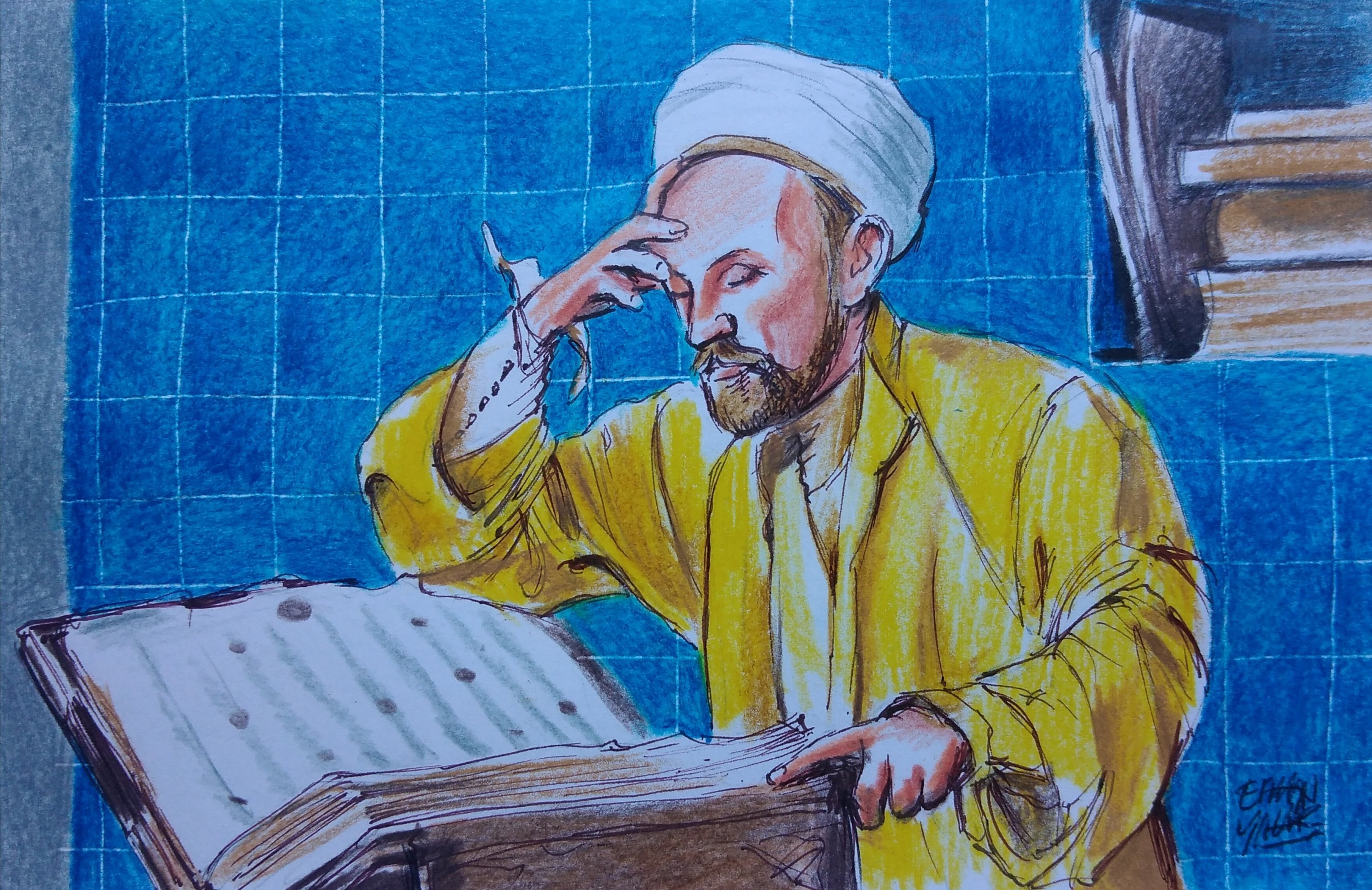
Al-Ghazali is one of the most debated scholars in the history of Islamic thought. His stance and objections toward the philosophical movement have often been interpreted as opposition to scientific thought and progress, by taking them out of their historical context. Consequently, it has been claimed that scientific advancements in the Islamic world stagnated after al-Ghazali. His evaluations concerning the causal relationship between cause and effect have particularly been used to reinforce this perception. Frank Griffel, in his article titled "The Western Reception of al-Ghazali’s Cosmology from the Middle Ages to the 21st Century," provides a comprehensive assessment of this perception and its background. In his article, Griffel explains how al-Ghazali’s teachings on causality were understood and interpreted by Western scholars who read his works outside the Islamic scholarly tradition, and he evaluates how this understanding has shifted in recent times.
According to Griffel, the perception in the West is that during the medieval period, the West – due to theological debates similar to those in the Muslim world – became disconnected from scientific knowledge. However, through subsequent Enlightenment struggles, it managed to escape this deadlock and advance to the modern era, whereas the Muslim world remained trapped in this impasse. As he puts it: "In Europe, that slumber was first and foremost associated with the “dark Middle Ages.” Europe awoke from this slumber first during the Reformation in the 16th century and secondly during the Enlightenment and its political manifestation, the French Revolution. The Islamic world was still in a state of development equal to the European Middle Ages." As Griffel emphasizes, this perception of the Muslim world (the East) – namely, the idea that the Islamic world resembles pre-Enlightenment medieval Europe – began with Napoleon’s invasion of Egypt and coincided with the formal beginning of Orientalist studies.
In Orientalist studies that construct the representation of the East based on a Western gaze, Paris becomes the central hub. As Griffel also emphasizes, the key figure here is the French historian of philosophy Ernest Renan (1823-1892), whose monograph Averroes et l’averroisme (Averroes and Averroism) made the most enduring contribution to this Orientalist narrative. Renan’s emphasis on Ibn Rushd is not coincidental. According to Renan, al-Ghazali was Ibn Rushd’s principal rival and the greatest enemy of philosophical free thought. Ibn Rushd’s significance lies in his authorship of a rebuttal to al-Ghazali’s "The Incoherence of the Philosophers," titled "The Incoherence of the Incoherence." Therefore, in Renan’s construction, with the death of Ibn Rushd, the production of thought in the Western philosophical sense ceased to exist in the Islamic world. For Renan, al-Ghazali’s ideas on causality, in particular, form the foundation of this narrative: "He opened his attack against rationalism especially through his critique of the causal principle. We only perceive simultaneousness, never causality. Causality is only that the will of God creates two things ordinarily in sequence. Laws of nature do not exist, rather they express a mere habitual cause. God Himself is unchanging. This was, as one can see, the negation of all science. Al-Ghazali was one of those bizarre minds who only embraced religion as a manner to challenge reason."
At the beginning of his article, Griffel draws particular attention to two contradictions that underlie the formation of this perception. First, Renan and others who contributed most significantly to the formation of this perception did not read al-Ghazali directly, but rather through the lens of Ibn Rushd’s interpretations. Second, they attempted to interpret and make sense of developments in the Islamic world not within their own natural course and context, but through the framework of Western historical developments. As a result, Ibn Rushd comes to be portrayed as pro-science in the Western sense, while al-Ghazali is depicted as anti-science. According to this interpretation, al-Ghazali, by rejecting causality, is seen – through Ibn Rushd’s critique – as denying reason itself and ultimately rejecting science altogether.
Griffel begins by examining the Ash‘arite school’s approach to the concept of causality to trace the roots of al-Ghazali’s own perspective – al-Ghazali himself being an Ash‘arite. According to Griffel, the first Western reader to recognize the strong connection between al-Ghazali’s view of causality and the Ash‘arite tradition was Solomon Munk. In Ash‘arite occasionalism, change and interaction in the universe are not attributed to direct physical cause-and-effect chains but to God’s constant intervention. Thus, no limits are placed on God’s will: "If we get the impression that there are indeed laws that govern God’s creation, it is because God has certain 'habits,' to create certain things always together with others. These habits give us the impression of causal laws, yet in principle, they are not laws but can be broken." In this respect, a direct philosophical link can be established between al-Ghazali’s critique of causality and Ash‘arite occasionalism. Griffel also notes that most Western philosophers, notably Thomas Aquinas, were well acquainted with the occasionalist theories of Ash‘arite theologians and engaged with them in their works, such as Aquinas’s Summa contra Gentiles. This interaction suggests that the Islamic theological tradition, and especially Ash‘arism, became part of philosophical debates in Europe and that there was a meaningful intellectual encounter, particularly on topics such as causality and the absolute power of God.
According to Griffel, the first rupture in the Orientalist narrative, led by Renan, regarding al-Ghazali’s approach to causality began with the publication of the first Arabic edition of "Mishkat al-Anwar" in Cairo in 1904. In 1914, the Scottish theologian William H. T. Gairdner (1873-1928) identified a series of issues in this work that contradicted the dominant Orientalist portrayal of al-Ghazali. In "Mishkat al-Anwar," God is neither the one who moves the heavens nor the one who governs their motion; he is far beyond such activities and has delegated these functions to his creations. Thus, Gairdner highlighted the complexity of the issue by showing that this depiction of God does not align with occasionalism, in which God is the direct and sole cause of all things and does not delegate His functions. As Griffel points out, al-Ghazali’s view in this text is instead associated with a different cosmological model — one developed by al-Farabi — where secondary causality is operative: "All in all, it describes creation in long chains of secondary causes, where every event in this world is caused by God, but not caused directly as in the occasionalist model, but through the mediation of other causes, i.e. secondary causes, that are also created by God." In other words, while God is the ultimate source of all things, he exercises his creative power indirectly, through intermediary causes that he has brought into being.
In addition to highlighting the aspects of "Mishkat al-Anwar" that conflict with occasionalism, Gairdner also pointed out a contradictory situation when considering al-Ghazali’s views in "al-Munqidh min al-Ḍalāl," which align more closely with occasionalism. In summary, according to Gairdner, in works like al-Munqidh min al-Ḍalāl, al-Ghazali presents God as the direct creator and commander of all created things. However, in "Mishkat al-Anwar," he states that this creative activity occurs indirectly through “secondary causes,” especially through being described as “the obeyed one” (al-muṭa), thereby inserting intermediaries into God’s actions.
Thus, Gairdner argued that al-Ghazali accepts causality in "Mishkat al-Anwar," whereas he rejects it in other works. However, by identifying this apparent contradiction, Gairdner also initiated a new interpretive phase – one that opened up the possibility that al-Ghazali’s intellectual system might be more complex and multilayered. As a result, later studies began to evaluate al-Ghazali’s intellectual evolution not only through his early works but also by including his later texts, thereby ushering in a more critical period of inquiry into whether he held a consistent or multi-dimensional understanding of causality.
In this new phase initiated by Gairdner, the main emphasis was on the idea that al-Ghazali held two seemingly contradictory doctrines – one that opposed causality and another that did not. According to this view, some of his books reflect one doctrine, while others present the opposite, thus indicating an apparent inconsistency. However, later studies by Richard M. Frank (1927-2009), which encompassed nearly all of al-Ghazali’s works, repositioned al-Ghazali not as a classical advocate of occasionalism, but rather as a thinker of a deterministic system in which the universe operates under God’s indirect control. Frank’s approach, therefore, rejects both Gairdner’s interpretation and the more recent "two doctrines" thesis advanced by Binjamin Abrahamov. Instead, it is an attempt to explain al-Ghazali’s thought within a single coherent metaphysical framework. Although Frank acknowledges that al-Ghazali uses expressions consistent with both causality and occasionalism, he defends al-Ghazali’s philosophical consistency, arguing that the apparent linguistic differences do not reflect a fundamental divergence in thought. This approach represents an effort to read al-Ghazali’s cosmology through a unified philosophical lens. Michael E. Marmura (1929-2009), whose work is also cited by Griffel in the article, similarly rejects the existence of two distinct doctrines. However, unlike Frank, Marmura argues that al-Ghazali consistently adhered to an occasionalist perspective throughout all his works.
At the end of the article, Frank Griffel refers to his 2009 book "Al-Ghazali’s Philosophical Theology," noting that in this work he evaluates the approaches of Frank and Marmura through the dialectical model of thesis, antithesis and synthesis: "While Frank’s and Marmura’s works are the thesis and the anti-thesis (or the other way round), this book wishes to be considered a synthesis. In truly Hegelian fashion, it does not aim to reject any of their work or make it obsolete. Rather, its aim is the Aufhebung of these earlier contributions in all meanings of that German word: a synthesis that picks up the earlier theses, elevates them, dissolves their conflict, and leads to a new resolution and progress."
Griffel’s approach is essentially a “neither this nor that, but both” position: "In my book I suggest that once the epistemological status of knowledge about God’s creative activity is taken into account, the apparent contradiction in al-Ghazali’s teachings on cosmology can be much better understood, and, as I suggest, even be resolved. For al-Ghazali, we cannot know how God acts upon his creation – either directly or through secondary causes. Yet both models, occasionalism and secondary causality, offer congruent explanations of the universe. For al-Ghazali, these two models represent different speculative attempts to explain God’s creative activity that have the same practical results. For all practical purposes, so teaches al-Ghazali, we should assume that the causes that we witness will not change in terms of the effects to which they lead."
In fact, Griffel’s account suggests that al-Ghazali’s somewhat ambiguous use of both doctrines is not coincidental, but rather part of an implicit effort to legitimize both approaches as different paths leading to the same truth. This narrative – or implication – by Griffel corresponds to a deeper intellectual shift that we often encounter during periods when major ruptures in the Islamic intellectual tradition led to the construction of new systems. It reflects what Ihsan Fazlıoğlu describes as a “transition from paradigm to perspective” – a shift from the singularity of truth to the plurality of method. In this context, both doctrines represent, for al-Ghazali, simply different methodological tools – each serving as a means toward the same ultimate truth.
This approach is not new for al-Ghazali. As Fazlıoğlu notes, he employed the same method in his critiques of philosophy: "Ultimately, through al-Ghazali’s critiques, the idea of ‘one truth, one method’ was replaced by the view of ‘one truth, multiple methods’; thus, a transition occurred from a doctrinal philosophical attitude to a perspectival one. Knowledge became naturalized, historicized, and thereby humanized. Within this framework, the strong bond between philosophy in its specific sense – i.e., metaphysics – and philosophy in its general sense – i.e., the sciences – began to loosen. Over time, this loosening triggered the emancipation of the mathematical sciences, whether numerical, geometrical, or computational, and this process was completed particularly in the 13th century. As a result of al-Ghazali’s critiques, the Illuminationist (Ishraqi) and Akbari traditions, which challenged the claim that truth, or the intelligible, could not be known, began to rise. At the same time, the mathematical sciences developed their own ways of producing knowledge. In particular, computational mathematics – with its components of arithmetic, algebra, and surveying – began to take a central position. This opened up new pathways for knowledge. Throughout this process, al-Ghazali, within the framework of his own metaphysics and epistemology, did not adopt a wholesale positive or negative stance toward the legacy of all forms of knowledge and thus toward the intellectual memory of humanity. Rather, he acted as a filter. He neither fully accepted nor completely rejected any form of knowledge activity, provided it adhered to rules such as methodological appropriateness and disciplinary distinction. Instead, he filtered them. This process also led to a loosening of the strict rule that ‘knowledge is dependent on the known." While objective knowledge is still grounded in an external reality (nafs al-amr), a more flexible view emerged within the realm of human knowledge, allowing for the idea that knowledge may, at times, depend on the knower."
In summary, the Orientalist narrative — which has played a key role in supporting the West’s domination over the East — is not an attempt to understand the East within its historical context but rather an effort to construct, represent and ultimately control the East from a Western perspective. As Edward Said emphasized, Orientalism is not merely a mode of interpretation; more accurately, it is a form of domination. It entails the West’s unilateral attempt to represent, speak for, and define the East. The Egyptian woman whom Flaubert encountered in Egypt also becomes subject to this dynamic. She is not allowed to speak for herself; instead, she is interpreted through Flaubert’s voice. In the Orientalist corpus, the East itself does not speak — nor is it allowed to. The West makes the East speak on its own terms, explains its mysteries, and defines its nature. In this context, al-Ghazali has become the chief scapegoat in Orientalist efforts aimed at Islamic thought. A broader narrative about the Islamic world has been constructed through him. What al-Ghazali actually intended, the historical conditions of his time, the meaning attributed to knowledge during that period, and the nature and evolution of the debates around him are all rendered irrelevant. This is because the Orientalist discourse does not seek to reflect the East’s reality but instead projects how the West wishes to see the East, beginning from its own assumptions. This projection leaves the Eastern subject with two possible responses. One is to accept this narrative and expand upon it with new content, a move the West tends to value and reward. The other is to offer a passive defense that does not challenge the dominant narrative but attempts to nuance it by emphasizing the significant contributions of Muslim scientists and classical scholars to the development of Western science, thereby seeking a historical share in the West’s achievements. Both responses are flawed. As this article attempts to emphasize, the story represented by al-Ghazali – along with its language and context – differs significantly from the Orientalist narrative.