From the late Ottoman period onward, attempts to understand political and social life in Türkiye frequently encounter a tension between the intelligentsia and the people. This tension is not merely a cultural difference; it also represents a deep divide over how the state should be governed and in what direction society should be transformed. This dual structure, which became more pronounced with the Tanzimat reforms and continued in various forms during the Republican era, has been one of the central axes of debate in Türkiye’s modernization trajectory.
In his work "The Alienation of the Order," Idris Küçükömer examines this divide in depth, presenting it as a key to understanding the political and social order of modern Türkiye. According to him, the intelligentsia in Türkiye is not only an intellectual class but also a broad group that includes civil servants and bureaucrats embedded within the state apparatus. Therefore, the distinction between the intelligentsia and the people reflects the distance between this stratum and the wider segments of society. The paradox highlighted by Küçükömer is that, throughout the historical process, this bureaucratic-intellectual class has generally emerged victorious in political struggles and has managed to sustain its dominance.
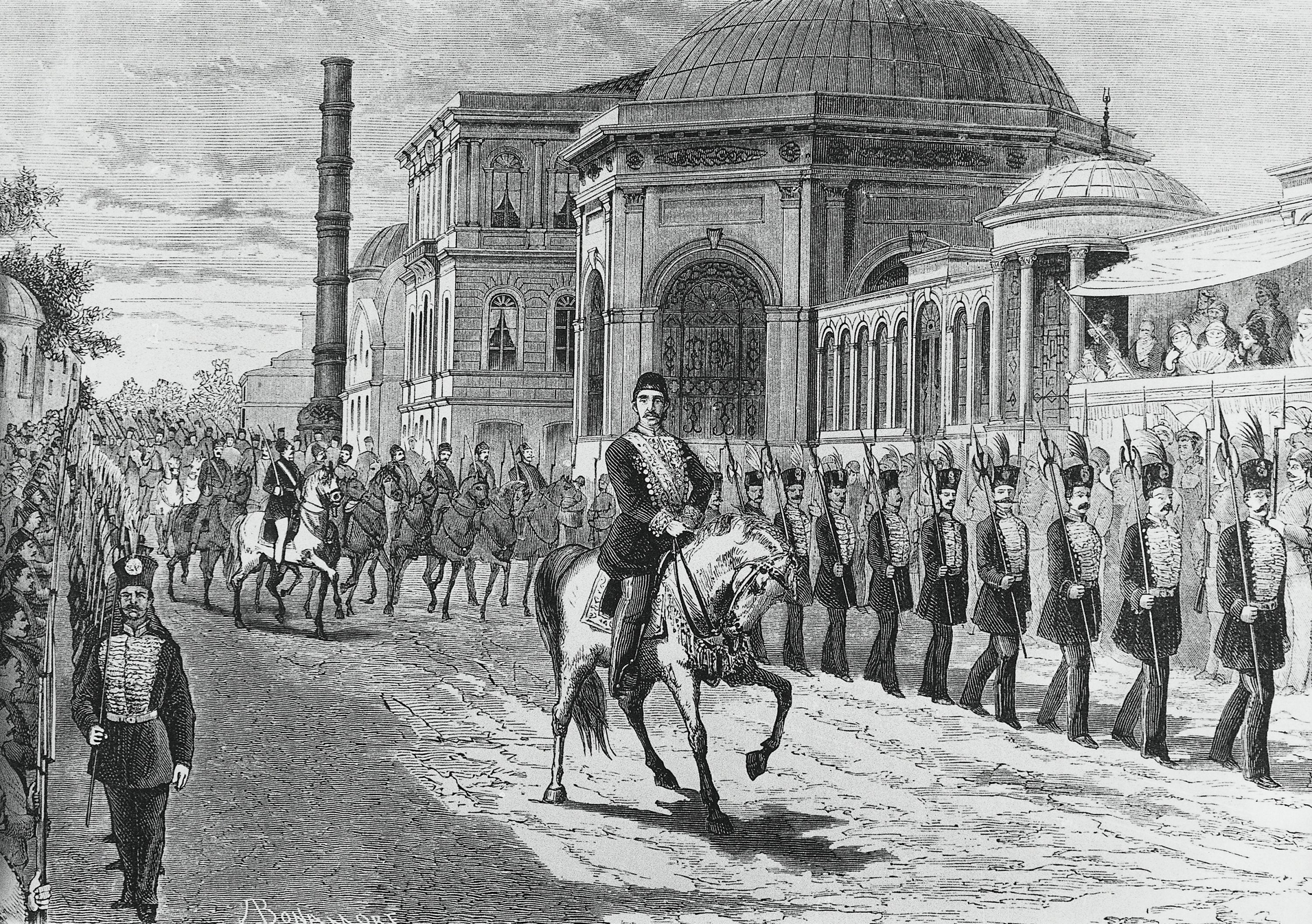
Teoman Duralı, in his interview book “Öyle Geçer ki Zaman” ("Time Passes By So Quickly"), also points to a similar historical continuity, emphasizing that this divide has been reproduced in different forms since the late Ottoman period. According to Duralı, the configuration that emerged during the reign of Abdülhamid II is particularly striking in this regard. In this period, while the sultan at the highest level of the state and the broader masses appeared to be on the same side, intellectuals and bureaucrats positioned themselves in opposition to the sultan. Duralı interprets this as a picture that runs counter to conventional historical narratives: “The man at the top of the state and the people come together, while the intelligentsia and the bureaucratic class move to the other side. A very intriguing picture emerges. That intelligentsia and bureaucratic classes grow so powerful! Abdülhamid himself also has a share in their strengthening. Despite opening schools and educating the youth, he cannot steer them in the direction he desires. In the end, the people and Abdülhamid are defeated; those who become Europeanized and advocate novelty and modernity prevail.”
Duralı argues that this divide was not unique to the Abdülhamid era but continued in different forms during the Republican period as well. According to him, in the early years of the republic, the social structure largely displayed a dual character, consisting of a small number of civil servants and bureaucrats on the one hand and broad masses of society on the other. Within this structure, the educated strata and state officials were largely aligned with the Republican People’s Party (CHP), while wider segments of society remained distant from political decision-making processes and struggled to fully embrace many of the reforms. For this reason, it can be observed that a certain distance between the bureaucratic-intellectual class and the people has persisted throughout Türkiye’s political history. Duralı further suggests that this pattern has reappeared in later periods as well, arguing that the intellectual-bureaucratic reactions against the Democrat Party (DP) and its leader and late Prime Minister Adnan Menderes, as well as the criticisms directed at President Recep Tayyip Erdoğan, can be interpreted as continuations of the same historical trajectory.
The roots of this divide, as Küçükömer suggests, extend much further back to an earlier phase of modernization – namely, the reign of Mahmud II. A key point emphasized by Küçükömer is that during the reform process led by Mahmud II, the groups aligned with the sultan largely consisted of bureaucrats and local notables. This development marks a critical turning point in shaping the trajectory of Ottoman modernization. In the process of restructuring the state, the alliance established between the sultan, the bureaucracy and local power holders led to the gradual weakening of broader social groups – represented by artisans, the ulema and the Janissaries – that sought alternative forms of restoration within the traditional social order. The abolition of the Janissary corps stands out as one of the most striking steps in this transformation, leaving behind primarily the guilds and the ulema. However, economic and commercial reforms soon weakened these groups as well. Trade agreements with Europe and the concessions granted to foreign powers gradually rendered the Ottoman economy dependent on external forces, while the guild-based production system could no longer compete with Western mechanized industry. As Küçükömer puts it, the underdeveloped Ottoman manufacturing sector and guild system were effectively swept away within a few decades by Western industrial power.
As a result, artisans and local production weakened economically, and large segments of society lost yet another key pillar of support. In the final stage, the influence of the ulema also declined. Reforms in the education system and the legal sphere effectively eliminated the social and political influence of the traditional religious scholars. Consequently, broad masses lost their capacity for representation, becoming vulnerable to the one-sided indoctrination of the bureaucratic-intellectual class while also failing to benefit from economic prosperity. The social landscape that emerged at the end of this transformation is quite striking. As traditional mechanisms of representation weakened, broad segments of society gradually lost their capacity to act as an organized force within the political process. Consequently, the historical trajectory of the intelligentsia-people divide – shaped from the Tanzimat period onward and continuing in various forms during the Republican era – persistently tilted in favor of the bureaucratic-intellectual class.
When evaluating this historical trajectory, it is also necessary to emphasize a critical feature of the reign of Abdülhamid II. One of the most notable aspects of this period was the initiation of a massification drive aimed at extending state services to as many broad segments of society as possible. The expansion of education and health care institutions, along with the development of transportation and communication networks, reflected an effort to reduce the distance between the state and society. However, with the political removal of Abdülhamid, this process was largely interrupted. Modernization continued through the bureaucratic-intellectual class, but the logic of massification centered on broad social inclusion was disrupted. Moreover, the distance between wide segments of society and the state – represented by the bureaucratic-intellectual elite – persisted.
After many years, a massification drive of comparable scale has re-emerged in Türkiye, particularly over the past two decades under the leadership of Erdoğan. Across a wide range of fields – from education and health care to transportation and infrastructure, and from culture and tourism to the defense industry – the gap with other countries has been significantly narrowed, and large segments of society have gained easy access to public services. The transformation achieved within such a short period of 20 years is far from ordinary. This process has not been limited to the expansion of physical services; it has also reshaped the relationship between the state and those segments of society that had previously benefited only marginally from public resources. It represents a comprehensive transformation that has restored a sense of confidence weakened or interrupted for a long period by the bureaucratic-intellectual elite, and has opened the way for society to become an active agent rather than a passive subject in these processes. Our relationship with history has also been reestablished on a more authentic footing, making it far more possible to articulate and pursue a new collective narrative.
At the same time, it would not be accurate to claim that the tension between the bureaucratic-intellectual elite and the people – whose historical roots extend back to the Tanzimat period – has completely disappeared. This tension continues to exist in different forms. However, with the transformations of recent years, elite groups that long shaped the direction of the public sphere have significantly lost ground. The central challenge in the coming period is to ensure the sustainability of this transformation. This requires not only strengthening the relationship between broader segments of society and the state, but also enabling the intellectual and bureaucratic strata to understand, internalize and contribute to the emerging new social narrative. Moreover, it is necessary to develop a new common language – and a shared narrative – that can grasp and critically engage with our historical legacy, interpret present-day challenges, and generate solutions that will sustain this transformation. If this historical opportunity is properly seized, it may finally become possible to overcome the long-standing intelligentsia-people divide that has recurred in different forms since the Tanzimat era. The conditions for this are now in place, and this opportunity must be carefully and fully utilized.