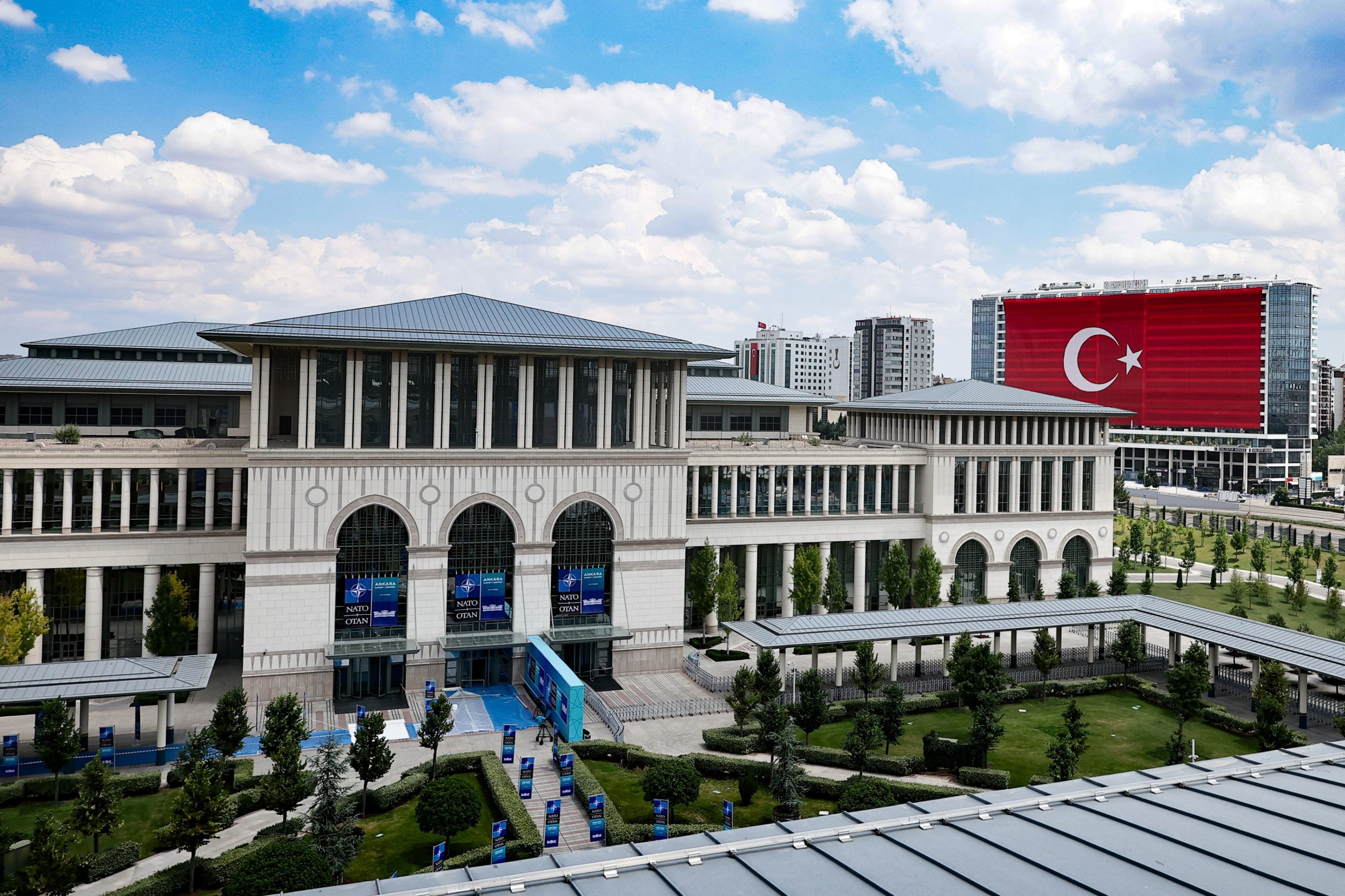
The NATO summit held in Ankara is likely to be remembered as a turning point in the alliance's history. The summit comes at a time when NATO is facing an existential identity crisis. For the first time, the security concerns and priorities of its allies diverge significantly. On the one hand, tensions between the United States and European countries have intensified. On the other, European countries have sought to exclude Türkiye from European security platforms, despite the self-defeating nature of such a policy. In addition, significant differences and disagreements persist among European states themselves.
Taking these political fault lines into consideration, I will briefly examine the importance of the Ankara summit for the city of Ankara and the Turkish state.
Since it was declared the capital of Türkiye in 1923, Ankara has remained in the shadow of Istanbul, a globally renowned Turkish city and the former capital of empires. Although Ankara developed rapidly and became the country’s third-most populous city within a few decades, it continued to face significant shortcomings until recently. Despite being Türkiye’s capital, it had yet to achieve comparable international visibility. As one of the world’s most attractive cities, Istanbul continued to serve as the symbolic center of Turkish history, economy and culture.
Following substantial public and private investments, Ankara has emerged as an important industrial, commercial, educational and cultural hub. In recent years, the number of international flights from the capital has increased significantly. The capacity of Esenboğa Airport has been expanded, and the government has initiated a project to connect the airport to the city center via a metro line. These and similar developments are expected to make significant contributions to Ankara’s future growth and global profile.
In addition, Etimesgut Air Base was renovated ahead of the 2026 NATO Summit, hosted in Ankara. The operation of the military base was transferred to the State Airports Authority. The aprons were expanded, the runway was extended, and a VIP lounge was constructed. Following the renovation, the facility was renamed Ankara Airport. It was officially inaugurated on June 15, just weeks before the summit, and will continue to serve as a protocol airport after the NATO summit.
Today, Ankara is hosting one of the most important international meetings in its history. For the first time, the city is hosting such a significant and widely attended summit. Around 40 heads of state and government, accompanied by large delegations from some of the world’s most powerful countries, will spend several days in the city. More than 3,000 journalists from around the world are covering the summit. More than 50,000 security personnel have been deployed to ensure that the meeting is conducted safely.
I believe Ankara is ready to elevate its status. In addition to its historical heritage from the Roman and Ottoman periods, and more importantly, from the early years of the republic, Ankara has many universities, historic neighborhoods, museums, concert halls, and stadiums to offer the world. Now, this summit, which presents an important opportunity to enhance Ankara’s diplomatic and political standing, will make a significant contribution to the city’s global brand value. In this sense, Ankara is becoming a true capital of the state by emerging as a center of diplomacy, trade, culture and international transportation. With the beginning of the Turkish Century, Ankara has begun to rise as a symbol and center of the new century.
It is not a coincidence that no NATO summit was held in Türkiye, which became a member of the alliance in 1952, until the AK Party governments, under which the country hosted two such summits.
It is noteworthy that only two NATO summits have been held in Türkiye: one in Istanbul in 2004 and the other in Ankara in 2026. Both summits took place during significant periods marked by uncertainty and crisis, when the alliance was debating its future direction. While the Istanbul summit formalized NATO 2.0 and consolidated the alliance in the post-Cold War era, the Ankara summit appears poised to shape NATO 3.0 and adapt the alliance to future threats.
At a time when many Western states are criticizing Türkiye for its evolving preferences and policies in international affairs, the NATO Summit held in Ankara demonstrates the success of Türkiye’s long-standing foreign policy approach. Ankara has been seeking to enhance its strategic autonomy vis-a-vis its European allies for some time. This approach reflects Türkiye’s efforts to elevate its international status and expand its influence.
This summit has demonstrated that Türkiye is not merely a beneficiary of NATO but also, more importantly, a country capable of making and sustaining significant contributions to the alliance. Many Western politicians and academics have begun to recognize Türkiye’s central role in shaping the European security architecture. With its substantial military capabilities and robust defense industry, Türkiye has the capacity to play a decisive role in deterring threats against itself and its allies. It has already demonstrated its capabilities in various regional crises, including Syria, Karabakh and Libya.