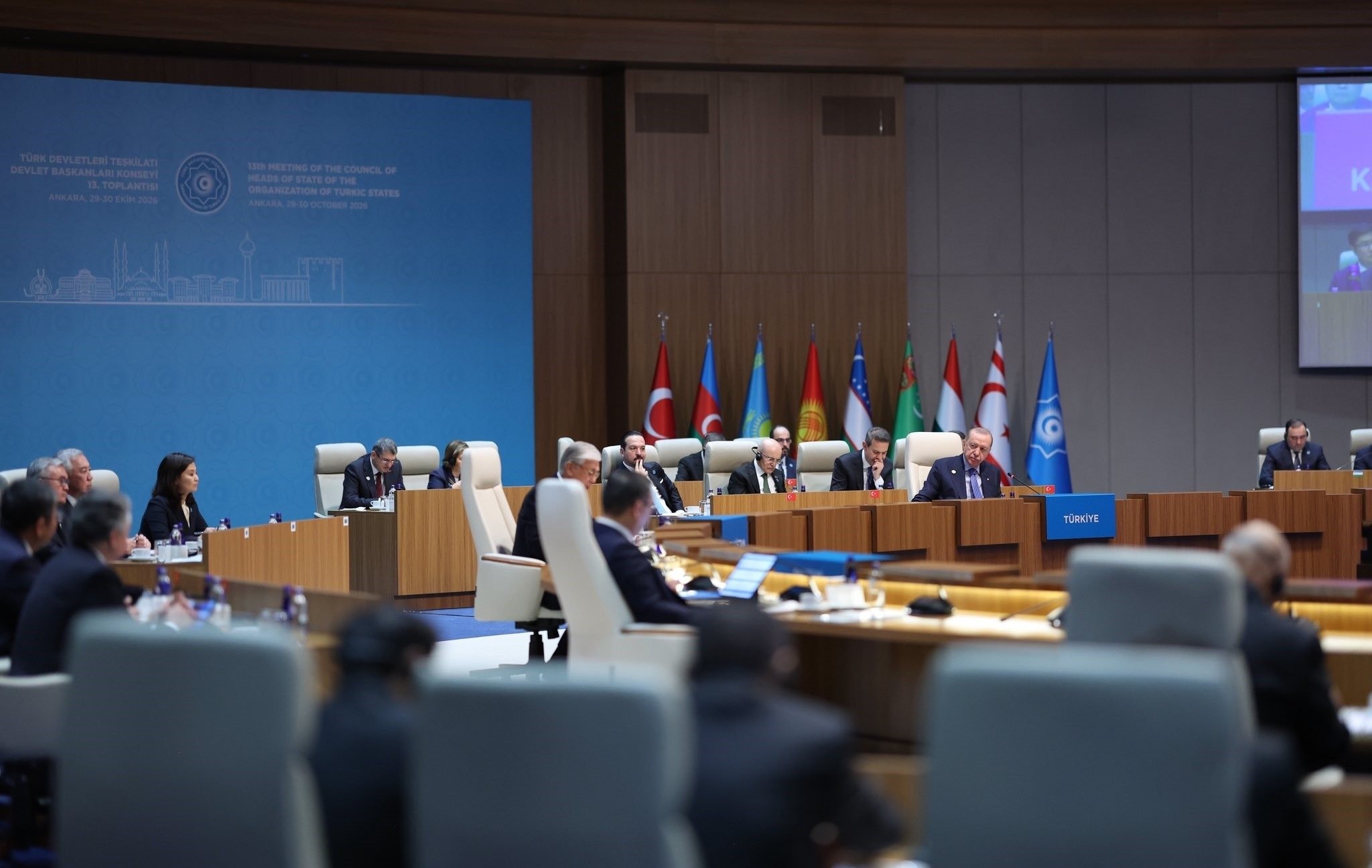
The 13th Summit of the Organization of Turkic States (OTS) was held in Ankara on Oct. 29-30. This summit will go down in the history of Turkic nations as a significant turning point, as it made a significant contribution to establishing relations between Turkic states on a truly rational foundation. This, in turn, will signify the normalization of intra-Turkic relations.
The summit's theme, “Unity in Language, Thought and Action,” determines the general strategy of the Turkic states. As President Recep Tayyip Erdoğan said: “Unity in language means persevering and developing our shared heritage, enabling us to understand one another directly, without intermediaries. Unity in thought means rallying around goals and developing a collective strategy. Unity in action means transforming our words into deeds, our will into tangible achievements, and our decisions into concrete results.”
One of the most challenging geopolitical issues concerning Turkic states is connectivity. It is clear that in today’s world, supply chains have gained greater significance, and logistics, land and naval routes have become critical issues for regional and global rivalries. The Middle Corridor, a route connecting East Asia to Europe through the Caspian Sea, is one of the most important projects for the Turkic nations. This route will significantly increase the strategic value of the Turkic states. In addition, there are many other connectivity projects such as the Zangezur Corridor, the Baku-Tbilisi-Kars Railway and the Trans-Afghan Railway, which will contribute to cooperation among the Turkic states.
Another significant decision emphasized a common approach to regional crises. The Turkic states reiterated their support for a two-state solution in Palestine, the territorial integrity of Syria and the resolution of the Cyprus issue through “a mutually acceptable and sustainable solution based on the existing realities on the island.”
Türkiye has taken over the rotating OTS presidency from Azerbaijan. As one of the organization’s most significant supporters and a country that frequently takes the initiative within the organization, Türkiye is expected to take concrete steps during its presidency. As president, Erdoğan has underlined that Türkiye will try “to translate the institutional foundation into more tangible gains.”
Uzbek diplomat Mirvokhid Azimov was appointed as the new fifth secretary-general of the OTS. The four preceding secretaries-general represented the other four member states, namely Türkiye, Azerbaijan, Kazakhstan and Kyrgyzstan. As an experienced career diplomat, Azimov previously served as head of the Treaty and Legal Department at Uzbekistan's Ministry of Foreign Affairs and also worked for four years as an international official at the Secretariat of the Shanghai Cooperation Organization in Beijing.
At the summit, significant steps toward the future were also taken. Numerous technical, economic and political projects are planned to further the integration of the Turkic world. Member states have agreed to build on their shared heritage as they shape their respective futures.
One of the most promising steps was the progress on the draft Treaty on Strategic Partnership, Eternal Friendship and Brotherhood among Turkic States. This treaty will make a great contribution to the institutionalization of the organization. This will further improve cooperation among the member states on international platforms.
Secondly, the preparation of the 2027-2031 strategy, as part of the Turkic Vision 2040 program, demonstrates the organization’s commitment to long-term planning. The implementation of connectivity projects, together with several energy infrastructure projects, will further consolidate the longstanding solidarity and cooperation among the Turkic States. Furthermore, the member states have decided to initiate the process of preparing the OTS Transport Corridors Strategy in order to develop an institutional response to future developments.
Third, the member states have decided to advance consultations to broaden the common security approach, including both conventional and new threats. A significant project involves signing the cybersecurity memorandum of understanding and establishing the OTS Cybersecurity Council. Thus, they will try to prepare themselves for one of the most vital threats of the future.
Another project of the OTS is the establishment of the Crime-Fighting Council. This will facilitate their joint efforts in their struggle against transnational terrorism. The Digital Silk Way Initiative is yet another project that will influence the national security of member states. This project aims to construct a data infrastructure for the Turkic world to secure the digital sovereignty of the member states.