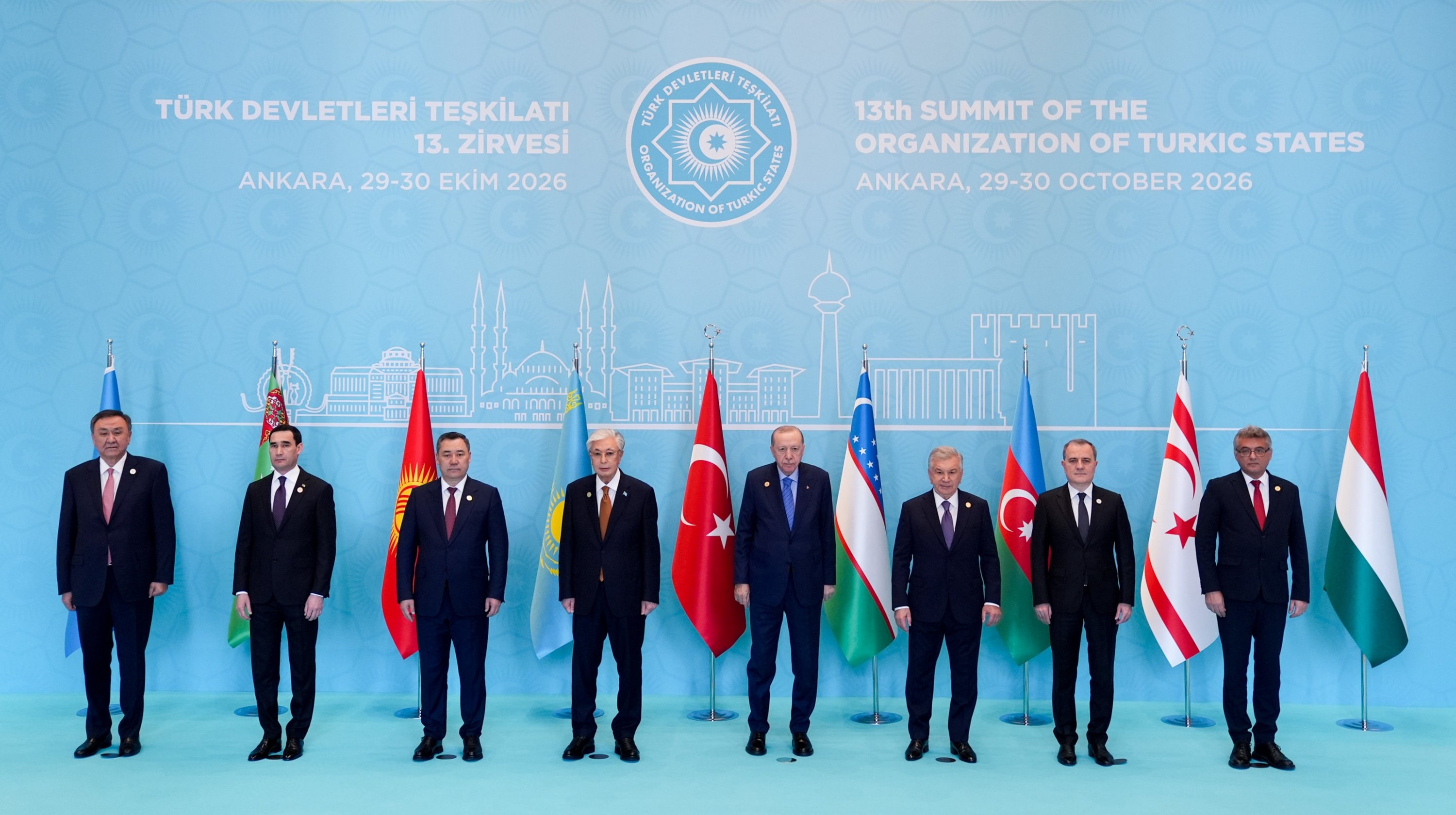
The 13th Summit of the Council of Heads of State of the Organization of Turkic States (OTS), held in Ankara on Oct. 29-30, reaffirmed political will for the common future of the Turkic world. At the summit, themed "Turkic Century: Unity in Language, Thought and Deed," Türkiye took over the rotating chairpersonship from Azerbaijan. The meeting centered its agenda on transforming cultural affinity into institutional cooperation, economic partnership and strategic solidarity.
As power rivalry, regional conflicts and the struggle over transportation routes reshape the international system, the Turkic states' pursuit of joint action is gaining ever greater importance. For this pursuit to produce concrete results, historical and cultural affinity must not remain confined to diplomatic rhetoric, and common interests must be backed by institutional mechanisms.
This is where the significance of the Ankara summit becomes clear. The goals in its final declaration, ranging from political coordination to the defense industry and from transportation to digital infrastructure, reveal both a broader cooperation agenda and the Turkic states' determination to extend cooperation to every field. Converting the common identity into measurable economic and geopolitical gains through this determination will bring the goal of the Turkic Century to fruition.
In the evolution of the OTS, the fundamental change has been the closer integration of cultural cooperation with political and security matters. Established in 2009 under the Nakhchivan Agreement and renamed at the 2021 Istanbul Summit, the organization seeks to become a structure capable of forming common positions on regional developments. The political coordination goals set out in Ankara mark a new stage in this transformation.
Progress on the draft Treaty on Strategic Partnership, Eternal Friendship and Brotherhood among Turkic States is among the summit's most meaningful outcomes for institutionalization. Mutual support for candidacies in international organizations and regular consultations among foreign ministers could enhance the organization's diplomatic effectiveness. The preparation of the 2027-2031 Strategy, a continuation of the Turkic World Vision 2040, is also significant for anchoring long-term goals in a common program. Signing the treaty will mark the threshold for the organization's transition from a platform of solidarity to a structure with legal obligations.
Nevertheless, how effective common political will is going to be in international affairs remains a core question for the organization. Member states have differing geographic positions, foreign policy priorities, and international partnerships. Identical positions on every development are an unrealistic expectation. Even so, regular consultation and diplomatic solidarity can be developed on matters of common interest. Institutional maturity will be measured by the ability to manage differences and preserve common ground.
Security and defense industry initiatives that stood out at the summit reveal the most tangible dimension of cooperation. Exploring the establishment of an OTS Defense Industry College program hosted by Türkiye is important for expanding the exchange of knowledge and experience. Accelerating the signing of the cybersecurity memorandum of understanding, advancing consultations on the OTS Cybersecurity Council, and encouraging the agreement on a crime-fighting council broaden the common security approach against threats ranging from terrorism to cybercrime.
Türkiye's defense industry experience can be combined with the production capacity, natural resources, and geographic advantages of the other Turkic states. Joint training programs, research and development projects, and defense supply chains could reduce external dependence in the long term. The defense industry stands out as the field that can contribute fastest to the Turkic world's strategic autonomy. These goals also require establishing legal principles for financing, intellectual property rights, and technology sharing.
Within the organization, the position of the Turkish Republic of Northern Cyprus (TRNC) is of particular importance for the political solidarity of the Turkic world. The summit emphasized that the Cyprus issue should be resolved through a mutually acceptable and sustainable solution based on the existing realities on the island, while reiterating support for the inherent equal rights of the Turkish Cypriot people.
Observer status is valuable for the TRNC in overcoming the political isolation it faces internationally and strengthening its institutional ties with the Turkic world. Turkic states' continuation of this support through diplomatic contacts and international initiatives will contribute to the rightful struggle of the Turkish Cypriot people. Support for a two-state solution to the question of Palestine and for Syria’s territorial integrity also reflects the organization’s shared regional concerns.
A key element in increasing the Turkic world's geopolitical weight is turning geographic connectivity into economic integration. As global supply chains are reshaped and logistics routes become part of strategic competition, the Middle Corridor, stretching to Europe across the Caspian Sea, can strengthen the position of Turkic states along trade routes.
The summit's emphasis on the strategic value of the Trans-Caspian International East-West Middle Corridor, the Zangezur Corridor, the China-Kyrgyzstan-Uzbekistan Railway and the Trans-Afghan Railway shows that Turkic states seek a more effective position in the transportation network between Asia and Europe. These projects should not be regarded as disconnected investments. Planned as a single connectivity network, these complementary routes can serve the economic integration of the Turkic world.
However, the strategic value of the corridors cannot be confined to routes on a map. Their competitiveness is determined by how they function on the ground: waiting times at border crossings, customs tariffs, the technical compatibility of railway lines, port capacity and logistics costs. The implementation of e-CMR, electronic document sharing, and common transport standards are therefore priorities. Preparing the OTS Transport Corridors Strategy could also provide an institutional response to these needs.
Energy security is another important dimension of economic cooperation. Existing infrastructure such as the Baku-Tbilisi-Ceyhan oil pipeline and the Southern Gas Corridor strengthens the strategic bond between Türkiye and the Turkic states of the Caspian basin. Cooperation to be developed on green energy corridors, critical minerals and the peaceful use of nuclear energy offers an opportunity to act jointly in future energy markets. Delivering renewable energy to European markets is also directly linked to Türkiye's goal of becoming an energy hub.
In this regard, the effectiveness of the Turkic Investment Fund needs to be increased, and barriers to intraregional trade need to be removed. The summit's encouragement of continued negotiations on the draft agreement on facilitating services and investments is noteworthy in terms of improving customs procedures. Unless joint financing mechanisms and private sector participation are secured, corridor and energy projects will remain declarations of political intent.
Digitalization is a new dimension of this integration. The Digital Silk Way initiative, including the Azerbaijan-Kazakhstan fiber-optic cable line, can strengthen the Turkic world's data infrastructure. The completed production of the 12U OTS-SAT Cube Satellite and the signing of the organization's first framework contract in the space industry are concrete examples of cooperation in this field. Joint capacity in data infrastructure and space technologies is a prerequisite for the Turkic world's digital sovereignty.
Lasting economic integration is also closely linked to stronger social and cultural ties. Promoting the Common Turkic Alphabet, developing education and student exchange programs, and supporting the initiative to establish a Group of Turkic States within UNESCO will help pass awareness of the common culture on to new generations and carry it into the international arena. The cultural bond is both the starting point and the most enduring guarantee of the Turkic world project.
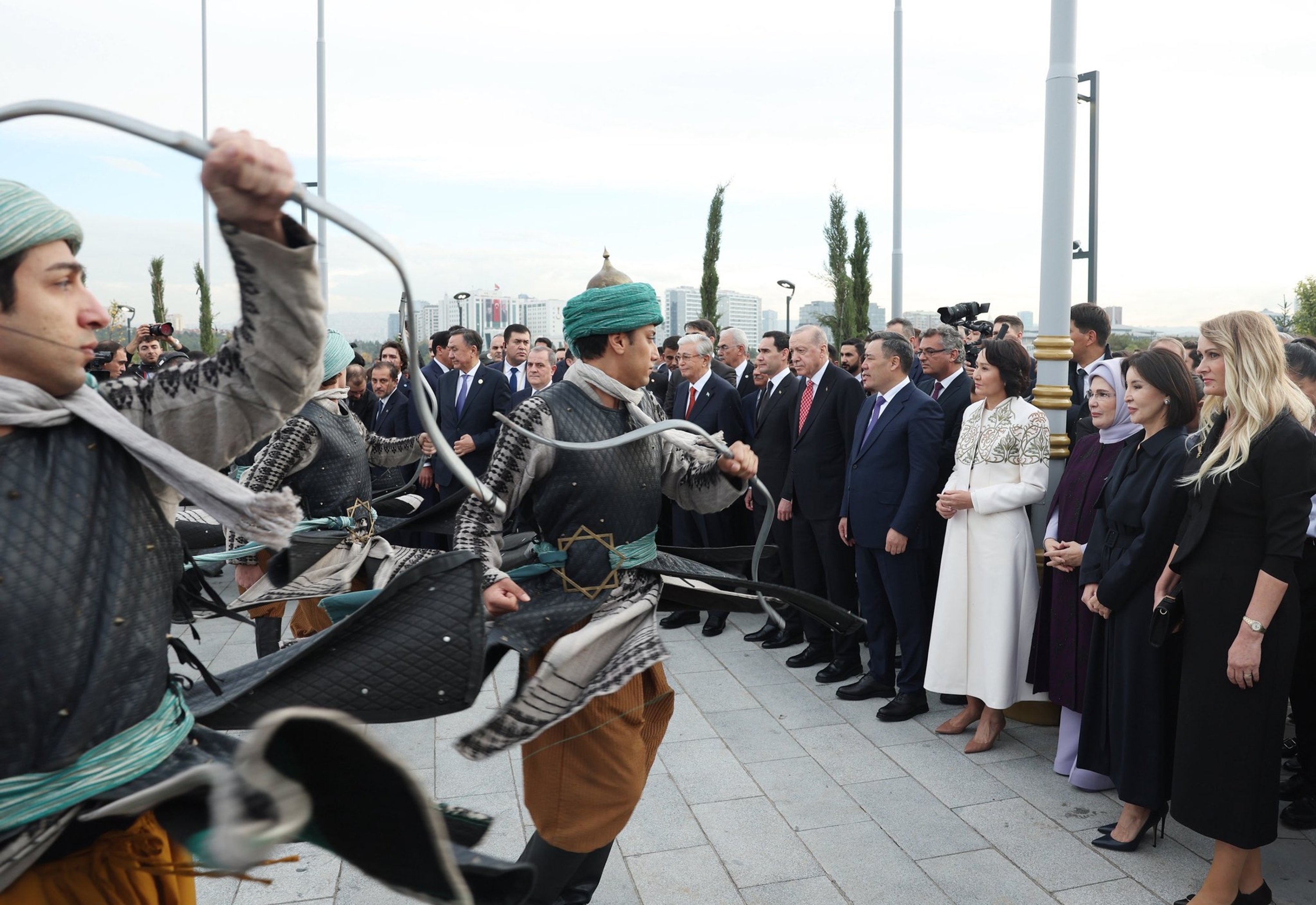
Ultimately, the Ankara summit showed that goals for the common future of the Turkic world are being addressed on a broader strategic basis. As chair, Türkiye bears an important responsibility for putting these goals into practice. Until the 14th summit, to be hosted by Uzbekistan in 2027, Türkiye's priority should be strengthening the mechanisms that ensure follow-up on decisions taken.
Turning solidarity among Turkic states into a lasting source of power depends on backing the common identity with political will, economic capacity and security cooperation. Building the "Turkic Century" will become possible once the affinity achieved in language and thought turns into institutional cooperation, and that cooperation into concrete strategic gains.