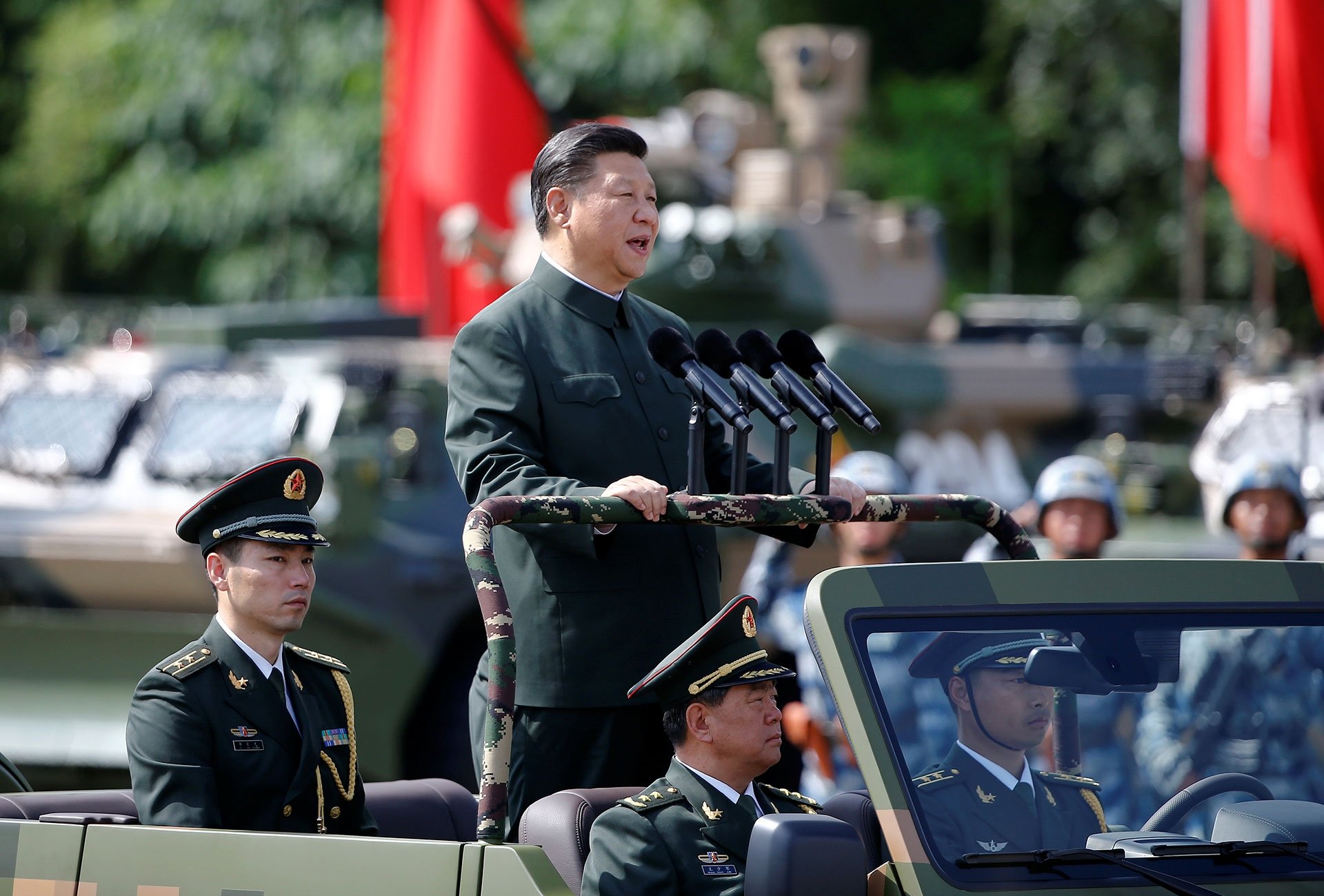
The 20th National Congress of the Communist Party of China also featured messages that should be carefully followed regarding the near term and the future.
The most important issues to come to the fore in China's 13th and 14th five-year development plans were the goals of reaching the newly rising middle class and a fair level of prosperity that would be shared by all equally. China is the second largest economy in the world after the United States and its economy reached $6 trillion 10 years ago, while exports of $2 trillion meant that one-third of the produced goods were sold abroad. However, when the Chinese economy reached $11 trillion in 2015, the fact that sales abroad only accounted for $3 trillion of that figure showed it was no longer possible for the Chinese economy to rely on exports.
Hence, it was inevitable that China would revert to fighting against poverty, focusing on new urbanization moves and a rising new middle class within the country. As a matter of fact, the content of the last two five-year development plans includes important headings for these goals. To ensure the sustainability of the Chinese economy, which is expected to reach $19 trillion by the end of 2022, it needs to focus on many infrastructure and superstructure projects that will rapidly increase the average purchasing power and standard of living. Although important targets for "2035 China" were foreseen in the 14th five-year development plan, the challenges and priorities brought to the agenda by the global world order indicate that China needs to quickly complete its work to rapidly raise the living standards of its total population by 2030.
Therefore, the "Made in China 2025" program aims to make China a self-sufficient country in technology, raw materials, components, digital hardware and software products, and in terms of its defense industry. Another important pillar of this process is raising the goals of "socialism" specific to China. In 2049, the People's Republic of China will complete its first century. For this reason, the national congress, attended by 2,300 delegates, was focused on "Building the Second Century."
The main theme of this critically important topic is defined as "a society of average welfare in all aspects" and "building a modern socialist society in all respects." Chinese President Xi Jinping describes the process as socialism in the new age. In the coming period, China will focus on new approaches that will concentrate primarily on "combating inequalities" and "fighting corruption" in addition to new approaches to encourage fertility regarding the sustainability and aging of the population.
As the global order is being restructured, the global political economy is trying to pave a new route for itself as the transition from a "unipolar" world order to a "multipolar" one after the Cold War continues, with the COVID-19 pandemic and the ongoing war in Ukraine bringing to fore the issue of "self-sufficiency" for leading countries. Therefore, with its large population, China, also wants to deepen its relations with Europe and Africa at a time when the global center of gravity has shifted from the Atlantic to the Pacific. For this reason, it looks like the countries of the Atlantic belt will do a lot of reading after the 20th National Congress.