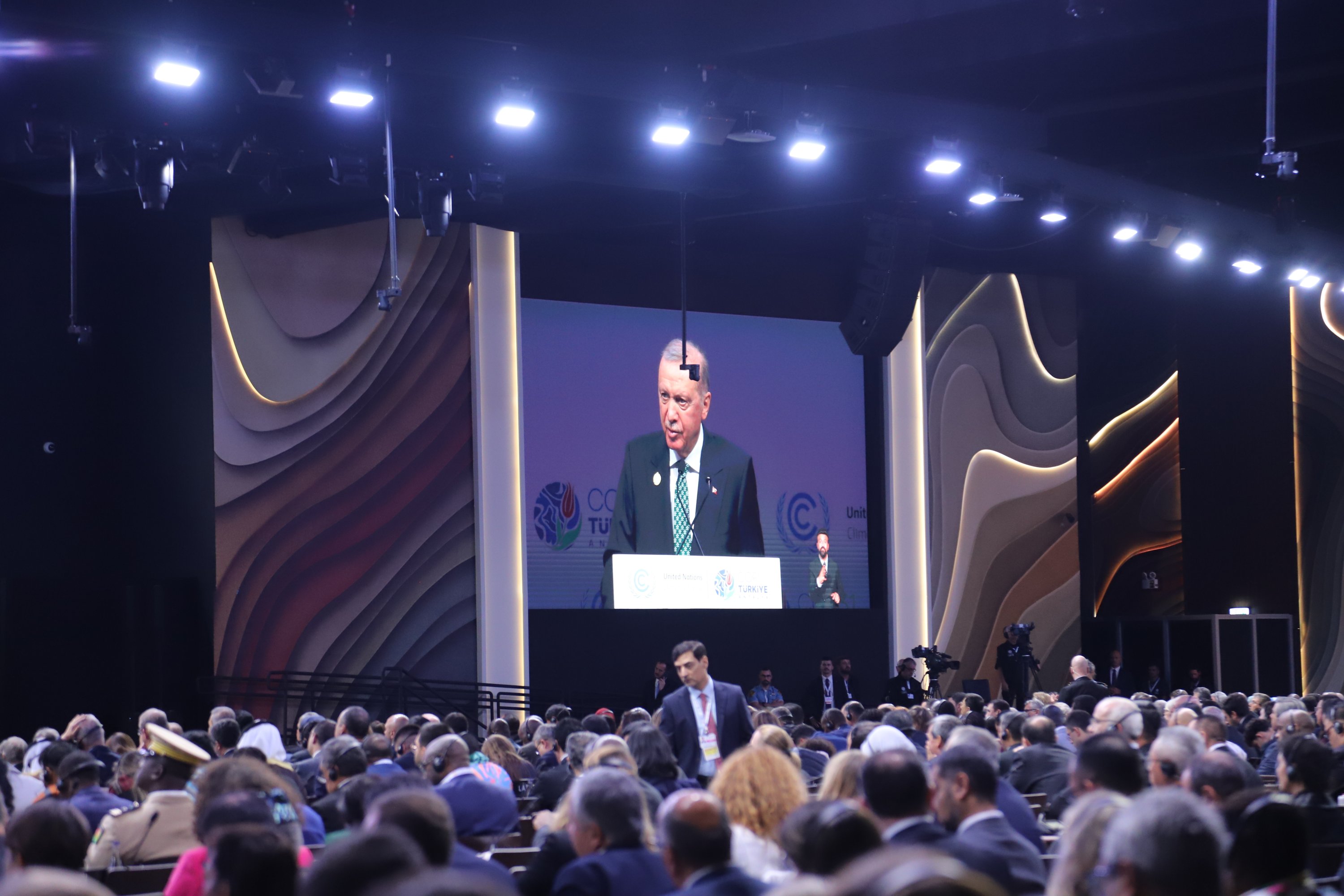
The climate summit in Antalya is still underway. It started on Nov. 9, and the leaders’ summit took place on Nov. 11-12. As anyone who has visited the venue could see, the Antalya event stood out from previous climate summits in many respects.
Having attended some of the earlier summits in person, I can say that the Antalya summit is far ahead of the others in terms of its organization, venue architecture, and overall services. Its diplomatic structure was also different from that of previous summits: Türkiye assumed the COP Presidency, while Australia led the formal negotiations.
Murat Kurum, Minister of Environment, Urbanization and Climate Change and President of COP31, was exceptionally well prepared for the summit. A new campus layout for COP31 was developed using the existing infrastructure at Antalya Expo, with permanent structures added to the site to accommodate future summits and other events.
The Antalya summit is set to become the largest COP summit to date, both in terms of the level of representation by world leaders and overall attendance. Climate summits are typically large-scale events, attracting thousands of participants and lasting more than a week. At each summit, a wide range of challenges are discussed and potential solutions are proposed. Countries also make various commitments. However, many countries have yet to fulfill the promises they made at previous summits.
The deadlock that blocks solutions to today’s international crises can also be seen in the climate field. Here too, the deciding factors are inequality between developed and developing countries, great-power rivalry, political differences, and the struggle over who gets the economic gains of the green transition.
With these problems in mind, Türkiye put implementation at the center of the summit’s agenda. It opened a discussion on how climate targets can be turned into measurable steps, sector by sector. In his opening speech at the leaders’ summit, President Recep Tayyip Erdoğan delivered a very powerful address that drew the world’s attention. By linking the call for climate justice to the environmental genocide in Gaza, he brought Israel’s genocide against the Palestinians to the center of climate diplomacy.
Zero waste was one of the most concrete and visible issues Türkiye brought to the international agenda as host. The Zero Waste Movement, launched in 2017 under the leadership of first lady Emine Erdoğan, gained an international footing when the United Nations General Assembly, at Türkiye’s initiative, declared March 30 International Day of Zero Waste. Speaking as Chair of the U.N. High-Level Advisory Board on Zero Waste, Emine Erdoğan addressed a leaders’ meeting in Antalya on “Zero Waste, Circularity and Methane.” New targets were set to reduce solid waste.
President Erdoğan is among the leaders who make the most effective use of international summits for bilateral diplomacy. Meetings that would otherwise require separate travel arrangements and protocol preparations can be held consecutively on the sidelines of an international summit. This saves time and reduces organizational costs. This approach also allows leaders to address issues earlier than they otherwise could under the official schedule of state visits.
With his counterparts, Erdoğan once again discussed many important issues, from the Iran-U.S. war to the problems of the Horn of Africa, from maintaining peace in the Caucasus to ensuring stability in the Balkans.
For climate policy, one of the most valuable outcomes the Antalya summit could produce is a mechanism that makes it easier for countries to put their climate commitments into practice. That is why the Climate Implementation Bridge, proposed by Türkiye under its COP31 presidency, matters. The initiative aims to turn the targets set out in national plans into projects that are technically ready for implementation and can secure financing.
Türkiye has hosted major international summits this year and is continuing its efforts to make the Antalya climate summit a success that will draw the world's attention.