Over the past 24 years, under the leadership of President Recep Tayyip Erdoğan, the Republic of Türkiye has experienced a historic period in which it has fundamentally redefined its approach to development. The transformation achieved across a wide range of sectors – from education and healthcare to the defense industry and energy – has been reinforced by substantial investments in transportation and logistics. Economic development depends not only on production but also on the ability to deliver goods to markets rapidly, securely and cost-effectively. Viewed from this perspective, the transportation investments undertaken over the past 24 years should not be regarded merely as the construction of roads, bridges and railways. Rather, they have constituted strategic initiatives that have enhanced Türkiye's economic dynamism, reduced regional disparities, strengthened social mobility and integrated the country more deeply into global production networks. The shortening of distances between cities and the ability of production centers to access ports and international markets more efficiently have been made possible through a transportation infrastructure extending from high-speed railways to an extensive network of divided highways. The robust transportation ecosystem that forms one of the principal foundations of the "Century of Türkiye" vision has likewise been built during this transformative period.
Today, Türkiye has moved beyond being a country whose transportation infrastructure serves primarily domestic needs. It has emerged as one of the key actors within the evolving trade architecture connecting Asia, Europe and the Middle East. In recent years, geopolitical disruptions affecting global trade, the restructuring of supply chains in the aftermath of the pandemic and growing uncertainties surrounding international maritime transportation have significantly increased the importance of secure and alternative transportation corridors. As the geography of production evolves, global trade routes are being reshaped accordingly. In such an environment, a nation's competitiveness depends not only on its productive capacity but also on its strategic position within global trade networks. By combining its unique geostrategic location with the transportation investments undertaken over the past 24 years, Türkiye has successfully transformed geography into a source of economic value. The Development Road Project represents one of the most significant international manifestations of this long-term transformation.
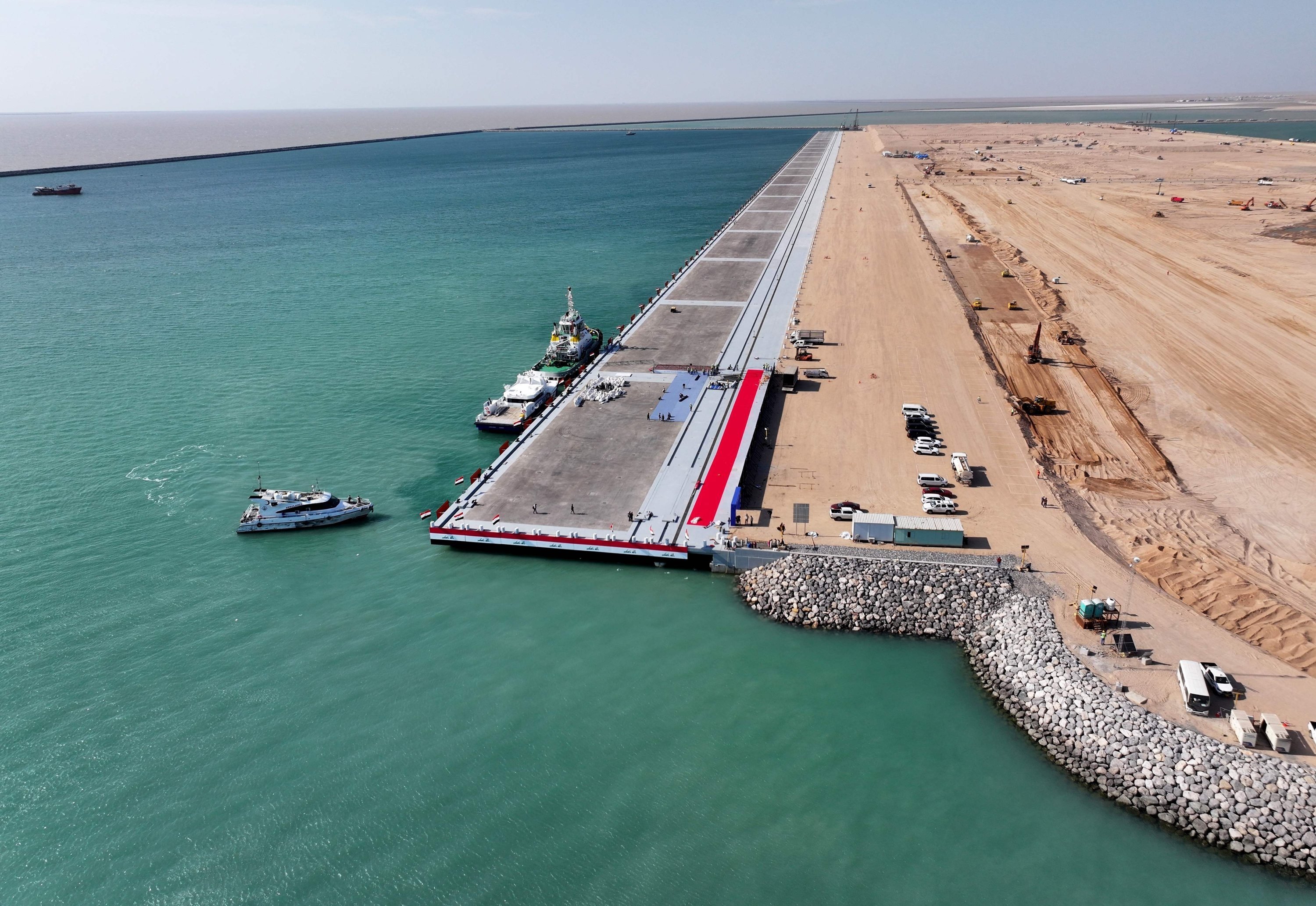
At a time when global trade is being reconfigured, supply chains are becoming increasingly diversified and secure transportation corridors are gaining unprecedented strategic importance, the Development Road Project stands as one of the clearest indicators of Türkiye's emerging role in international commerce. Built upon the country's extensive transportation infrastructure and accumulated institutional expertise, the project goes beyond establishing Türkiye as a strategic link between Asia and Europe by creating new opportunities for production, trade and logistics. Although the Development Road Project may initially appear to be a new transportation corridor extending from Iraq to Europe, it represents a vision that is far broader in scope. This multimodal corridor will transport cargo arriving at the Grand Faw Port from India, South Asia and the Gulf countries through Iraq to Türkiye and onward to Europe, thereby creating a new axis of connectivity in global trade.
The corridor will begin at the Grand Faw Port in southern Iraq and proceed through Basra, Nasiriyah, Najaf, Samarra, Mosul and the Ovaköy Border Gate before entering Türkiye. Within Türkiye, it will extend from Ovaköy through Şanlıurfa, Gaziantep, Adana, Mersin, Karaman, Konya, Afyonkarahisar, Eskişehir, Gebze, Istanbul and Edirne, where it will connect to Europe's railway and highway networks. In doing so, it will establish strong integration with the European transportation system while simultaneously creating a new, seamless corridor linking the Southern Corridor with the Middle Corridor.
The planned integration of electricity transmission lines, oil and natural gas pipelines and telecommunications infrastructure alongside the railway and motorway networks demonstrates that the project is built upon a comprehensive vision of development that extends well beyond transportation to encompass energy and digital connectivity. This integrated design gives the Development Road the character of a truly multimodal corridor. From this perspective, the Development Road is not merely a conventional transportation project but a new-generation model of economic integration.
From Türkiye's perspective, one of the project's most significant contributions will be the deeper integration of the country's existing transportation infrastructure into global trade networks. Through approximately 2,100 kilometers of railway and 1,900 kilometers of motorway corridors within Türkiye, east-west transportation connectivity will be substantially strengthened, while the existing railway network will be enhanced through new lines, electrification, signaling systems, and high-speed rail investments. The inclusion of the section extending from the Iraqi border to Gaziantep in the national investment program demonstrates that the project has progressed beyond the planning stage and entered the implementation phase. Consequently, while expanding its own transportation capacity, Türkiye is poised to become one of the fastest and most reliable logistics bridges connecting Europe with the Arabian Gulf.
The benefits of the Development Road Project extend far beyond the transportation sector itself. Over 10 years, the project is expected to contribute approximately $55 billion to the Turkish economy while generating an average of 70,000 jobs annually. It is also expected to stimulate the development of new manufacturing centers, logistics hubs and industrial investments along the corridor.
Throughout history, trade routes have served not only as channels for the movement of goods but also as engines driving the growth of cities, economies, and civilizations. Likewise, the economic dynamism generated along the Development Road corridor will not only reduce transportation costs but also promote production, create new investment opportunities, and accelerate regional development. Accordingly, the project represents far more than transportation infrastructure; it constitutes a comprehensive transformation program designed to support production, employment, exports, and regional development.
Another distinctive feature of the Development Road Project is its foundation in international cooperation. The high-level engagements between Türkiye and Iraq in recent years, together with the memoranda of understanding signed and the cooperative mechanisms established with the participation of four countries, demonstrate that the project is far more than a transportation route connecting two neighboring states. Rather, it reflects a long-term vision aimed at fostering regional stability, economic integration and shared prosperity. This approach is a natural extension of Türkiye's broader vision of connectivity in the field of transportation. Türkiye is no longer merely a country that builds infrastructure within its own borders; it has emerged as a leading force behind strategic regional initiatives that strengthen connectivity, facilitate trade, and promote shared prosperity across neighboring regions.
The transportation investments undertaken over the past 24 years have not only transformed Türkiye's physical infrastructure but have also significantly strengthened the institutional knowledge, engineering expertise, project management capabilities and international cooperation experience of the public institutions responsible for delivering this transformation. In other words, it has not only been Türkiye that has grown; the public institutions that have driven the country's development have likewise acquired new capabilities and greater institutional depth. The Development Road Project is the natural outcome of this accumulated experience. By bringing together transportation, energy, and digital infrastructure within a single corridor, the project elevates Türkiye's vision of transforming its geostrategic location into economic value to a new international level. Implemented within the framework of the Century of Türkiye vision, the Development Road Project will strengthen the country's position in global trade, deepen regional cooperation, and create new opportunities built upon the robust transportation infrastructure developed over the past 24 years.