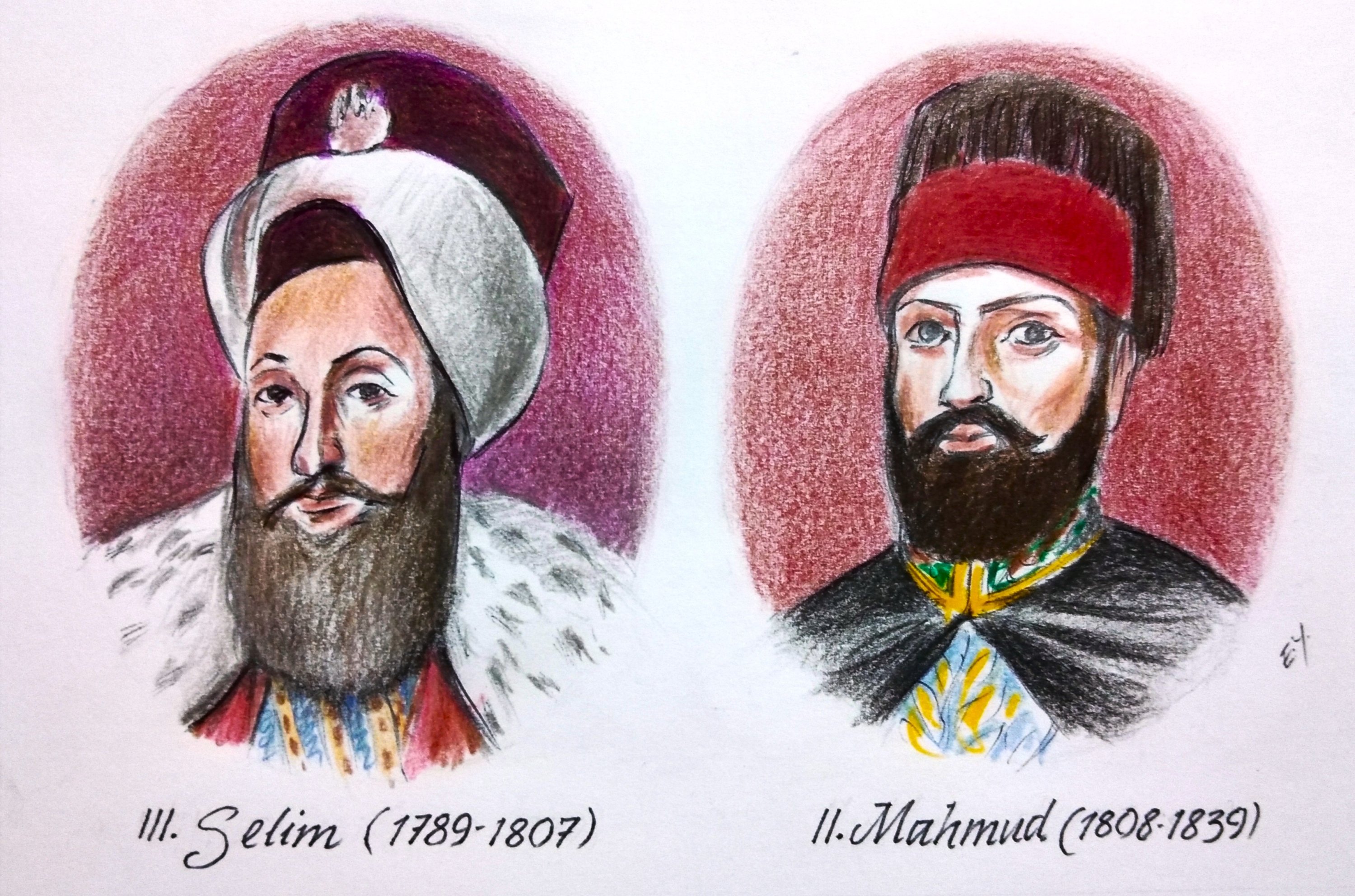
The history of modernization in the Ottoman Empire is generally narrated through the strengthening of the central state, the restructuring of military and administrative institutions and the resistance of traditional centers of power to change. Within this narrative, the attitudes toward modernization of the state seeking to implement reforms and the social and institutional actors seeking to preserve the existing order, particularly the ulema, are often presented as one of the most prominent examples of this opposition. Yet do historical transformations really unfold through struggles between sides that can be so clearly distinguished from one another? Or are the direction and outcomes of change more profoundly determined by struggles among elite groups possessing different economic resources, institutional authority and social connections?
Professor Selim Argun’s book, "Elite Structures and Power Networks: the Ulema, Waqfs and the Ottoman State (1789–1839)," published in Turkish by Ibn Haldun University Press in 2026, reexamines this crucial fifty-year period of Ottoman modernization within a different theoretical framework. Based on his doctoral dissertation completed at McGill University in 2013, the book explores the relationships among the state, the "ulema" (Islamic religious scholars and authorities) and "waqfs" (Islamic charitable foundations or endowments) during the fifty years extending from Ottoman Sultan Selim III’s reform initiatives to the centralization policies of Ottoman Sultan Mahmud II. However, the book’s principal significance lies in its use of a different explanatory model to analyze the power relations underlying the developments of this historical period.
At the heart of Argun’s approach is the theoretical framework developed by sociologist Richard Lachmann concerning elite conflicts and historical contingency. This approach considers it insufficient to explain the transformation of states and social institutions solely through the intentions of rulers, the characteristics of reform programs, or the attitudes of social groups toward change. Instead, it focuses on how struggles among different elite groups over economic resources, institutional authority and political influence shape historical outcomes. When Argun applies Lachmann’s theoretical framework to Ottoman modernization, modernization ceases to be a linear process progressing toward a predetermined objective. Rather, it emerges as a complex transformation shaped by encounters, alliances and conflicts among different centers of power, together with the historical trajectory produced by that transformation.
One of the book’s most striking arguments is that understanding the obstacles to Ottoman modernization requires focusing on horizontal struggles among elites rather than vertical conflicts. Whereas conventional explanations emphasize a vertical confrontation between the reformist state and the ulema resisting reform, Argun argues that horizontal struggles among different elite groups were decisive in determining the success or failure of reform initiatives. This approach also challenges the treatment of the ulema as a single, homogeneous social group. Indeed, the ulema included actors occupying different institutional positions and possessing varying economic resources and political connections. Consequently, explaining their attitudes toward reform exclusively in religious or intellectual terms may obscure the power relations within which these actors operated.
Argun’s thesis therefore opens the door to an important reinterpretation of Ottoman modernization. Resistance to reform cannot be understood in a one-dimensional manner simply as a struggle between change and tradition. It is also necessary to consider the efforts of elite groups affected by changes in the existing distribution of power to preserve or strengthen their positions. From this perspective, modernization is not merely a matter of establishing new institutions or dismantling old ones. Fundamentally, it is a struggle over the redistribution of political authority, economic resources and institutional powers. This interpretation also suggests that support for or resistance to reforms may not always be the direct consequence of a particular ideological position.
The special place occupied by waqfs in Argun’s study is particularly meaningful in this respect. In Ottoman society, waqfs operated across a broad range of public activities, from education and health care to religious services and social assistance. They managed substantial economic resources and facilitated the establishment of enduring relationships among different segments of society. Thus, while waqfs played important roles in meeting social needs, they could also function as institutions enabling particular elite groups to maintain their economic and institutional power. Particularly noteworthy is Argun’s emphasis that the relationship between the state and the ulema cannot be adequately understood without considering the multidimensional nature of waqfs. One of the most surprising aspects of reading the book, therefore, is discovering that the functions performed by waqfs in Ottoman society extended far beyond the charitable activities with which we are familiar and into the realm of power relations. Although waqfs generally operated in areas such as education, health care, religious services and social solidarity, and although these functions were undoubtedly extremely important, Argun’s study demonstrates that they were also significant instruments for protecting wealth, transferring economic power across generations and establishing enduring networks of influence among elites. Particularly noteworthy in this context is the role of waqfs in safeguarding economic power.
In the Ottoman Empire, the wealth of individuals holding high state offices could, under certain circumstances, be exposed to the risk of confiscation. Losing political position could mean losing not only one’s office but also accumulated wealth. Establishing a waqf could therefore, in some cases, become a means of protecting assets against such uncertainties. The distinctive legal status of endowed property created a separation between the founder’s personal assets and those transferred into the waqf. Naturally, this did not provide absolute protection. Interventions by the central authority, the legal character of waqfs and the conditions stipulated in their founding deeds determined the limits of such protection. Nevertheless, waqfs appear to have become an important component of institutional strategies for safeguarding wealth in the Ottoman Empire, particularly during periods of heightened political and economic uncertainty.
A second, equally interesting aspect is that waqfs could be used to limit the fragmentation of wealth through inheritance. Family waqfs, or "zurri waqfs," in particular, could preserve the integrity of certain assets within the endowment while allowing family members to benefit from the income generated by those assets. In this way, the economic returns from wealth could be transferred to subsequent generations without dividing the underlying assets. Although the relationship between such practices and inheritance law has been the subject of legal debate throughout history, the mechanism that emerged is quite remarkable. Economic resources accumulated during an individual’s lifetime could continue to support the family’s social and economic position after that individual’s death.
Perhaps one of the book’s most important contributions, therefore, is its emphasis on the role of waqfs in establishing power networks among elites. The administration of waqfs, trusteeship positions, the distribution of revenues, employment opportunities within these institutions and various other associated responsibilities provided a foundation for enduring relationships among families, members of the ulema, bureaucrats and local notables. Exercising influence over the administration of a waqf did not simply mean controlling economic resources. It also provided opportunities to appoint particular individuals, support them financially, establish relationships of mutual dependence with different families and expand social influence. Thus, economic resources acquired institutional continuity through waqfs; this institutional continuity translated into social relationships, and those relationships, in turn, developed into enduring networks of power. Moreover, all of this occurred through institutions that generated social benefits and possessed religious and moral legitimacy. Waqfs were therefore not merely structures in which wealth was preserved but also institutional spaces through which wealth could be converted into social and political influence.
Although Argun’s book does not establish an explicit causal relationship, the continuity of socioeconomic capital provided by waqfs also appears to have facilitated the intergenerational transmission of positions within the "ilmiye," the Ottoman religious-judicial establishment. Argun cites the Taşköprülüzade family, which produced judges, military judges (kazaskers) and grand viziers over six generations, as an example. This situation also points to an important difference in the relationship between the ulema and political authorities compared with the pre-Ottoman period. The ulema were not outside the governing structure; on the contrary, they were present throughout the bureaucracy and constituted an integral part of it. This difference was not limited to the relationship between the ulema and the state. Similar distinctions also appeared in the diversity of waqfs. For example, although cash waqfs had no precedent before the Ottoman period, they became quite widespread in the Ottoman Empire.
One of the most striking consequences of Ottoman modernization, therefore, was the transformation of the institutional mechanisms that had enabled traditional elites to reproduce their social and economic status. For centuries, waqfs had served, particularly for certain segments of the ilmiye class, not only as institutions financing religious and charitable services but also as structures enabling the preservation of wealth, influence and social status across generations. However, with the centralization of waqfs in the nineteenth century, the foundations of this order were significantly weakened. The economic resources and administrative powers exercised by traditional elites through waqfs increasingly passed under the control of the central state. Yet this transformation did not mean that the privileged positions of elites disappeared entirely. On the contrary, within the newly established salaried bureaucratic structure, access to the state’s decision-making and resource-distribution mechanisms became one of the principal means of preserving and reproducing social status. Modernization thus transformed traditional privileges on the one hand while laying the foundations for a bureaucratic order in which new privileges were produced on the other.
In conclusion, Argun’s book is an important study because it examines a critical period of Ottoman modernization from a different perspective. Its principal contribution lies in making visible the struggles among elite groups and the effects of these struggles on institutional transformation, rather than interpreting modernization during this period solely through the opposition between a reformist state and traditional institutions. Argun’s challenge to the treatment of the ulema as a homogeneous group and his emphasis on the critical functions of waqfs in generating socioeconomic capital beyond their visible roles as charitable institutions are among the most prominent features of the approach he develops in depth throughout the book. Since waqfs could perform important functions beyond their founding purposes, including protecting wealth, transferring economic power across generations and reproducing networks of influence among elites, bringing them under central control represented more than a fiscal and administrative reform: It amounted to a restructuring of power relations within society. For this reason, Argun’s work offers valuable insights not only into elite struggles during a particular period of Ottoman modernization but also into the broader question of how modernization transformed power relations between the state and society.