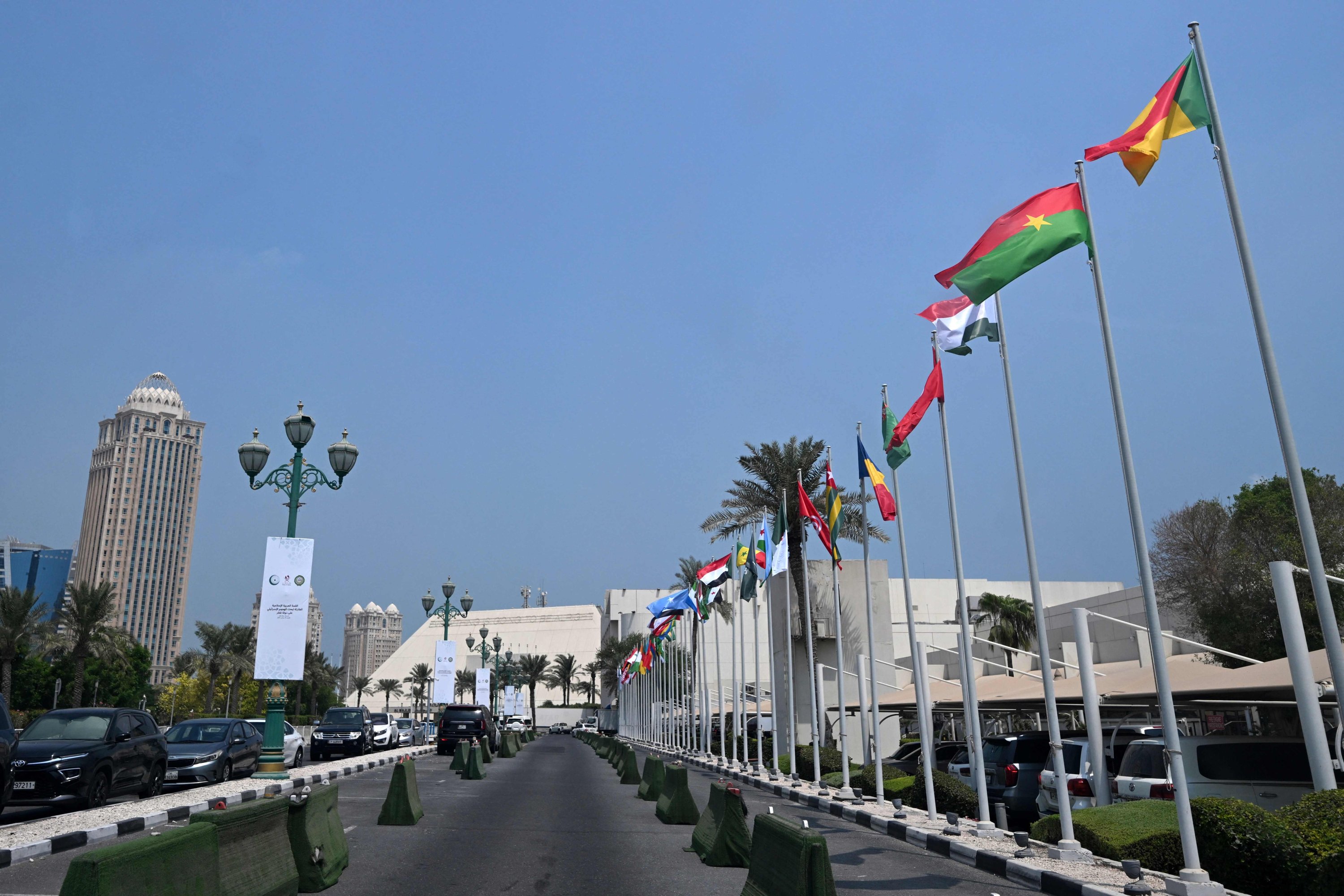
Israeli forces attacked a Hamas target in Doha on Sept. 10, 2025, making Qatar the seventh country that Israel has unilaterally attacked, blatantly violating its sovereignty and breaching the basic principles of the international order. This strike was the last wave of the Israeli aggression over the previous two years. Israel has been insistently and illegally attacking the occupied Palestinian territories, Lebanon, Syria and Yemen since Oct. 7, 2023. It has attacked Iran, with the support of the U.S. and some other Western countries, for 12 days in the summer of 2025. Israel attacked the humanitarian ships in Tunisian ports with drones on Sept. 9. Lastly, it attacked a building in Doha on the very same day.
Most states consider and accept that the Israeli government is above international law. Especially for Western countries, including the U.S., Israeli policies and, therefore, its attacks are not questioned. After several official condemnations, no game-changing steps were taken by Western countries. However, the same cannot be said for the regional countries, which are directly or indirectly influenced by this attack. It seems that, for many reasons, Israel’s attack against Qatar will become a turning point in the Middle East.
First of all, Qatar is not a typical Middle Eastern state that Israel can target. Qatar does not pose any threat to Israel, and Israel has historically not perceived any threat from Doha. Furthermore, Qatar is one of the closest allies of the U.S. in the region. The largest U.S. military base, al-Udeid, is based in Doha. Qatar largely relies on this military base for its national security and defense. In addition, not only the U.S., but also most Western countries have been attaching great importance to Qatar's effectiveness in mediation efforts with regional actors such as the Taliban and Hamas. That is, Western countries welcome the Qatari mediation efforts.
The Doha attack has also shown that it is meaningless to initiate any resolution or even cease-fire processes with the U.S. and Israel. Israel attacked a group of people who were summoned to discuss the terms of a possible cease-fire between Israel and Hamas. It is clear that the Israeli government does not want a cease-fire in Gaza and wants to keep the war going. More importantly, the U.S. credibility was severely damaged, since it was the U.S. that asked Qatar to convene the Hamas officials and discuss the conditions of a possible cease-fire. From now on, all countries that negotiate with the U.S. will think twice.
Furthermore, the attack was a blatant message to the other Gulf states. Now they all know that they must be alarmed by the Doha attack. They must also be aware of the fact that they will also be targeted soon, since Israel does not want stability in the region. Israel is determined to create regional chaos, which will influence all regional states. According to the calculations made by Israel and the West, the more the region becomes unstable, the more the regional states will become dependent on the Western states, and the easier it will be for Israel to behave. However, this expectation may not come true due to an unexpected reaction that may be given to the Doha attack.
The attack has shown that the American allies are not immune to Israeli attacks and all of them can be targeted, even with the support of the U.S. The military base responsible for the security of the Qatari state was used by Western governments during the Israeli attack. According to the international news outlets, American and British planes helped the Israeli aircraft. This may influence the foreign policy orientation of the Gulf states. At least, they will try to diversify their foreign policy, especially their defense supply.
Lastly, the Doha attack will change the perception of other Gulf states and other regional countries, who feel obliged to react to the attack. It is clear for now that any country can be the next target of Israeli aggression and expansionism. Sooner or later, all Arab states that fall within the peripheries of the so-called “promised land” can be hit by Israel. If they fail to cooperate and develop a common answer, they will also be targeted. Therefore, they have to come together against the Israeli aggression and expansionism. Even if the most pro-Israeli Arab states continue to provide their high-level support to Israel, they will be targeted when the time comes.
The Arab states destroyed their deterrent defense line when they sold the Palestinian cause at the negotiation tables during the Abraham Accords process. Especially when the Gulf states and some other Arab countries that normalized their relations with Israel declared the Muslim Brotherhood, the largest non-violent Arab social and political movement, and Hamas, the main resistance actor of the Palestinian resistance, as terrorist organizations, they have indirectly destroyed their own regional defense line and the buffer zone between the stable Gulf and the unstable or failed states of the region. In other words, the Arab regimes forgot that their defense front starts in Palestine. When they lost Palestine, they began to lose their territorial integrity and political independence. In other words, when Arab states sold Palestine at the negotiation table, they sold out their national security.
Similarly, if Arab states remain indifferent to the persistent Israeli attacks against Lebanon and Syria, they will indirectly pave the way for Israel to punish them as well. Many Israeli officials have repeatedly declared that they will prevent any regional power from rebuilding the state structure in either of the two states.
As a result, if Qatar does not react to the Doha attack, it may lose its influence and effectiveness in regional politics, just like Kuwait, which lost its influence after being invaded by the ousted Iraqi leader Saddam Hussein’s Iraq in 1990. Therefore, a concrete step must be taken; otherwise, no regional or global state will take Qatar into consideration anymore.
Considering that Israel does not want any regional state to become powerful and remain stable, all regional states must be alert against the Israeli threat. It is not a secret anymore that Israel has a long-term expansionist political and military strategy. Sooner or later, all regional states will be influenced by this strategy. Therefore, they have to act together and deter Israel, especially its supporters.