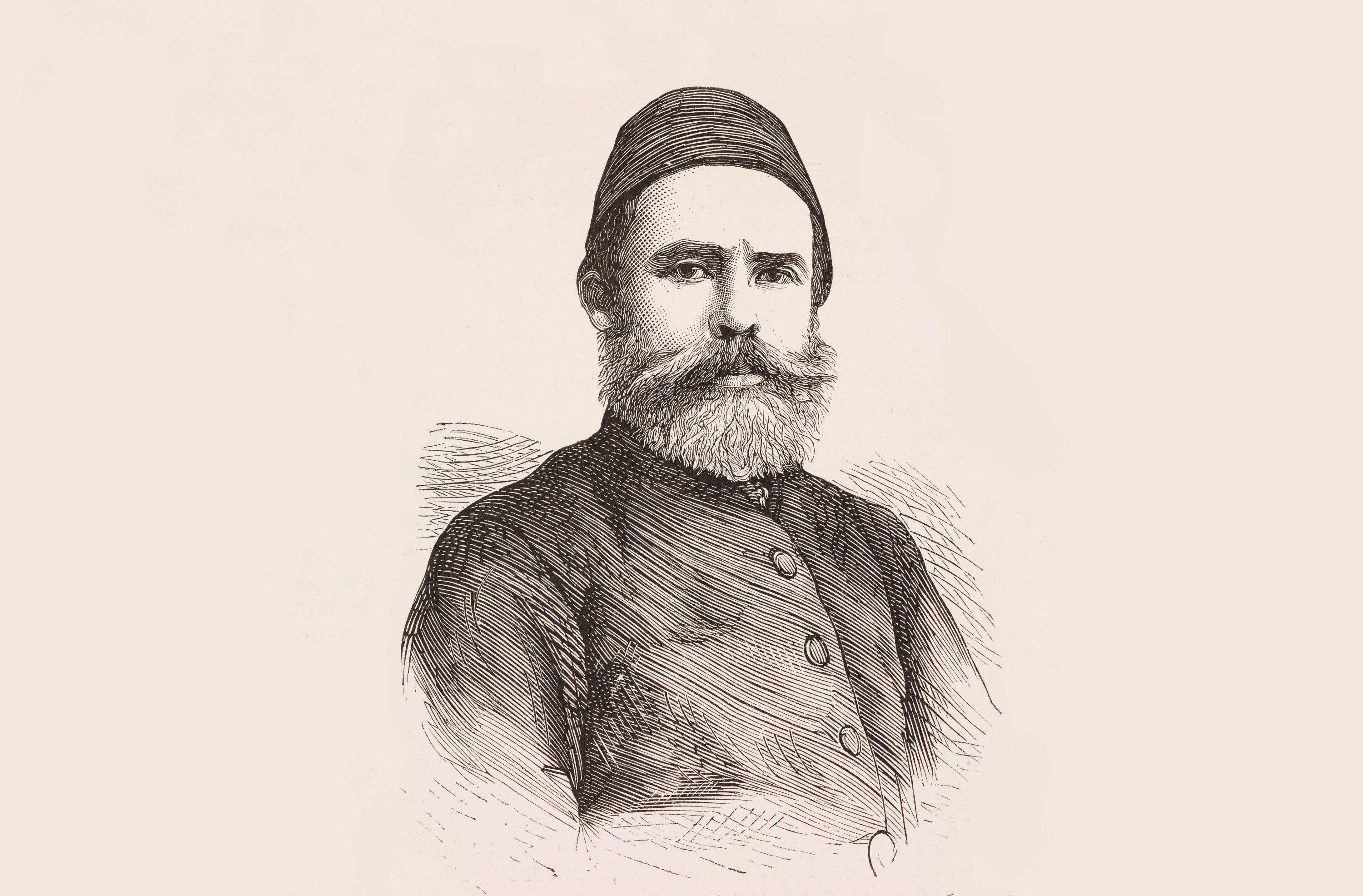
Ahmet Cevdet Pasha was not only a highly important statesman of the late Ottoman Empire, but also one of its most prolific intellectuals. His intellectual productivity was sustained by a dynamic interplay between two domains: on the one hand, his grounding in the ilmiye (scholarly-judicial class) and the works he produced in connection with his education; and on the other, his transition into the bureaucracy, where he continued to produce works related to the positions he held. This dual engagement ensured that these two spheres continuously nourished one another. Moreover, in his role as the empire’s official chronicler, he maintained this high level of productivity while recording historical events. By witnessing firsthand the contexts in which events unfolded, he acquired significant experiential insight. In this regard, "Maruzat," which he composed at the request of Abdulhamid II, stands as a major work covering the period between 1839 and 1876. The book provides a detailed account of key events and their underlying contexts, making it an essential source for understanding the political developments of the era, the balance of power, the hardships faced by the population, and the overall condition of the Ottoman state.
When the book is read, the first striking observation is that the administrative units within the Ottoman state spoke very little to one another, and that the state’s ability to act in a synchronized manner as an integrated whole had significantly weakened. This becomes particularly evident in the observations made by Ahmet Cevdet Pasha during his assignments to regions such as Bosnia, Herzegovina, Kozan, Iskenderun and Aleppo, where he was sent to resolve pressing issues. Throughout the book, we witness how Ahmet Cevdet Pasha, together with his accompanying team, was able to address problems swiftly and with minimal cost. One of his earliest observations in these regions was the severe weakening of the link between provincial administrations and the central government. At times, the central authority remained unaware of misapplications in the provinces; at other times, the demands or warnings of provincial administrations were not taken seriously by the center. As a result, issues that could have been resolved with minor interventions and low cost became increasingly difficult to address, while their eventual resolution grew more expensive.
In fact, the breakdown in the synchronization between the provinces and the center is closely related to the loss of seriousness in the Ottoman Empire’s ability to govern its own internal system. For this reason, as Ahmet Cevdet Pasha repeatedly emphasizes in his other works, this constitutes the fundamental source of the problems. As a solution, he proposes a return to the "kanun-ı kadim" (the ancient/established order) and the reform of the system within that framework. His recurring emphasis throughout the book consistently points to this deviation. For instance, he notes: “Due to the disintegration in the state’s order and laws ... it has been proven by experience that even a slight abandonment of established procedures and order leads to such undesirable consequences. ... After them, established procedures and rules were no longer sought, and respect for the rights of sovereignty disappeared. Everyone pursued their own personal interests.”
The loss of coherence in governance also leads to an erosion of competence within the bureaucracy: “Although there had once been established procedures determining who could become a qadi, these rules and regulations were later disrupted; now, despite the fact that many retired individuals go from door to door seeking appointment as judges.” Ahmet Cevdet Pasha expresses this deviation in governance even more strikingly when he addresses Fuad Pasha directly: “Köprülü Mehmed Pasha was an experienced elder who understood the realities of the state and had become fully integrated with it. Renouncing all personal desires, he devoted all his thought to reviving a state that had fallen into prostration – and he succeeded. If such a self-sacrificing vizier existed today, he could revive the state once again. You are more knowledgeable than he was, yet you occupy yourself with personal matters such as arranging gardens and favoring individuals. That is why you cannot achieve the great successes of figures like Sokullu Mehmed Pasha and Köprülü.”
In such an environment, the process of disintegration gradually deepens, and administrators become less focused on solving the state’s problems and more preoccupied with expanding their own networks of influence by placing their affiliates in positions of power: “He too took care to favor and protect those who were loyal to him. For this reason, in the appointment and dismissal of officials, their competence was no longer taken into consideration.”
The second major challenge faced by the Ottoman Empire was the rise of a new power with fundamentally different dynamics beyond its borders: continental Europe. While struggling with its internal problems, the empire increasingly encountered this emerging force, yet found itself steadily losing ground. In a period when internal and external challenges had become deeply intertwined, the Ottomans were searching for a way out. Throughout the book, we observe how this new power intervened in the empire’s provincial affairs, exacerbating its internal problems. For instance: “However, since foreigners who do not wish to see these regions brought into order would resort to various schemes as soon as they became aware of such initiatives in order to obstruct them, it is deemed necessary to keep the matter confidential.” In short, the rising power in Europe was highly active across the entirety of the Ottoman geography, striving to further destabilize an already fragile imperial balance.
In this context, the privileges granted to foreigners within the Ottoman Empire were continuously expanded. This situation eventually reached a point where social unrest intensified to a critical level: “In short, in this respect as well, foreigners have acquired yet another privilege. One of the most difficult issues for the Ottoman State is precisely this matter of privileges. Although, in many respects, the subjects of even the smallest states are superior to foreigners, within the Ottoman State, it is the foreigners who are privileged. As a result, since the Ottoman subjects are deprived of such advantages, they tend to seek foreign nationality. Particularly in judicial matters, the privileges enjoyed by foreigners constitute an intolerable situation.”
Moreover, ambassadors in Istanbul interfered in virtually every aspect of governance, making extraordinary efforts to prevent the administration from returning to the kanun-ı kadim. Throughout the book, we witness how those in positions of authority increasingly became aligned with, and influenced by, different foreign powers. For instance: “Thereafter, the British and French ambassadors in Istanbul entered into a contest for influence. Mustafa Reşid Pasha continued, as before, to follow British policy; Mehmed Emin Ali Pasha and Mehmed Fuad Pasha aligned themselves with French policy. As for Rıza Pasha, he had virtually become a servant of the French Embassy.”
In such an environment of intense power struggles, it is inevitable that bureaucratic appointments and dismissals – driven by various motives – became unusually frequent. As the atmosphere grew increasingly chaotic, the execution of pending affairs was further delayed: “He would appoint a man as governor to a province, only to dismiss him while he was still on the road, or transfer him to an unrelated province. Dismissed and newly appointed governors and district governors wandered along the roads, sometimes even encountering one another. Uncertain of where to go or under which laws and regulations to act, they were all left in a state of confusion.”
These frequent changes in bureaucratic appointments were not limited to the provinces; they also applied to the highest levels of administration in Istanbul, particularly the grand vizierate: “Midhat Pasha could not remain long in the office of grand vizier and was dismissed in October 1872, after which Mütercim Mehmed Rüşdü Pasha became grand vizier. Rüşdü Pasha sought to preserve the dignity of the office, whereas Mahmud Nedim Pasha had left no prestige or decorum in the Sublime Porte and had undermined the honor and dignity of viziers and officials. For this reason, Rüşdü Pasha’s old-fashioned, cautious, and dignified manner proved difficult for the palace circle to tolerate. A softer-natured grand vizier was sought, and on 15 February 1873, Rüşdü Pasha was dismissed and replaced by Sakızlı Esad Pasha. ... On April 16, 1873, Esad Pasha was dismissed and replaced by Şirvanizade Mehmed Rüşdü Pasha.” What is particularly striking in these changes is that governance revolved around a rather narrow circle. The same individuals were repeatedly dismissed, reassigned to other positions, and then, after a time, returned to the very offices they had previously held. Along with these shifts, bureaucratic teams followed a similar orbit, constantly relocating and reshuffling within the system.
Ahmet Cevdet Pasha also points to a dangerous rupture in political conduct within these changes. Up until the period of Mahmud Nedim Pasha, the problems that emerged were generally attributed to figures other than the Sultan; thus, when those individuals were replaced, public reaction would subside. However, with Mahmud Pasha, this longstanding protective buffer around the Sultan was broken, and problems began to be directly associated with the ruler himself: “Thereafter, through a reverse practice, Mahmud Pasha attributed everything that occurred – whether good or bad – to the sovereignty, and even presented the wrongful acts he carried out for his own personal interests as if they had been executed under the Sultan’s direct orders.”
In this way, the sultan’s reputation in the eyes of the public was deliberately undermined. Moreover, the sultan’s ability to perceive this situation was also obstructed, as he was surrounded by individuals aligned with those implementing this new political approach: “My close friends watched these developments with sorrow, yet were powerless to act. Among those around the Sultan, some had become aligned with Mahmud Pasha and others with Hüseyin Avni Pasha. Meanwhile, Mahmud Pasha and Avni Pasha competed with one another in distributing bribes. One acted solely to achieve his personal aims, the other to satisfy his own ambitions; and the actions of both served to make the Sultan a subject of public reproach.”
In conclusion, Maruzat offers a kind of anatomy of the administrative crisis of the late Ottoman Empire. The problems highlighted by Ahmet Cevdet Pasha are not merely isolated errors but rather stem from the system’s loss of internal coherence. The weakening of the link between the center and the provinces, the erosion of the principle of merit, and a bureaucratic structure increasingly open to external interference gradually limited the state’s capacity for self-correction. On the other hand, the fact that Maruzat, written at the instruction of Abdulhamid II, addresses each problem so openly, together with its context and underlying causes, is not only a reflection of Ahmet Cevdet Pasha’s integrity as a statesman but also indicative of Abdulhamid II’s determination to understand the challenges facing the state and to seek solutions. Earlier works such as the treatises of Koçi Bey were composed with a similar purpose in mind: to ensure that, despite the prevailing disorder, the problems confronting the state would be clearly perceived by the Sultan, and that solutions could be developed accordingly to strengthen the empire’s capacity for renewal. Despite all the adverse conditions of its final period, the Ottoman world continued to produce figures such as Koçi Bey, Kâtip Çelebi, and Ahmet Cevdet Pasha – individuals who sought to diagnose the system’s ailments and preserve its ability to endure.