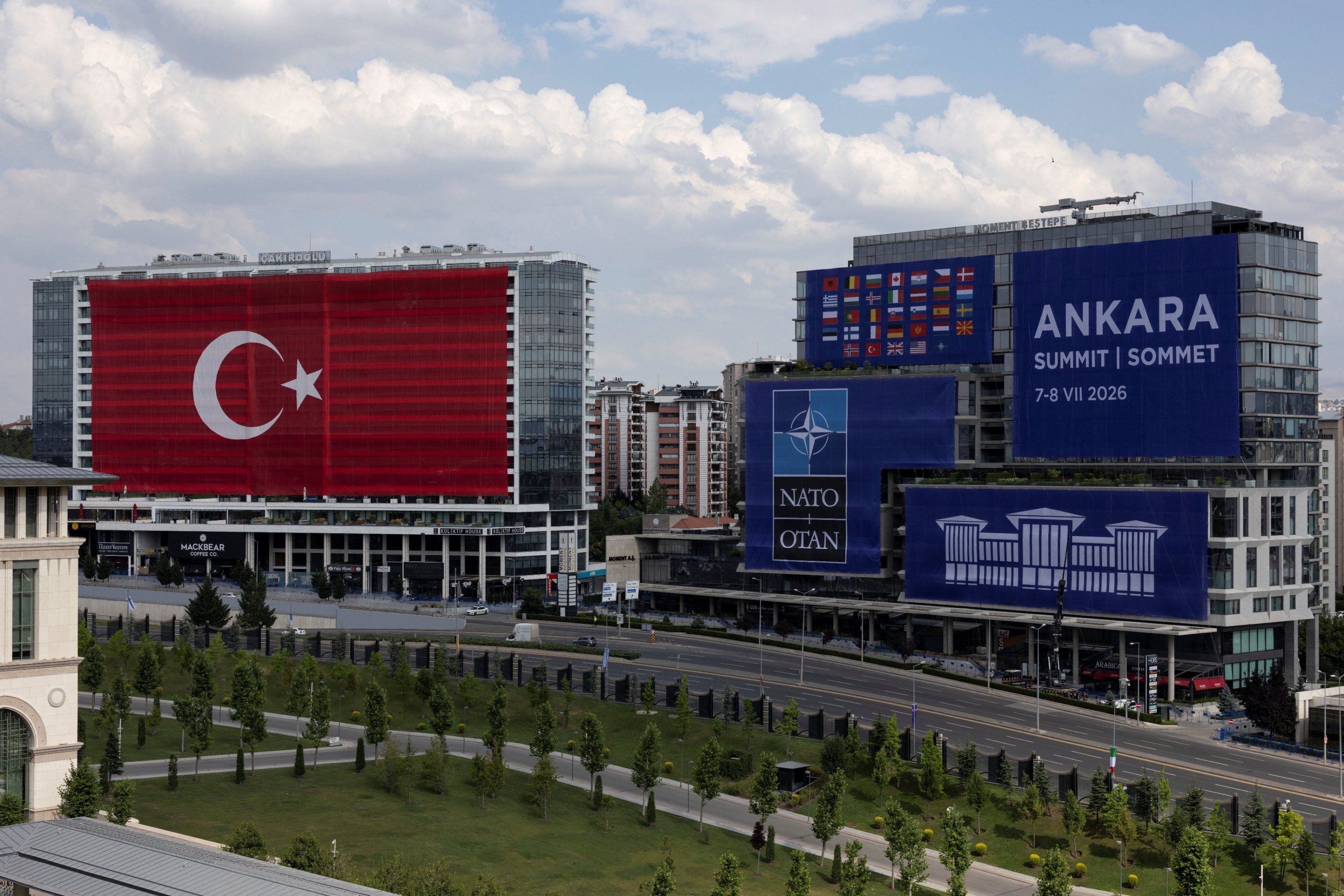
Last week, Ankara hosted one of the most critical summits in NATO's history. This gathering exceeded the scope of a routine annual alliance meeting, taking place at a time when the global security architecture is undergoing structural transformation.
With agenda items spanning the Russia-Ukraine war, the Iran-Israel-U.S. conflict, crises in the Middle East, energy security, defense industry cooperation, and NATO's new strategic vision, the summit moved Türkiye to the center of international diplomacy. The gathering of the world's most powerful leaders in Ankara highlighted Türkiye's importance beyond its strategic geography, confirming its status as a significant political and strategic actor.
Throughout the summit, Türkiye's diplomatic weight became increasingly visible to the international public. President Recep Tayyip Erdoğan held a series of intensive bilateral meetings on the summit's sidelines, verifying Türkiye's constructive role in resolving international crises and underscoring its renewed visibility as a diplomatic actor on the world stage.
The demand for Türkiye's views on numerous conflicts – from the Ukraine-Russia war and the Gaza issue to Syria, Black Sea security, and Europe's energy supply – underlined the level of diplomatic influence it has achieved.
The summit made it clear that Türkiye's multidimensional foreign policy approach in recent years has transformed the country into an indispensable actor not only within NATO but also across the wider landscape of global diplomacy.
One of the summit's most striking diplomatic developments was the meeting between Erdoğan and U.S. President Donald Trump. The positive signals exchanged between the two leaders regarding the opening of a new chapter in bilateral relations have fueled hopes that long-standing disagreements may finally be addressed.
Notably, indications of easing restrictions in the defense industry, the renewal of evaluations of the F-35 program, encouraging signs of U.S. engine support for Türkiye's domestically developed fifth-generation fighter jet Kaan and statements aimed at reinforcing the strategic partnership all pointed to the beginning of a more constructive period between the two nations.
Decisions adopted at the summit to increase defense expenditures and strengthen NATO's collective production capacity have generated significant economic and technological opportunities for Türkiye. Having attracted considerable international attention in recent years with its indigenous and national defense industry infrastructure, Türkiye now wants to develop more comprehensive joint projects with its NATO allies across a range of domains, including aviation, drones, ammunition production, electronic warfare systems, missile technologies, and air defense.
In this manner, the defense industry has emerged as one of Türkiye's strategic advantages not only in the security realm but also in terms of exports and high-technology production.
NATO's new security concept positions Türkiye as a pivotal country across a vast geography stretching from the Black Sea to the Mediterranean and from the Caucasus to the Middle East. The roles Türkiye has assumed in securing energy corridors, managing irregular migration, combating terrorism, facilitating grain corridor diplomacy, and resolving regional crises constitute an indispensable strategic asset for the alliance.
The Ankara summit has once again demonstrated to the international community that Türkiye is no longer merely an ally guarding NATO's southern flank, but rather a central actor shaping the alliance's future with steadily growing influence in decision-making processes. Türkiye's central role in NATO's future has been more firmly verified.
The New York Times noted that Türkiye is regarded as critically important to the alliance's future due to its growing defense industry and its military – the second largest in NATO after that of the U.S. The newspaper also reported that Trump explicitly stated his decision to attend the summit was motivated by Erdoğan's role as host.
European media outlets emphasized Türkiye's expanding influence, its increasing strategic value, and its achievements in defense and diplomacy, while Trump's lavish praise for Erdoğan also resonated widely.
Among the most striking publications underscoring Türkiye's pivotal position at the summit was the American magazine Politico. At the conclusion of the NATO summit, the magazine identified Erdoğan as a "clear winner," characterizing him as an effective negotiator and a leader in indigenous defense industry development.
The summit's organizational achievements likewise received significant credit in the international press. We conclude our article with what is perhaps the most poetic reflection among them – one penned by Bulgarian writer Sophia Proneikos, who sensed the secret behind this successful gathering:
"The most captivating scene of the NATO summit in Ankara unfolded not around the negotiating table, but before the first handshake ever took place. The leaders of the twenty-first century's most powerful military alliance were received at the Presidential Complex to the sounds of the Mehter – the world's oldest military band – while before them stood soldiers clad in historical costumes representing various centuries of the Ottoman Empire. What an extraordinary sense of historical continuity: a military alliance founded in 1949 as a symbol of the post-war world, entering a presidential palace to the music of a martial tradition whose roots stretch back to the thirteenth century."