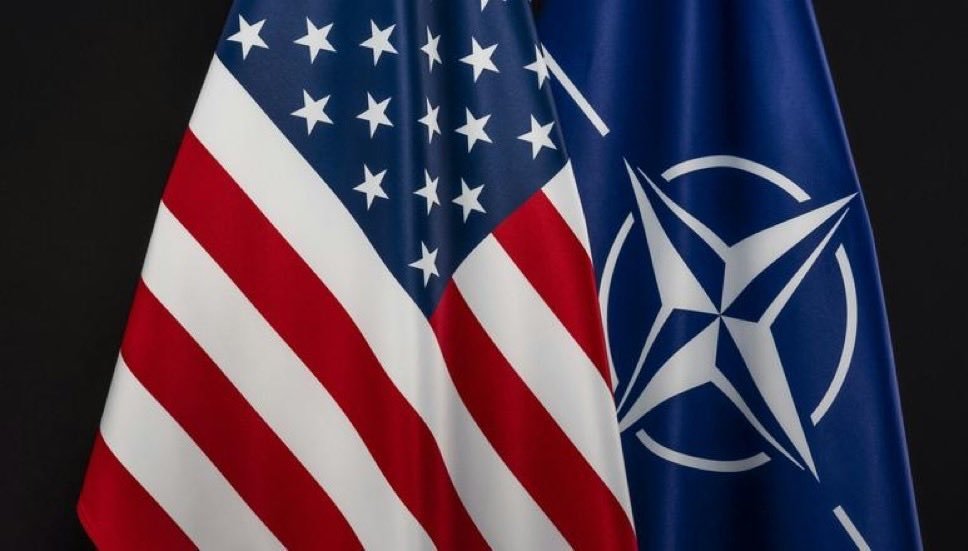
The debate over NATO’s future is neither new nor unprecedented in its intensity. Since the end of the Cold War, the alliance has repeatedly confronted moments of uncertainty regarding its purpose, its internal balance and its relevance in an evolving international system. Yet, what is unfolding today cannot be understood as another cyclical debate or a temporary divergence among allies. It represents a structural rupture that goes beyond policy disagreements and reaches into the political and strategic foundations of the alliance itself.
Previous crises, including disputes over burden-sharing, the transatlantic split during the Iraq War and tensions over defense spending during U.S. President Donald Trump’s earlier presidency, all took place within a shared strategic framework. Allies disagreed, sometimes sharply, yet they continued to operate under a common understanding that NATO was a collective defense alliance grounded in Article 5, geographically bounded and politically defined by mutual obligations among sovereign equals. What distinguishes the current moment is that this shared understanding is no longer taken for granted. It is being openly contested, reinterpreted and in some cases, fundamentally challenged.
The simultaneity of two major conflicts, Russia’s ongoing war in Ukraine and the U.S.-Israel military campaign against Iran, has exposed contradictions that had long been managed through ambiguity. These contradictions are no longer confined to diplomatic language or internal discussions. They now shape the operational and political behavior of the alliance. At the core of this transformation lies a set of interconnected questions concerning the definition of threat, the scope of alliance obligations and whether the United States continues to view NATO as a collective defense arrangement among equals or increasingly as an instrument aligned with its broader global strategy.
The Trump administration’s rhetoric has accelerated this transformation by moving beyond traditional alliance management toward a language that questions the very value of NATO. European allies have been portrayed as strategically dependent actors, while expectations have been raised that they should support military operations undertaken without prior consultation within NATO structures. This shift has transformed what had previously been a latent structural tension into an overt political crisis. The issue facing NATO today is therefore not simply one of adaptation, but of whether the alliance retains sufficient political cohesion to redefine itself before its internal contradictions deepen further.
The first dimension of this crisis emerges in the context of the war in Ukraine, where initial unity masked underlying divergences in strategic perception. For NATO’s eastern flank, the war represents an existential challenge that directly affects its security environment and the credibility of collective defense. For these countries, deterrence against Russia is not an abstract principle but a concrete necessity that requires sustained commitment and clarity of purpose. However, the evolving position within the U.S. reflects a different interpretation, one that increasingly treats the conflict as a problem to be managed rather than a defining strategic confrontation. This divergence signals a fragmentation in the shared threat perception that has historically underpinned NATO’s cohesion.
If the Ukraine war reveals a fracture in strategic interpretation, the Iran war exposes a more fundamental tension regarding the nature of alliance obligations. The U.S. initiated military operations without prior consultation with its NATO allies, yet expected logistical and operational support in return. Several European states declined to provide such support, including restrictions on airspace access and the use of military bases. These decisions have been framed by some in Washington as a lack of solidarity, yet such a framing overlooks the legal and political foundations of the alliance.
NATO was not established as a mechanism to support unilateral military campaigns conducted outside its treaty-defined scope. It is a collective defense organization activated under specific conditions, particularly in response to an armed attack on a member state. The Iran war does not fall within these parameters and the refusal of certain allies to participate reflects not disloyalty but adherence to the alliance’s foundational logic. What makes this moment particularly critical is the emerging discourse that seeks to reinterpret NATO as a structure that should align with the global military operations of the U.S. If such a reinterpretation becomes normalized, it would transform the alliance into a hierarchical and conditional framework, thereby undermining the principle of equality that has sustained it.
Alongside this political divergence, NATO faces a structural imbalance in military capability that further complicates its internal cohesion. The issue is not simply a lack of resources but the uneven distribution of capacity across the alliance, driven by differing threat perceptions and domestic political conditions. Countries on the eastern flank and in the Nordic-Baltic region have moved rapidly toward higher levels of defense readiness, reflecting their direct exposure to Russian power. Poland’s substantial increase in defense spending exemplifies this trend, as do broader efforts by states that perceive an immediate security risk.
In contrast, Western and Southern European countries operate within more constrained political and economic environments, where rapid increases in defense spending remain contested. This divergence produces not only differences in capability but also in strategic culture and political will. As a result, NATO increasingly exhibits characteristics of sub-regionalization, where clusters of states develop varying levels of readiness and coordination that do not always align with the alliance as a whole. Financial investments alone cannot resolve this imbalance, as it reflects deeper differences in how threats are perceived and prioritized.
These dynamics point toward several possible trajectories for NATO’s future, none of which can be ignored. One trajectory involves the gradual strengthening of European strategic autonomy as a parallel framework that gains relevance as confidence in American leadership becomes more uncertain. In this scenario, European states deepen cooperation through institutional and sub-regional mechanisms, creating a layered security architecture in which NATO remains present but no longer central.
A second trajectory suggests the emergence of a more transactional alliance, where the traditionally unconditional nature of collective defense commitments becomes subject to political and strategic conditions. Such a transformation would have significant implications for deterrence, as it introduces ambiguity into what has historically been NATO’s most reliable function. The credibility of Article 5 depends on its perceived automaticity and any erosion of this perception would weaken the alliance’s deterrent effect.
A third trajectory involves the increasing reliance on ad hoc coalitions for military operations, effectively bypassing NATO’s collective mechanisms. In such a configuration, the alliance continues to exist formally but its operational role diminishes as coalitions of the willing take precedence. This would reduce NATO’s effectiveness and signal to potential adversaries that collective action is no longer guaranteed.
Against this backdrop, the NATO Summit to be held in Ankara in July 2026 represents a critical moment for the future of the alliance. The summit must move beyond incremental adjustments and address the deeper structural questions that have now come to the forefront. This requires a clear reaffirmation of NATO’s purpose as a collective defense organization, bounded by its treaty obligations and not subject to unilateral reinterpretation. At the same time, it requires recognition that a stronger European pillar within the alliance is not a challenge to transatlantic relations but a necessary condition for their sustainability in an increasingly complex global environment.
Ultimately, the issue confronting NATO is not simply whether it can adapt but whether it can preserve the strategic coherence that has defined its role for decades. The pressures generated by the wars in Ukraine and Iran have reduced the space for ambiguity, making it increasingly difficult to maintain cohesion without a more explicit political understanding among its members. The decisions taken in Ankara will therefore shape not only the future of the alliance but also the broader architecture of Euro-Atlantic security.
The question is no longer whether NATO requires transformation but whether it possesses the political will to undertake it before the erosion of trust and shared purpose reaches a point from which recovery becomes increasingly difficult.