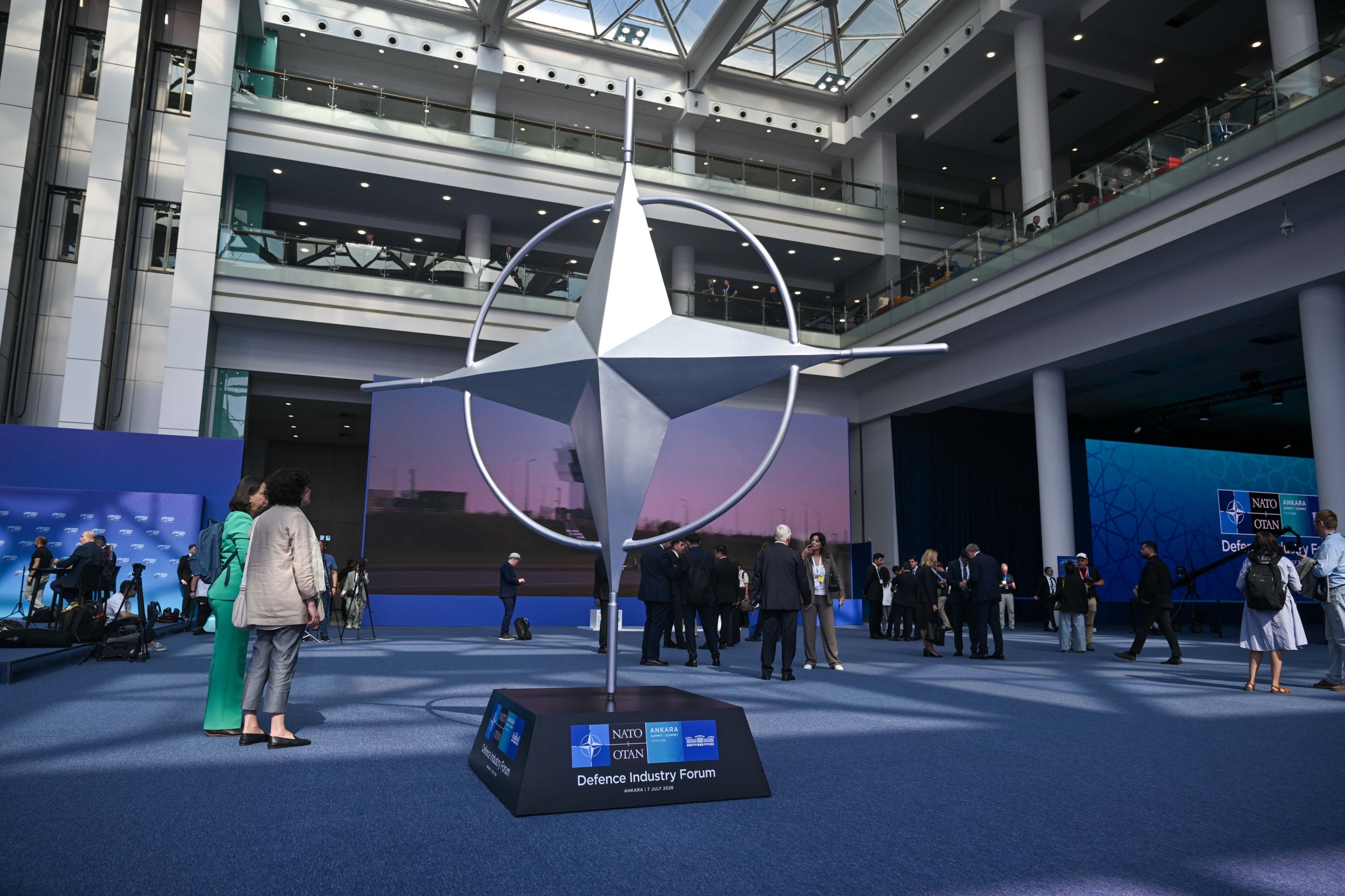
As NATO leaders gather in the Turkish capital for the two-day summit, a critical question remains to be answered: Will they be able to agree on a more unified approach on the future of the alliance, including from defense spending and security strategy to how to move from planning and pledges to action?
Indeed, the alliance has faced numerous challenges in recent years. From the Ukraine-Russia war to the discrepancy between the United States and Europe on defense spending, to a lack of political unity on key security issues such as China and cyber threats.
At a time when the world has become increasingly unpredictable, security challenges have also become more complex. As such, the summit will seek to address these issues and facilitate a sustainable path forward for NATO 3.0.
At the core, the alliance must take the opportunity not only to reaffirm its commitment to the collective defense principle and make mere symbolic pledges, but to take concrete actions.
Two main objectives must be prioritized. One, to tackle and address the issue of defense spending and how to deal with the U.S. position on European security architecture. Two, to organize and be prepared for new threats such as hybrid warfare and cybersecurity-related issues that surpass simple geographical borders.
Along the same line, another urgent objective must be to recognize the need for cooperation on logistically effective joint defense-industrial production that would improve interoperability. It is clear that having a large number of tanks or troops is no longer sufficient. Rather, it is essential to have well-coordinated and technologically up-to-date military equipment to face new forms of complex threats, be it in the immediate neighborhood of NATO borders or beyond, as in Asia-Pacific.
Above all, however, the success of the summit will be measured by the extent to which NATO leaders can forge political unity on a joint roadmap and strategy that would translate into tangible actions on the ground.
Here it is also important to mention that this summit is hosted by Türkiye, which has made significant contributions to the alliance since joining in 1952. Türkiye’s decadeslong contribution, however, has not only been overshadowed by political biases and ideological tensions against Ankara, but they had also limited the country’s defense industry from reaching its full potential.
In the last decade, however, a new reality about Türkiye’s strategic importance for the alliance, especially given its booming defense industry, has emerged. In addition to a large number of troops and military experience in conflict zones, Türkiye’s defense industry products have also been game-changers in terms of cost-efficiency and technological innovation. Critically, this new reality about Türkiye is now receiving the well-deserved recognition, and those who can move beyond ideological disagreements can now appreciate the strategic value of Türkiye to the alliance, and especially for the European continent and its security needs. As such, while Türkiye already sells its products worldwide, including some NATO members, visionary EU leaders can also foresee how Türkiye could be one of the main pillars of the European security architecture. Thus, that is why, as part of the summit agenda, a defense industry forum is also being held, with state-of-the-art products being displayed for decision-makers.
Lastly, credit must be given where it is due. The location of the summit itself must be highlighted, as Türkiye has done it all to prepare for the event as the host country. From security measures to logistical arrangements, every detail has been meticulously planned and executed flawlessly. More than 70,000 security personnel are on duty to ensure the safety of the delegates and the public. Some 3,000 journalists have been accredited to cover the event, and the arrangements for the media are very well organized at the National Library at the Presidential Complex.