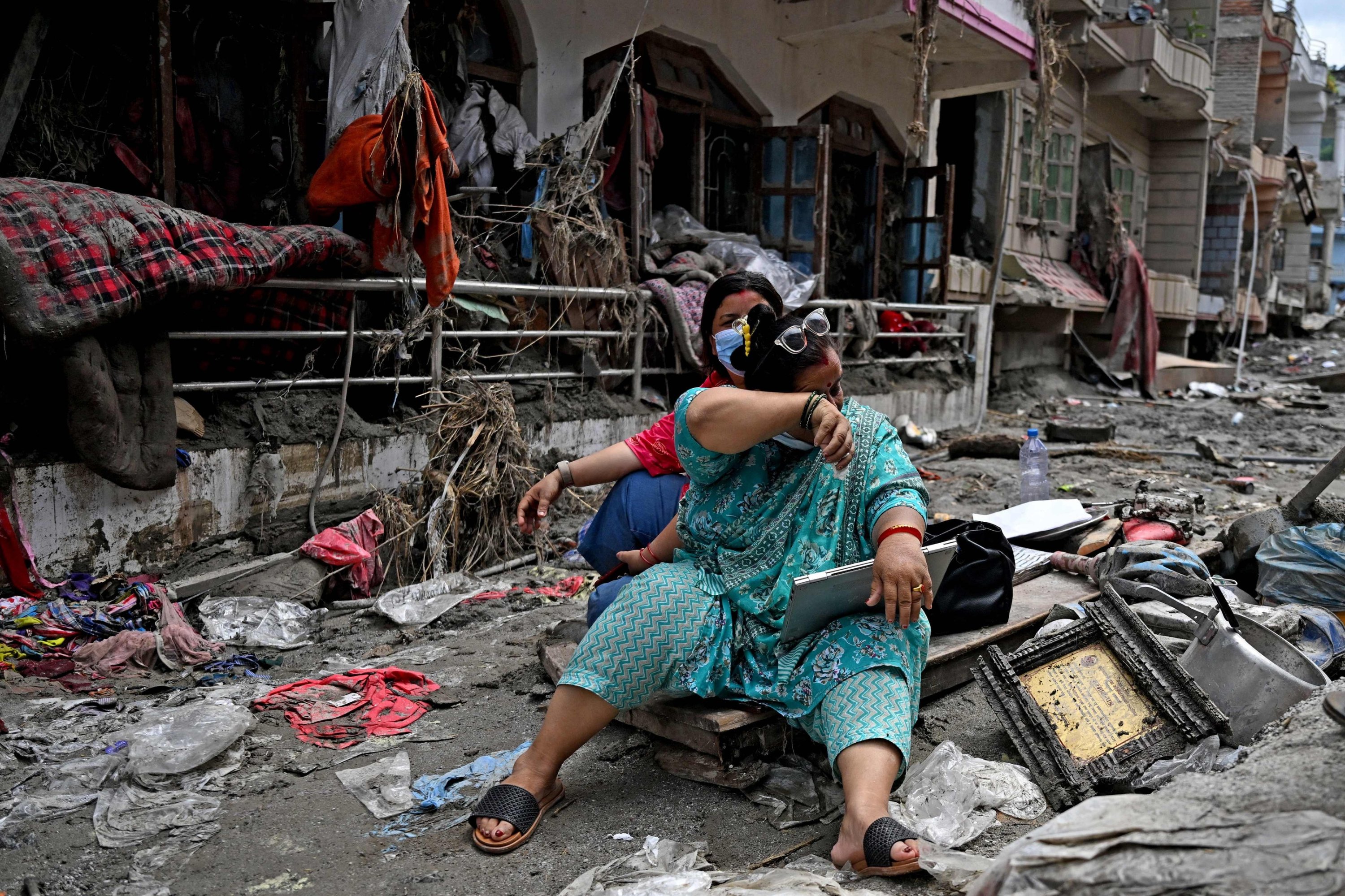
On the morning of Aug. 26, a chunk of glacier broke off Langtang Lirung, one of Nepal’s Himalayan peaks, and plunged into a river valley below. Within minutes, water levels in the Trishuli River rose by as much as nine meters (30 feet). Villages, bridges, hydropower stations and roads vanished under a wall of mud, ice and rock. As of this weekend, the confirmed death toll across Nepal and Tibet has passed 800, with more than 3,000 people still missing, including hundreds of foreign nationals. The scale of loss is still unfolding. But the cause is becoming clear, and it should alarm anyone paying attention to how the planet is changing.
Scientists studying the collapse point to a familiar and worsening pattern. The Hindu Kush Himalaya region is warming faster than the global average, destabilizing glaciers, permafrost and mountain slopes that have held steady for centuries.
Researchers at the International Centre for Integrated Mountain Development, based in Kathmandu, have long warned that more than a third of Himalayan glaciers are set to disappear by the end of this century even if the world meets its most ambitious climate targets, and up to two-thirds could vanish if emissions keep rising unchecked.
What happened in Rasuwa district is not an isolated freak accident. It is a preview.
This is not the first time in recent memory that a warming mountain has turned deadly. Switzerland’s Blatten village was buried by a glacier collapse in 2025. The Alps saw a record number of rockfalls during last year’s extreme summer heat. Scientists now describe these events not as rare anomalies but as the shape of things to come, a “new normal” produced by decades of unchecked greenhouse gas emissions.
It is worth being honest about what is driving this. These are not simply natural disasters. They are, in large part, man-made climate disasters, the result of over a century of fossil fuel emissions concentrated overwhelmingly in the industrialized world. Yet the price is being paid first and worst by countries like Nepal, which contribute a negligible share of global emissions but sit directly in the path of a warming atmosphere’s consequences.
This is the injustice at the heart of the climate crisis. Kathmandu did not build the coal plants or the highways that raised global temperatures. Rasuwa’s farmers and hydropower workers did not choose to live beside an unstable glacier; they lived where their families always had, until the mountain itself became a threat.
The early warning systems in place were built for monsoon floods, not glacial collapse. Nobody had mapped this particular danger, because nobody expected the mountain to fail this way, this fast.
Rescue and recovery must be the immediate priority, and international support should match the scale of the tragedy. But the longer-term obligation is just as urgent. Wealthy, high-emitting nations need to fund climate adaptation and glacial monitoring in vulnerable mountain regions, not as charity but as accountability. Global climate finance pledges, including those tied to the Paris Agreement, remain badly underfunded relative to what disaster-prone nations actually need.
Nepal’s tragedy should not fade from headlines once the search for the missing ends. It is a data point in a pattern that includes vanishing Himalayan villages, Alpine landslides and rising seas from the Pacific to the Mediterranean. Each of these events has the same root cause. The question is whether the world treats Nepal’s disaster as an isolated tragedy or as the urgent warning it actually is.