The opposition failed to adopt a coherent policy framework regarding the Terror-Free Türkiye initiative, much like its approach to every other major issue. The New Path group (YY) and the Republican People’s Party (CHP) joined the parliamentary commission. They called for an end to terrorism, yet deliberately attempted to pull Terror-Free Türkiye, fundamentally a state initiative, into the realm of everyday politics. Regardless of what they claim, they sought to make various parts of the initiative vulnerable to political exploitation.
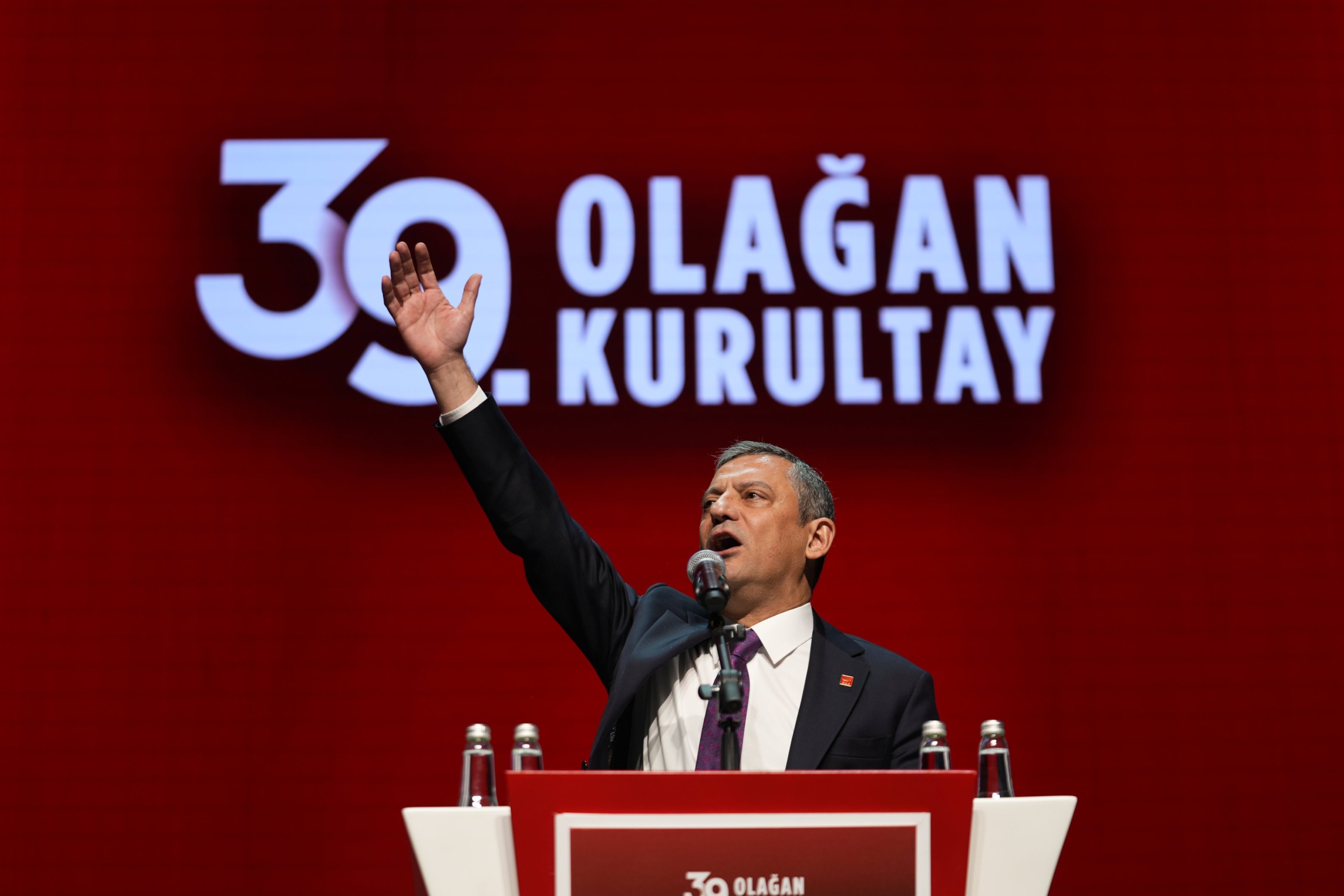
When Nationalist Movement Party (MHP) Chairperson Devlet Bahçeli issued the original call for the laying down of arms, CHP Chairperson Özgür Özel responded, “I raise the stakes, Devlet Bey. I, in turn, am offering the Kurds a state!” That off-the-cuff remark revealed the CHP’s true intention from the outset. Mr. Özel’s knee-jerk reaction did not reflect a perspective grounded in rationality or capable of supporting a holistic policy. On the contrary, the CHP chairperson plainly signaled that he intended to shift his position in line with daily developments, attempting to gain political ground in whatever vacuums he believed the government might leave open.
That is precisely what happened. The CHP leadership searched for opportunities to introduce unrelated issues, claiming, as they often do, that there were disagreements within the governing People’s Alliance. They argued that President Recep Tayyip Erdoğan did not fully support the initiative and deliberately misinterpreted the cautious stance and warnings voiced by certain stakeholders who had taken part in earlier peace processes and were drawing on their past experiences.
Moreover, the CHP made its support for the Terror-Free Türkiye initiative conditional on halting the corruption and bribery investigations involving CHP-controlled municipalities. The party raised this demand at virtually every meeting of the parliamentary commission. The opposition also inflated public expectations, effectively reducing the end of violence to the resolution of the Kurdish question. In doing so, they moved to the top of the agenda issues that ought to have been addressed only at the final stage. What remained unsaid was portrayed as if it had already been said.
In the end, the opposition’s true stance toward the initiative became fully visible during the latest debate regarding the parliamentary commission’s proposed visit to Imralı Island, where the PKK terrorist group's jailed ringleader, Abdullah Öcalan, is serving a life sentence. The New Path group and the CHP anticipated that such a visit would be politically costly for the Justice and Development Party (AK Party), given the public sensitivity surrounding the issue. Although the commission itself was responsible for making the final decision, it insisted that President Erdoğan immediately declare his position on the matter. In other words, the opposition stepped aside the moment they were expected to assume responsibility for a terror-free Türkiye, asking why they should shoulder a risk that, in their view, should fall to Erdoğan personally. Had the People’s Alliance refrained from deciding on the visit, the opposition would have portrayed that, too, as a mistake. Ultimately, this latest episode demonstrated that the opposition lacks a constructive policy for ending terrorism.
There is a clear difference between taking a political stance and merely reacting to the government’s statements and boundaries. Those whose actions are defined by the government’s vacuums, rather than by their own vision, can only ever be followers. Today, we stand before yet another critical threshold. The parliamentary commission has completed its preliminary work and is preparing to draft its final report. For that reason, the governing bloc must exercise caution to ensure that the report remains within a rational and coherent framework.
Unfortunately, maximalist expectations have formed around the commission’s report, largely because terrorism and various issues related to the Kurdish question have frequently been discussed as though they were inseparable. As a result, some observers expect the report to address every aspect of the Kurdish question simply because progress has been made on counterterrorism. Instead, the report must clearly distinguish between ending terrorism and the broader Kurdish question. It should offer recommendations that define the technical framework of disarmament and the steps that must be followed. In other words, it must prioritize the requirements of the transition period.
After all, democratization and individual rights are not conditional upon the end of terrorism. These issues will inevitably be debated independently in the future. Including matters that fall outside the commission’s mandate would only spark additional disputes. Put simply, it would be misguided to assume that the commission should address every possible topic just because Parliament will ultimately debate the report. On the contrary, such an approach would generate pressure to legislate based on the report’s content, further inflating expectations and potentially undermining the disarmament process. For this reason, the commission’s report must be concise and clear.
Several critical thresholds have already been crossed on the road to a terror-free Türkiye. Still, a considerable distance lies ahead. From the very beginning, the current process has been described as a “historic opportunity.” That opportunity remains fully intact, and in the most positive sense of the term.