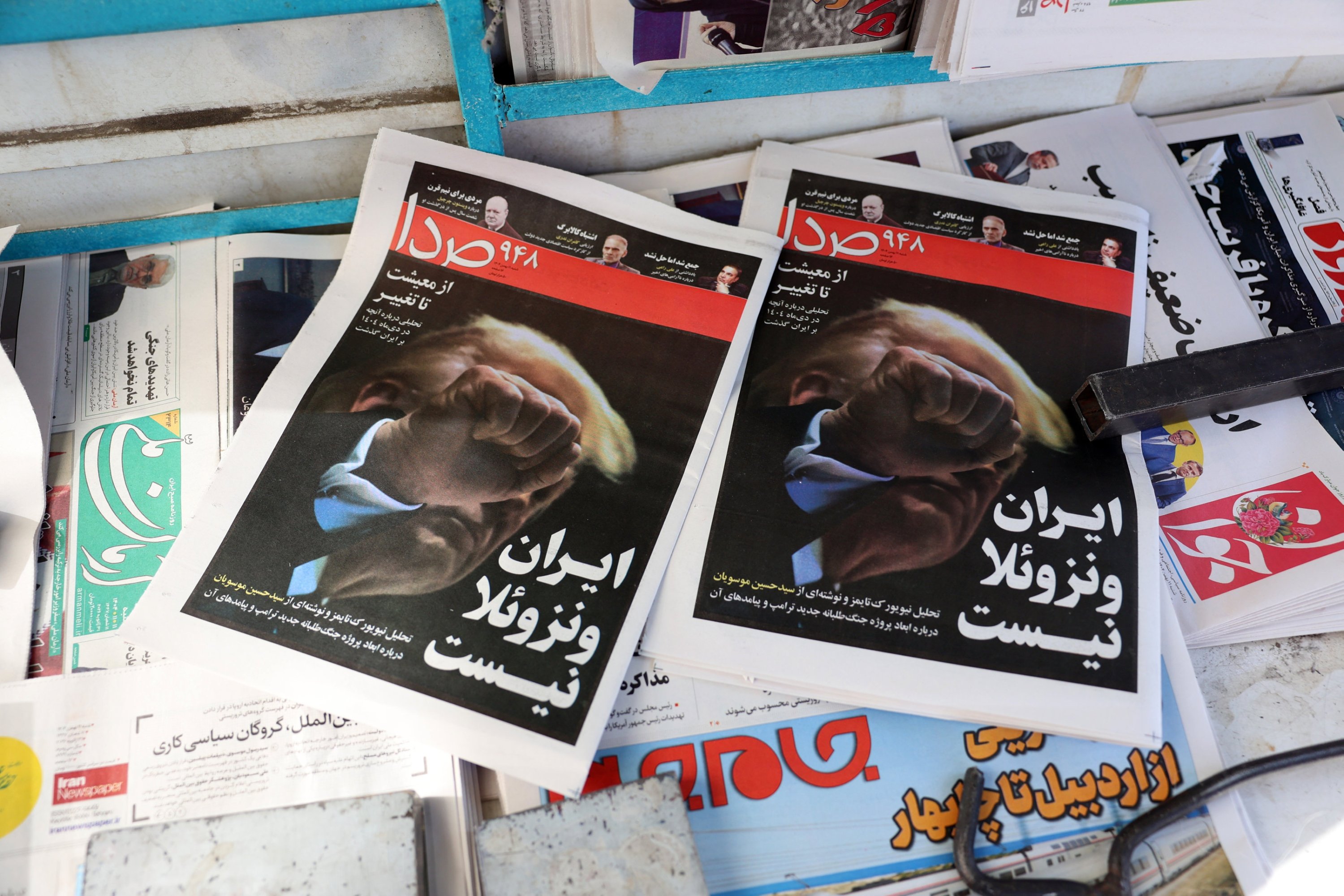
For the last several months, the whole world has been asking a question: whether the United States will attack Iran. For various reasons, it is not easy to give a concrete answer to this question. There are both positive and negative signs and dynamics that will determine the outcome. Several key factors that will largely determine the outcome are listed below.
First, the U.S., having long paid a heavy price through direct foreign military interventions, was forced to change its military and foreign policy strategy. During the first Trump administration, the U.S. government sought to secure its interests through its allies without paying any price. However, this strategy has failed. For example, the U.S. government asked its Middle Eastern allies to punish the Qatari state’s relatively neutral policies, but its regional allies failed to do so.
The U.S. has changed its strategy during the second Trump administration. It decided to secure its national interests by using power indirectly, at a lower cost. It does not want to pay the price for its foreign military interventions. According to this, the U.S. government will threaten third states to use force to change their behavior. It uses force without engaging in war and imposes its will on countries with which it has tensions.
In other words, the U.S. government does not prefer a full-scale war with Iran. Instead, it aims to get whatever it wants from Iran without resorting to the use of violence: to eliminate its nuclear project, to halt the production of ballistic missiles, and to abandon its regional proxy actors. Trump thinks that he will resort to violence only when necessary.
One of the most influential factors pushing the U.S. to attack Iran is the current domestic political conditions. It faces a great-scale public protest, in which millions of people took to the streets and protested the Trump Administration due to the killing of several U.S. citizens by ICE forces. On the other hand, economic conditions are getting worse. Therefore, President Trump needs a new success in foreign policy.
Second, Iran does not want to escalate the conflict with the U.S., since the Iranian regime has been on the defensive for the past two years. A new military attack against Iran may weaken the Iranian regime and thus deepen domestic political, social and economic problems. Therefore, Iranian officials attempt to ease the tension with the U.S.
Iran has been experiencing some of the most difficult days of its regime for the last month, which has seen the eruption of nationwide social unrest and a deepening economic crisis. This wave of protests has been the largest since the Islamic Revolution. The protests, which were sparked by frustration over high inflation, rising food prices and currency depreciation, evolved into a national movement demanding the end of the regime. Iranian security forces were ordered to open fire on protesters, resulting in the largest massacres in modern Iranian history.
Having been severely weakened by the latest wave of protests, the Iranian regime may be forced into a limited offensive to protect the state’s reputation and consolidate its power. One of the shortest ways to consolidate the public is to divert attention toward a vital threat and enemy. The regime may consider a limited American military attack as a chance for the consolidation of the regime. Therefore, the Iranian regime is constantly raising the stakes.
Third, most regional countries, such as Türkiye and Saudi Arabia, oppose the American military attack against Iran, mainly due to its regional repercussions. It is clear to everyone that the consequences of the collapse of the Iranian regime will be enormous. The collapse of Iran, the second-largest country in the region, may cause a power vacuum and therefore regional chaos in the Middle East. There would be many direct problems stemming from Iran’s downfall. The regional balance of power will be fundamentally disrupted. For example, a massive wave of migration will occur.
The only regional state that wants Iran to be punished is Israel. Therefore, it will continue to ask the U.S. government to attack Iran. Israel will hold elections by the end of this year, and Prime Minister Benjamin Netanyahu’s reputation has been severely damaged in the eyes of the Israeli public. Thus, he will be forced to intervene in a Middle Eastern state to consolidate its constituents. The best option is a limited attack against Iran.
In summary, while regional balances and conditions reduce the likelihood of the U.S. attacking Iran, the domestic politics of the three states involved in the tension, which are the U.S., Israel and Iran, may compel their governments to escalate tensions in the region to divert public attention. We will see whether regional or domestic conditions will prevail.