Although the Western-American global hegemony is obsolete, no non-Western state wants to claim the global hegemony, mainly due to the burden and responsibility that comes with this claim.
On the one hand, for the last several decades, China has been enjoying being a free rider and benefitting from American hegemony. As a politically communist state, China has become one of the champions of economic liberalism, enjoying a comparative advantage in most financial issues. On the other hand, the United States is unhappy about the current international system established by the U.S.-led West and is trying to change it. Therefore, most Western countries have been following unilateral revisionist policies and want to maintain their hierarchical relations with the rest of the world, including their allies.
Washington still maintains military force in almost every region to support its hegemony. However, the U.S. and its Western European allies have recently lost interest in maintaining the military force in different areas and have withdrawn their militaries. In many cases, the West is being challenged by non-Western countries such as China and Russia. These two countries have increased their military presence in different Middle Eastern and African countries, traditionally controlled by the traditional colonial powers. The more the West withdraws from the crisis areas and creates a power vacuum in different regions, the more the non-Western countries fill the power vacuum and become effective in regional crises.
The Western countries have been following policies that will keep other states largely dependent on them. Therefore, many Western allies in the Middle East have begun to flirt with non-Western global powers such as China and Russia. On the other hand, the mistakes and miscalculations made by the Western countries have paved the way for rapprochement processes between the Western allies and the Western global challengers – for example, when the Western countries refused to sell air defense systems to Ankara, pushing Türkiye to purchase S-400s from Russia.
The Western countries, especially the U.S., have been increasingly otherizing the Middle Eastern countries, even their allies. For instance, U.S. President Joe Biden harshly criticized the regional countries before he came to power in 2020. Therefore, as soon as he came to power in the U.S., the regional countries reacted to this governmental change and decided to restructure their foreign policies accordingly. One of the most critical factors in the normalization process in the Middle East was Biden’s hawkish discourse and approach toward the region. Even before becoming president, he criticized all regional states, declared Saudi Arabia a pariah state and did not back down from this rhetoric. As a result, the regional countries have begun to pursue policies that will make them less dependent on the West.
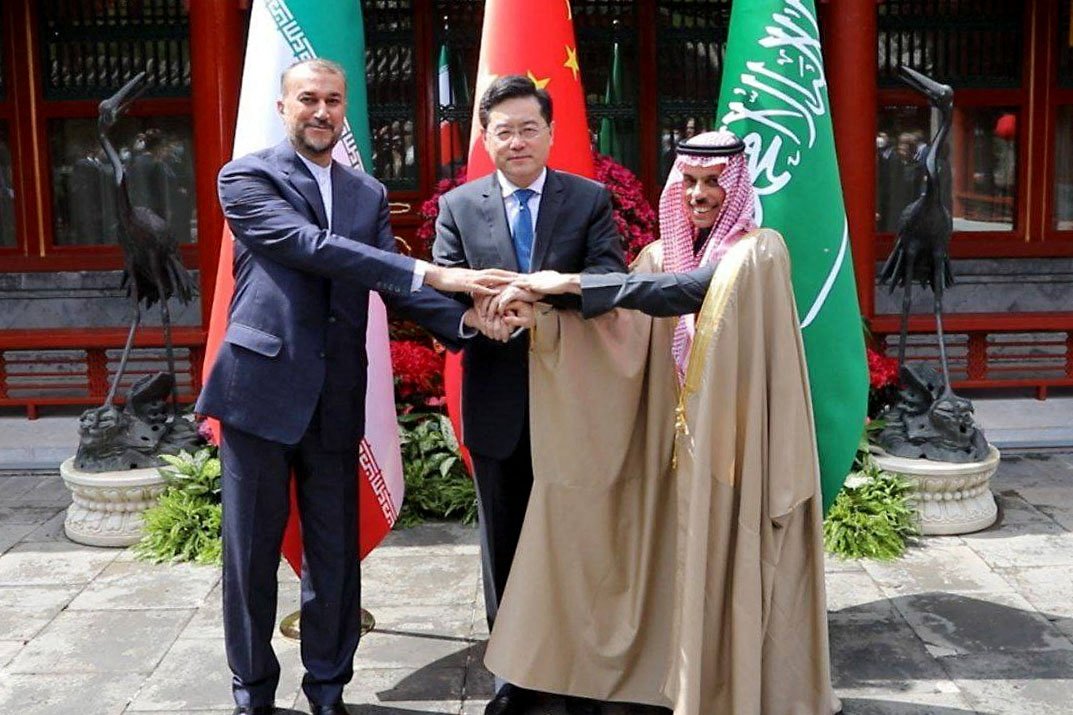
However, Middle Eastern countries, which are still largely dependent on Western countries, have been careful in developing cooperative relations with other countries. For example, they want to improve their relations with China without annoying the West. Middle Eastern countries have begun to strengthen their economic ties with China while trying to maintain their security engagements with Western countries. Nevertheless, they still address their security concerns under the umbrella of the U.S. and other Western powers. Although the U.S. is still the number one security partner of the Gulf states, these countries have been trying to improve their economic relations with China. Thus, by diversifying their foreign relations, the Gulf states try to set up a new balance of power in the region. Ultimately, China has emerged as an economically usable power and an alternative peacemaker and balancer state.
Regional countries that evaluate the changing distribution of power globally pursue a balanced foreign policy to maximize their national interests and regional stability. The new realities of the world system require the regional countries to improve their economic and technological relations with China to provide economic development and prosperity for the Middle East.
On the other hand, China, which wants to be recognized as a global power, aspires to improve its relations with regional countries and to integrate into the world economy. While the trust between Western countries and the Middle East decays, the trust between the Middle Eastern countries and China increases. The current momentum in Middle Eastern politics and the arrogant language of Western countries will alienate Western countries even more.