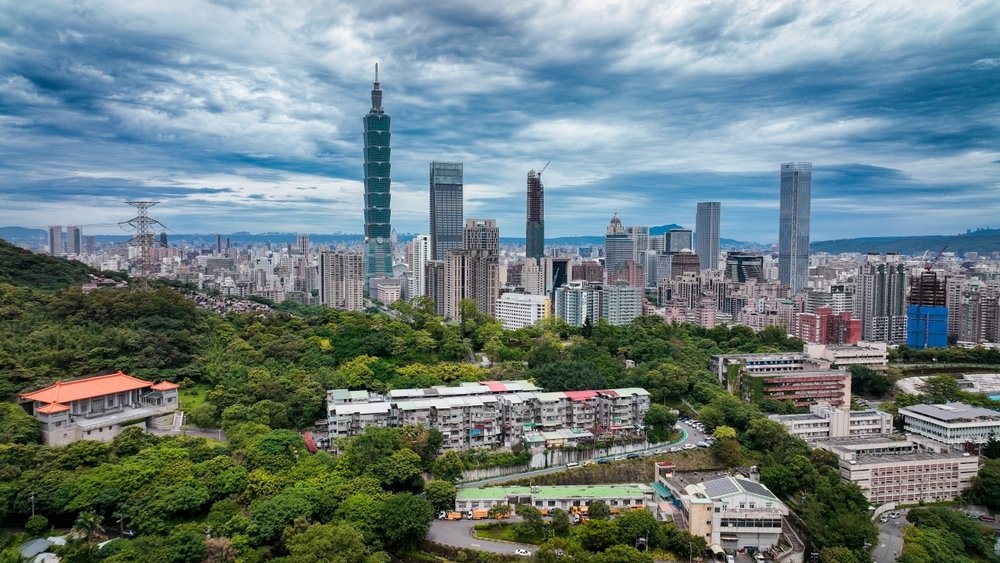
Last week, I paid a weeklong visit to Taipei, where I joined a group of international journalists in meeting with senior Taiwanese officials and policy experts across government, foreign affairs, aviation, energy and strategic sectors. Against the background of warm and humid temperatures, walks through the historic Dadaocheng district and other attractions, I had the opportunity to learn about the rich culture of the island and dig deeper into sensitive topics, which included the geopolitical situation of the region, upon the invitation of the Taipei Economic and Cultural Mission in Ankara. In some candid conversations, we discussed Taiwan’s "status quo" position, which is described as refraining from provoking China’s unification aims under what the mainland describes as “One-China” principle, while balancing close ties with the Western alliance. Moreover, the escalation in global tensions during the Trump 2.0 phase, especially in terms of tariff wars and the U.S. foreign policy aims in Asia-Pacific, puts the island in a uniquely difficult and increasingly dangerous geopolitical bind.
Coinciding with the visit, the SEMICON Taiwan 2025 expo also took place in Taiwan, attracting over a thousand international tech companies. In a way, the expo was a manifestation of Taiwan’s aim to become a global technology supply chain, especially in advanced chips, AI and high-performance computing. Taiwan’s role in the semiconductor sector, both as an economic asset and as a "strategic component," was highlighted in almost every conversation during the visit.
Nevertheless, while Taiwan’s geopolitical location and highly critical role in the global semiconductor supply chain show its importance, the island’s political status remains contested under the internationally recognized One-China policy.
Taiwanese consistently emphasize a desire to preserve the “status quo” – a term used very often in conversations. The "status quo" is described vaguely as avoiding actions that could provoke Beijing while seeking greater international participation. Put broadly, Taiwan posits a pragmatic diplomatic approach framed by the question, “What can we do for you?” as it pursues membership or observer status in organizations such as the International Civil Aviation Organization (ICAO), the World Health Organization (WHO) and Interpol.
In addition, to avoid dependency, it is diversifying its economic ties, pulling back from heavy investment in mainland China. According to figures shared with the media, its direct investment in mainland China has fallen from 83% in 2010 to 7.5% in 2024. According to officials, new investment areas are diversified, including seeking closer relations with India and other partners. Moreover, according to officials in Taipei, Taiwan plans to increase defense spending to 5% of gross domestic product (GDP) by 2030, signaling a cautious strengthening of its self-defense capabilities amid uncertainty.
As an island dependent on external energy resources, energy security is a pressing priority. Now, Taiwan is importing 96% of its energy, but aiming to lower this to 70% with self-sufficiency through renewables by 2027. According to experts in Taipei, in case of a hard confrontation, Taiwan has safe reserves of grain that would last for 100 days. In terms of energy, it can survive for 11 days on LNG reserves (aiming to be 14 days by 2027). The main sources of LNG for Taiwan are 37% from Australia, 26% from Qatar and 11% from the U.S., and the rest from other countries. The experts told us that the island has oil reserves that would last around 90-120 days and coal reserves that would last about 56 days.
During the visit and the exchange of conversations, three themes emerged: The call for the international community to recognize the island’s geostrategic, economic and value-based (democratic) values.
In the background of these themes and the "status quo" described in Taipei, Taiwan’s status is nonnegotiable for Beijing. The People's Republic of China (PRC) views the island as a breakaway province whose reunification is essential to China’s territorial integrity and national rejuvenation. Beijing regards Taiwan’s moves toward greater international recognition and its unofficial ties with foreign powers as provocations undermining sovereignty.
As one of the world’s superpowers with growing economic and military influence, China sees the island’s geostrategic location as critical to its national security and maritime strategy in the Indo-Pacific region. The military parade on Sept. 3 and the frequent military drills in the region are clear examples of the PRC’s firm position on the island and the island’s sovereignty claims.
For the U.S., the main backer of Taiwan, the island is still recognized as part of the PRC, as Washington acknowledges the One-China policy. In contrast, the Taiwan Relations Act seeks to deter any intervention on the island by providing defense capabilities. In a way, the island holds a strategic importance for Washington, not only in economic terms, but also for the U.S. strategic interests in the Indo-Pacific region and global rivalry with China. Stuck between two superpowers' strategic calculations, the island faces heightening risks of miscalculation or conflict as both sides have increased assertiveness in the new multipolar world setting.
The situation of Taiwan can be likened to that of Ukraine in some way. Both cases involve external powers’ involvement that shape the dynamics on the ground, facing powerful neighbors asserting territorial claims. Ukraine’s experience has underscored the dangers of escalating the "status quo" into open conflict and the complexities of international rivalry in contested regions.
For the international community, Taiwan presents a profound dilemma: how to support a democratic and critical economic player while taking into consideration the geopolitical sensitivities rooted in the One-China framework.