Anyone who has been to Syria, whether before the war, during its darkest years or as the country struggles to recover from one of the most devastating conflicts of our time, knows that it possesses extraordinary human capital. It has resilient communities, skilled labor, deep commercial instincts and a cultural memory of coexistence and statehood. From my perspective, Syria’s tragedy was never a lack of potential. It was the systematic destruction of the institutions capable of channeling that potential into a shared future.
Today, the question of how to rebuild state capacity stands at the center of Syria’s recovery. Over the past year, Damascus has accomplished something that seemed improbable not long ago. The Syrian leadership has reasserted itself as a legitimate interlocutor regionally and internationally, as President Ahmed al-Shaara distinguished himself from other post-conflict leaders through consolidation rather than rhetoric. His government rapidly restored diplomatic channels, re-engaged neighbors and projected a sense of institutional continuity instead of revolutionary uncertainty. Without this growing credibility, no reconstruction on the economic, political or social level would have been possible.
Normalization, however, has a hard ceiling. And that ceiling is the unresolved status of armed non-state actors. At this point, since the Dec. 31 deadline under the March 2025 agreement to integrate the SDF, the so-called armed branch of the PKK's Syrian wing YPG, into the national armed forces has already expired, the issue has ceased to be technical and has become the single most consequential obstacle to Syria’s stabilization. That a deadline agreed upon months ago was allowed to lapse reflects a continued attempt by the YPG leadership to delay or reinterpret its commitments out of unwillingness, not caution.
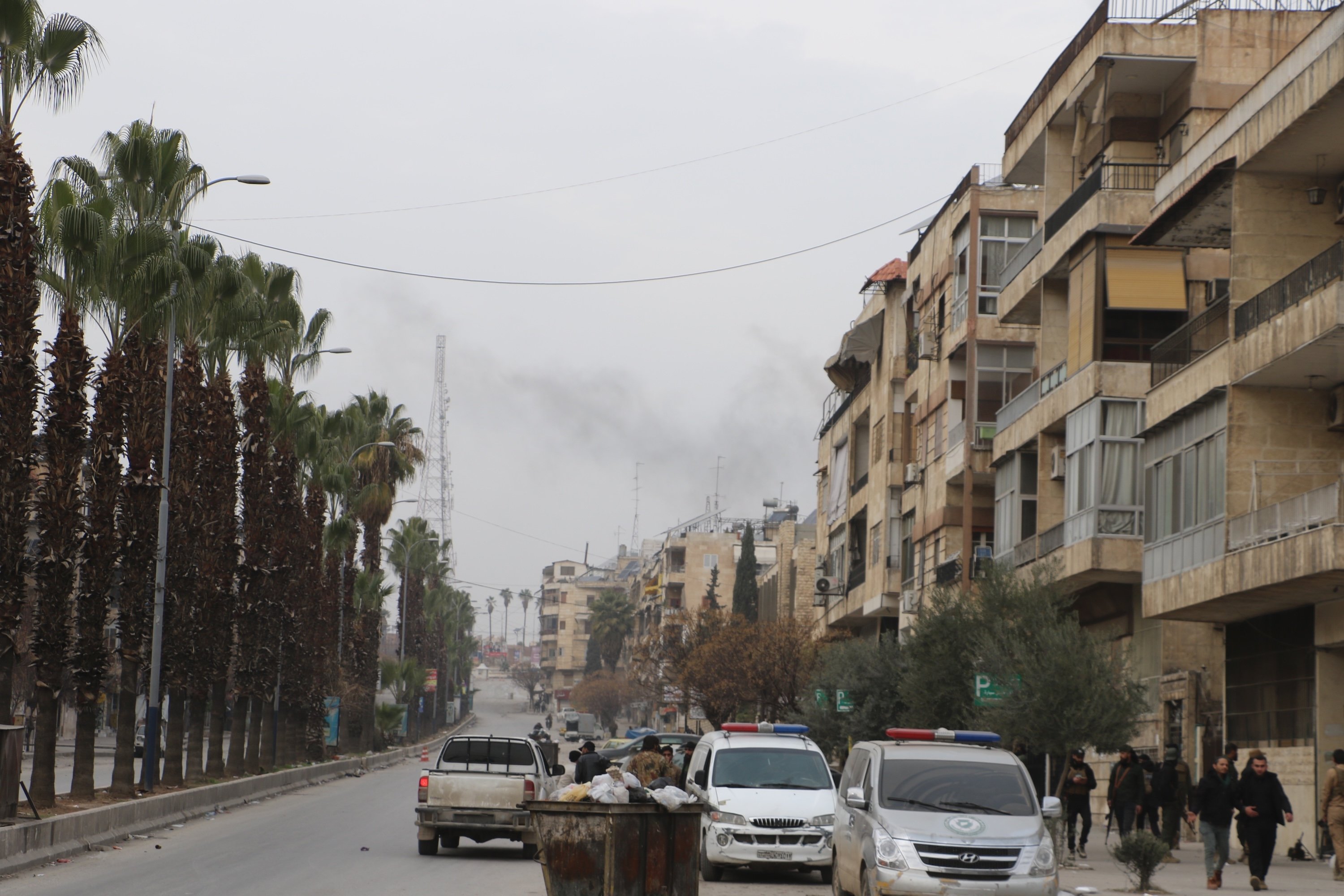
Recent events in Aleppo illustrate why this moment matters. Syrian security forces carried out a limited and targeted operation in the Sheikh Maqsoud and Ashrafiyeh neighborhoods – areas long treated as exceptional zones under de facto parallel authority. The operation was neither indiscriminate nor symbolic. It was precise, enforcing previously negotiated arrangements regarding heavy weapons and internal security. The message was unmistakable: Syria will no longer tolerate armed enclaves operating as states within the state.
To be clear, this is textbook state-building. Max Weber famously defined the modern state as the entity that successfully claims the monopoly of the legitimate use of force within a given territory. Without this monopoly, sovereignty becomes performative and governance fragmentary. Syria’s experience since 2011 is a textbook case of what happens when that monopoly collapses: militias replace institutions, loyalty displaces law and violence becomes a political currency.
Rebuilding Syria, therefore, requires more than reconstruction funds or humanitarian corridors. It requires, as a precondition, the restoration of a single, accountable security architecture. Pluralistic or otherwise, no country can function while armed groups retain veto power over state authority.
Some frame this reality as hostility toward Kurds. This is both false and intellectually dishonest. Kurds are an integral part of Syria’s social fabric, and their rights are not advanced by militarized separatism or foreign dependency. In fact, no community has suffered more from prolonged militarization than the Kurds themselves, displaced, instrumentalized and isolated by organizations whose survival depends on perpetual conflict. It should also be recalled that the YPG targeted several groups, including Kurdish groups, during the Syrian civil war, at times in collaboration with or in parallel to the Assad regime.
The window that once empowered armed non-state actors opened during the chaos following Daesh’s advance on Mosul has closed. Foreign fighters, once treated as strategic assets, are now liabilities. The Syrian state has both the capacity and the will to manage this challenge. Going forward, any meaningful political process requires actors with organic ties to Syria, not transnational militancy.
This is where Türkiye’s role becomes central. The recent visit to Damascus by Türkiye’s foreign minister, defense minister and intelligence chief just ahead of the SDF integration deadline was not routine diplomacy. It was a coordinated signal that fragmentation is no longer an option. In other words, regional powers, possibly and notably with the exception of Israel, are aligning around stability, not managed disorder.
Just before the deadline expired, Damascus itself reflected this shift. The Hamidiye Bazaar was alive again. Families shopped, children roamed, and churches displayed Christmas decorations alongside the centuries-old Umayyad Mosque, a masterpiece of Islamic culture and civilization. Across the old center of the Islamic world, there was a palpable sense of resilience. Yet resilience alone will not rebuild Syria.
A strong and stable Syria is indispensable to the emerging Middle East. If the U.S. truly wishes to reduce its regional footprint and focus elsewhere, empowering sovereign states, rather than perpetuating armed ambiguity, is the only viable strategy. Syria’s future depends on a simple but difficult truth: human capital flourishes only where authority is clear, institutions function, and violence is monopolized by the state. Without this foundation, coexistence becomes fragile and recovery illusory.
Syria does not need another experiment in fragmentation. It needs a functioning state that is capable of signaling to millions of Syrian refugees abroad that it is time to come home and build a brighter future together.