The Middle East has continued to occupy the main agenda of world politics for the last two decades. The region has been witnessing major events and developments since the rupture of the Arab uprisings and revolutions that erupted in 2011. The regional balance of power has shifted significantly due to the widespread waves triggered by the Arab uprisings. After the Arab world lost its political significance and the states that served as the traditional carriers of Arab nationalism collapsed, Israel emerged as the most influential state in the region. Israel, in conjunction with the U.S. and with the support of Western global powers, has compelled Arab states through the “Deal of the Century” and the Abraham Accords to accept its regional supremacy.
Having freed itself from the pressure of Arab states, Israel turned its attention toward Iran, one of the two most significant obstacles to the realization of its regional project. The Netanyahu government persuaded the Trump administration to attack Iran, and on Feb. 28, the two nations launched a major military offensive against the country. They dealt a severe blow to Iran, eliminating a large portion of its political and religious leadership. The Iranian regional projection, the “axis of resistance,” was profoundly destroyed.
After Iran was significantly weakened, the Israeli government began to threaten Türkiye, the only state capable of standing in the way of its regional dominance. Many Israeli intellectuals, journalists and politicians have begun to threaten Türkiye openly and directly. Netanyahu even stated that the possibility of a war with Türkiye is quite high. These anti-Türkiye statements cannot be explained solely by the election atmosphere. On the contrary, they are statements made in pursuit of strategic objectives.
Naturally, Türkiye has taken a number of significant political steps and implemented various security measures in response to a regional projection that envisions Israeli hegemony. First, Türkiye signed an alliance agreement, the Mecca alliance, with Pakistan and Saudi Arabia on Aug. 7, 2026. The alliance was established as a structure aimed at protecting the security of Muslim countries against Israeli aggression.
Three strategic regional powers have established a deterrent regional mechanism and a new security paradigm in the region. The Mecca alliance is based on a collective security arrangement modeled after Article 5 of NATO. According to Article 2 of the alliance, “An armed attack against any one of the three states shall be considered an attack against them all.” This regional initiative is a significant shift in Middle Eastern geopolitics and the first institutional arrangement of its kind in the region.
With the perspective of “regional ownership,” introduced by Türkiye, some other regional platforms were also established, and many states in the region were incorporated into these platforms. One of the most significant features of Türkiye’s “regional ownership” perspective is to ensure that as many states as possible take action in implementing security measures and maintaining regional stability. In doing so, the principle of complementarity is taken into account both in the determination of the members of regional institutions and in the establishment of the institutions themselves. In other words, there is a complementarity among regional platforms.
One of the newly established platforms is the Badr pact, signed on Oct. 21 by Türkiye, Pakistan, Qatar and Indonesia. This is a defense industry cooperation agreement and a new model of security cooperation. The four countries agreed to enhance existing military projects through joint production, technology transfers, and more tightly integrated supply chains. The Badr agreement will address the needs not only of member states but also of friendly non-member nations. Through joint production projects, the aim is to reach a broader market. If successful, this initiative will both meet the security requirements of Muslim countries and reduce their dependence on global powers.
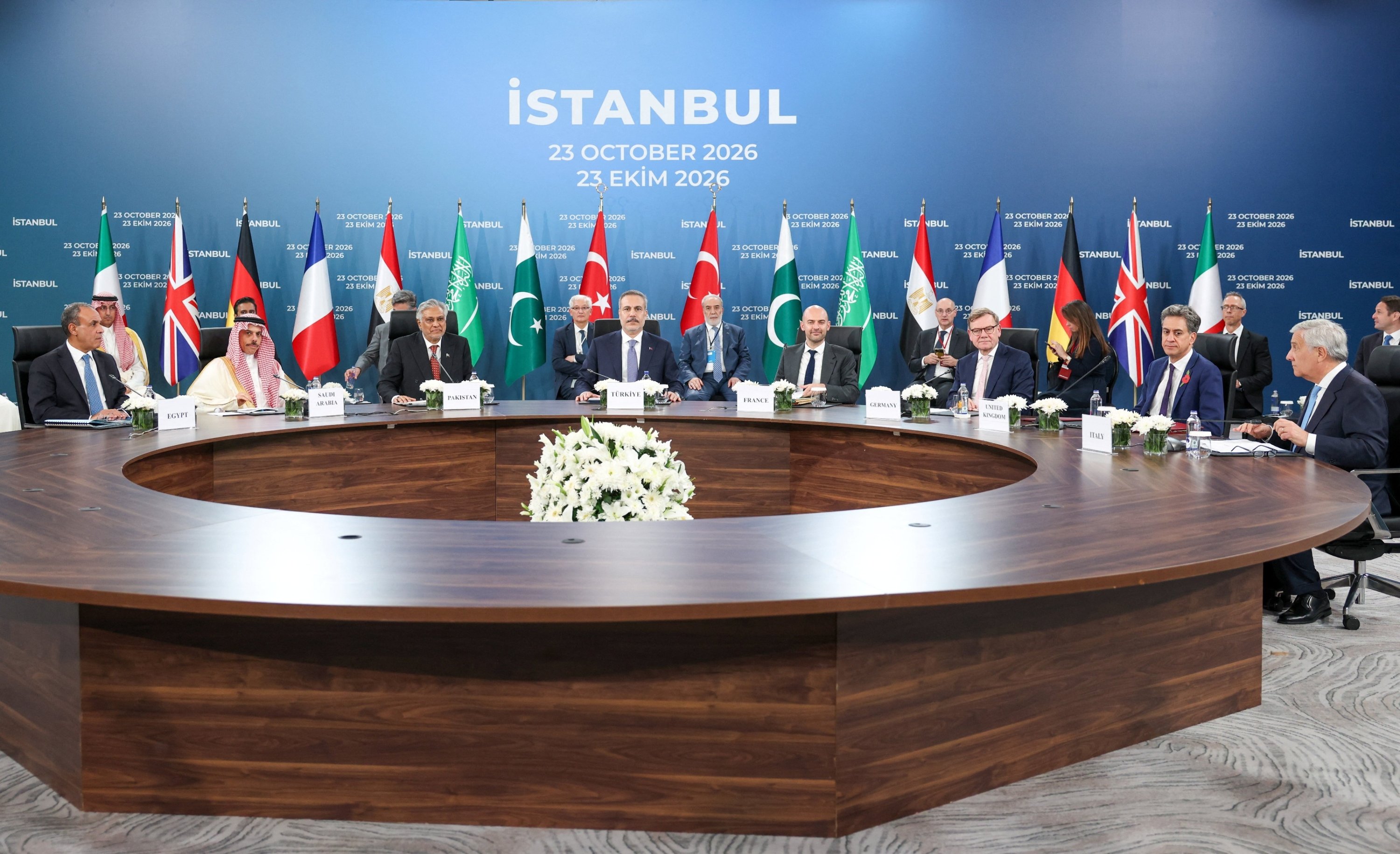
Another regional initiative introduced in 2026 is the Regional Four (R4). This consultative mechanism is an informal platform established by Türkiye, Egypt, Pakistan and Saudi Arabia to discuss regional and international issues and improve diplomatic coordination in the light of the principle of “regional ownership.” This platform views Israel as the primary source of regional instability and considers the establishment of a Palestinian state a prerequisite for regional security.
The platform, which is seen as an indication of the regional countries’ pursuit of more structured consultations on security and diplomatic issues, operates through meetings of foreign ministers of member states. The four states try to constitute a cohesive political bloc in which members would adopt the same stance on all foreign policy issues or make binding decisions. Since last March, the platform has held seven different ministerial meetings.
The seventh meeting of the R4 was held in Istanbul last week, during which they held a meeting to four European countries, namely the United Kingdom, France, Germany and Italy. This meeting was an exchange of views between the most influential Middle Eastern states and the most influential European states. It was interesting to see that Türkiye is part of the Middle Eastern balance of power, not the European context. This was a clear consequence of Türkiye’s exclusion from the European Union’s security architecture and defense industry projects.