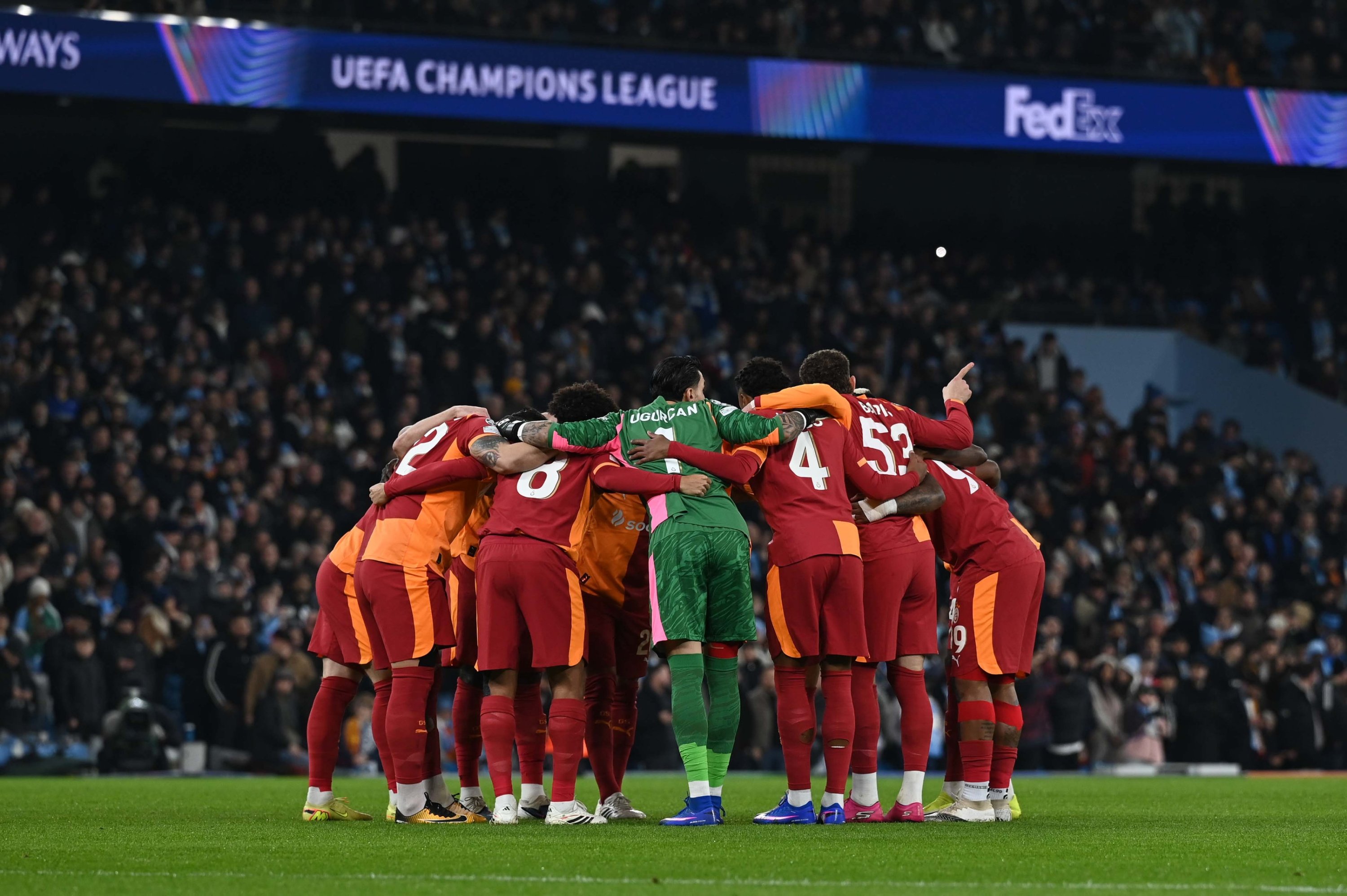
My favorite slogan in football and in life is written on Tottenham Hotspur’s logo: To dare is to do.
It also summarizes Galatasaray’s long and stubborn journey in European football. We love Türkiye, but let’s be honest: economically, it is extremely difficult for any Turkish club to compete consistently at the very top level. This was true in the 1990s and it is even more true in the age of industrial football, where budgets, sponsorships and TV deals often decide the winner before the match even starts. You can have passion, history and talent, but if you do not have financial depth, one bad injury or one missed transfer can ruin an entire season.
Still, we love teams that dare, whether or not they ultimately succeed.
Over the last few seasons, Galatasaray have won three consecutive league titles. That is no small achievement. Yet ask any die-hard fan about their most vivid European memory and they will likely mention not the victories, but the defeats: the home loss against Bayern Munich, the narrow defeat in Munich, or that audacious Panenka penalty by Mauro Icardi in Istanbul. Odd as it may sound, this is the right kind of nostalgia for a club trying to punch above its weight. It reflects a mindset that values competing at the highest level rather than merely surviving domestically.
If you ask me, this is exactly the mentality needed, in football and in life. You step onto the pitch knowing the odds are against you, but you go out there anyway. You test yourself. You dare to fail, because the alternative is never daring at all. Playing it safe may protect you from humiliation, but it also guarantees that nothing truly meaningful will ever happen.
Another team that has given me similar hope this season is Qarabağ FK. Our cousins from Azerbaijan reached the playoff round despite suffering a heavy 6-0 defeat at Liverpool. Of course, such nights hurt. No one enjoys watching their team concede six goals. But perspective matters. Competing at this level is already an achievement for clubs coming from leagues with limited resources and little international exposure. It is still something remarkable to say that not one, but two Turkish teams have reached the final 24 of Europe’s top competition.
In an era when football increasingly resembles a financial arms race, courage still counts. Maybe it does not always change the scoreboard. But it preserves something far more important: ambition, identity and the refusal to accept one’s place as permanently small. It keeps hope alive, not only for players and managers, but also for young fans who need to believe that challenging the powerful is still possible. And sometimes, that alone is already a victory.