In the history of international relations, changes in the power balance occur gradually but steadily. Even though political and economic dynamics tend to fluctuate, the impact of historical, cultural and geographical factors remain permanent.
In its heyday in the 16th century, the Ottoman Empire reached the borders of the Roman Empire. The failure of the Siege of Vienna in 1683 marked the end of Ottoman domination in Eastern Europe. When the Ottoman Empire disintegrated due to the dawning of the age of nation-states, British and French colonial empires succeeded in colonizing the vast lands of the Empire, except for its heartland in Anatolia. After a brief period of military invasion following World War I, the Turkish Republic emerged as an independent nation-state from the ashes of the Ottoman Empire.
In the newly established Republic, the Turkish intelligentsia was divided into two main groups. While some had faith in Turkey’s potential for greatness due to its vast historical and cultural experience and unique moral and civilizational perspective, others put their trust in the values of Western civilization, denying Turkey’s capacity to revive from its roots.
The new Republic adopted a middle path between these opposite perspectives, following the revolutions in Western countries without disregarding Turkey’s historical and cultural experience. Even though Turkey was dragged toward the Western end of the political spectrum during President Ismet Inönü's autocratic rule from 1938 onward, the Democrat Party’s coming to political power in 1950 pushed the country toward its historical mission.
While Turkey’s membership in NATO resulted in the foundation of a military tutelage over civilian politics, the Turkish people’s democratic struggle eventually succeeded in putting the army under the command of civilian politics.
The end of the Cold War led to the emergence of a unipolar world order in which the United States became the world’s sole policing power. However, after occupying Iraq and Afghanistan with impunity, the U.S. did not consolidate its so-called “new world order.” Instead, the emergence of new regional and global powers led to a multipolar balance of power. As traditional Western European powers weaken, China and Russia have come to the world stage as economic and military superpowers.
Josep Borell, vice president of the European Commission, emphasized not only Russia and China but also Turkey as the rising stars of the post-Cold War era. Due to its rapidly growing defense industry, its invaluable experience in hybrid warfare thanks to its 40-year struggle against terrorist organizations, and its vast export network that includes technological products, Turkey has emerged as an economic regional power and a political great power.
As the influence of Western powers wanes, Turkey’s role has increased in the former lands of the Ottoman Empire. Restructuring its regional relations, Turkey has become not only a role model but also a game-changer in the Middle East, North Africa and the Balkans.
The ongoing Russian-Ukrainian war demonstrated once again the indisputable significance of Turkey in its region of influence. On the one hand, Turkish-Ukrainian relations had developed to an almost strategic alliance since the end of the Cold War. On the other hand, Turkey successfully negotiated with Russia by appreciating its position and power despite conflicting interests between the two countries on several issues.
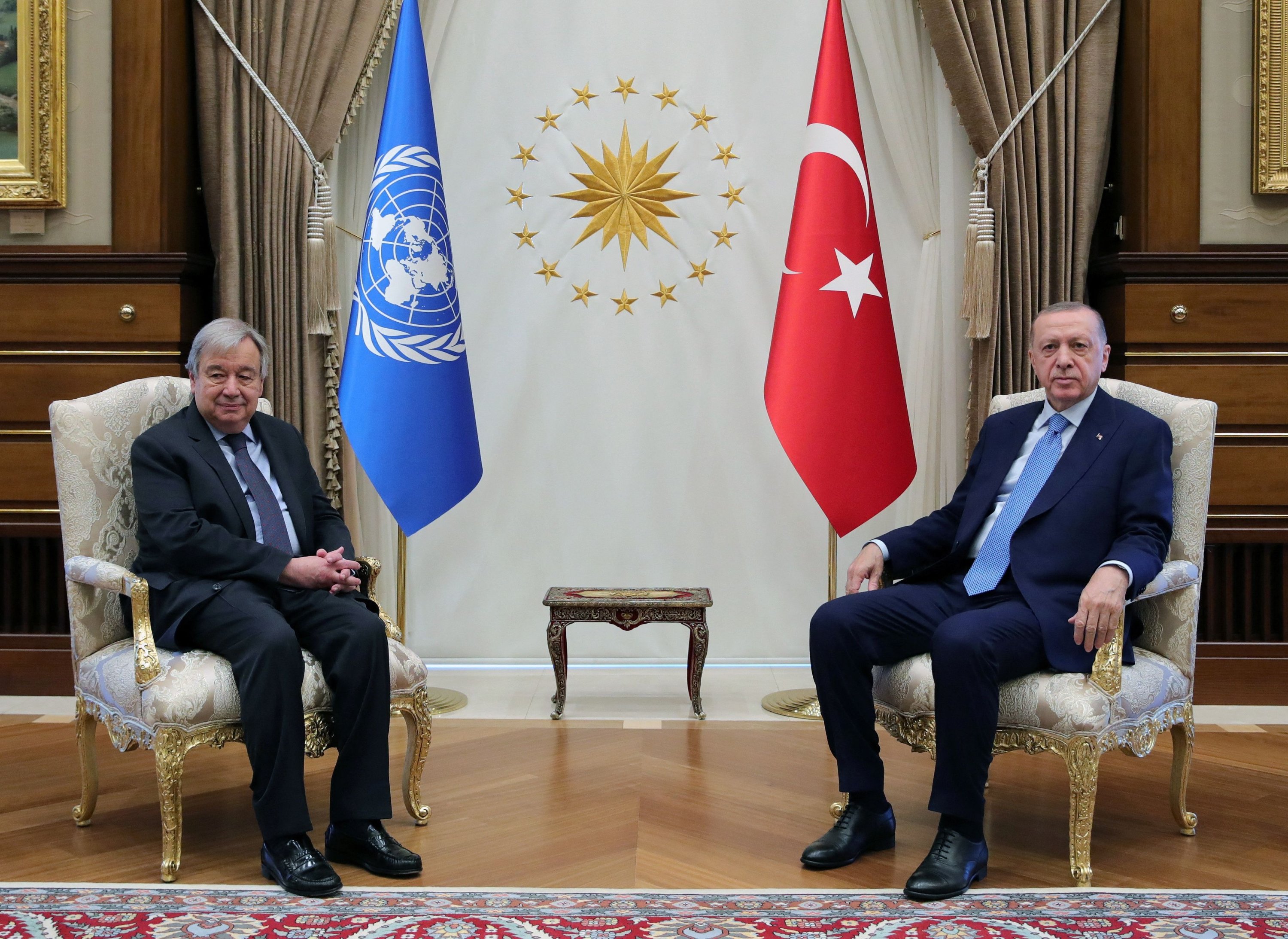
During the Russian-Ukrainian war, Turkish President Recep Tayyip Erdoğan has almost undertaken the function of the U.N. Secretary-General. Indeed, the U.N. Secretary-General Antonio Guterres visited President Erdoğan in Turkey before going to Russia to meet Russian President Vladimir Putin.
Turkey’s emergence as a political great power in the ongoing post-Cold War era reminds us of the wisdom of the great Islamic scholar Ibn Khaldun, who wrote, “the past resembles the future more than one drop of water resembles another.”