

Daily Sabah logo

Politics
Diplomacy Legislation War On Terror EU Affairs Elections News Analysis
TÜRKİYE
Istanbul Education Investigations Minorities Expat Corner Diaspora
World
Mid-East Europe Americas Asia Pacific Africa Syrian Crisis Islamophobia
Business
Automotive Economy Energy Finance Tourism Tech Defense Transportation News Analysis
Lifestyle
Health Environment Travel Food Fashion Science Religion History Feature Expat Corner
Arts
Cinema Music Events Portrait Reviews Performing Arts
Sports
Football Basketball Motorsports Tennis
Opinion
Columns Op-Ed Reader's Corner Editorial
PHOTO GALLERY
JOBS ABOUT US RSS PRIVACY CONTACT US
© Turkuvaz Haberleşme ve Yayıncılık 2026

Daily Sabah - Latest & Breaking News from Turkey | Istanbul

  • Politics
    • Diplomacy
    • Legislation
    • War On Terror
    • EU Affairs
    • Elections
    • News Analysis
  • TÜRKİYE
    • Istanbul
    • Education
    • Investigations
    • Minorities
    • Expat Corner
    • Diaspora
  • World
    • Mid-East
    • Europe
    • Americas
    • Asia Pacific
    • Africa
    • Syrian Crisis
    • Islamophobia
  • Business
    • Automotive
    • Economy
    • Energy
    • Finance
    • Tourism
    • Tech
    • Defense
    • Transportation
    • News Analysis
  • Lifestyle
    • Health
    • Environment
    • Travel
    • Food
    • Fashion
    • Science
    • Religion
    • History
    • Feature
    • Expat Corner
  • Arts
    • Cinema
    • Music
    • Events
    • Portrait
    • Reviews
    • Performing Arts
  • Sports
    • Football
    • Basketball
    • Motorsports
    • Tennis
  • Gallery
  • Opinion
    • Columns
    • Op-Ed
    • Reader's Corner
    • Editorial
  • TV
  • Opinion
  • Columns
  • Op-Ed
  • Reader's Corner
  • Editorial

Turkish defense industry paves way for new alliances

by İhsan Aktaş

Feb 24, 2024 - 12:05 am GMT+3
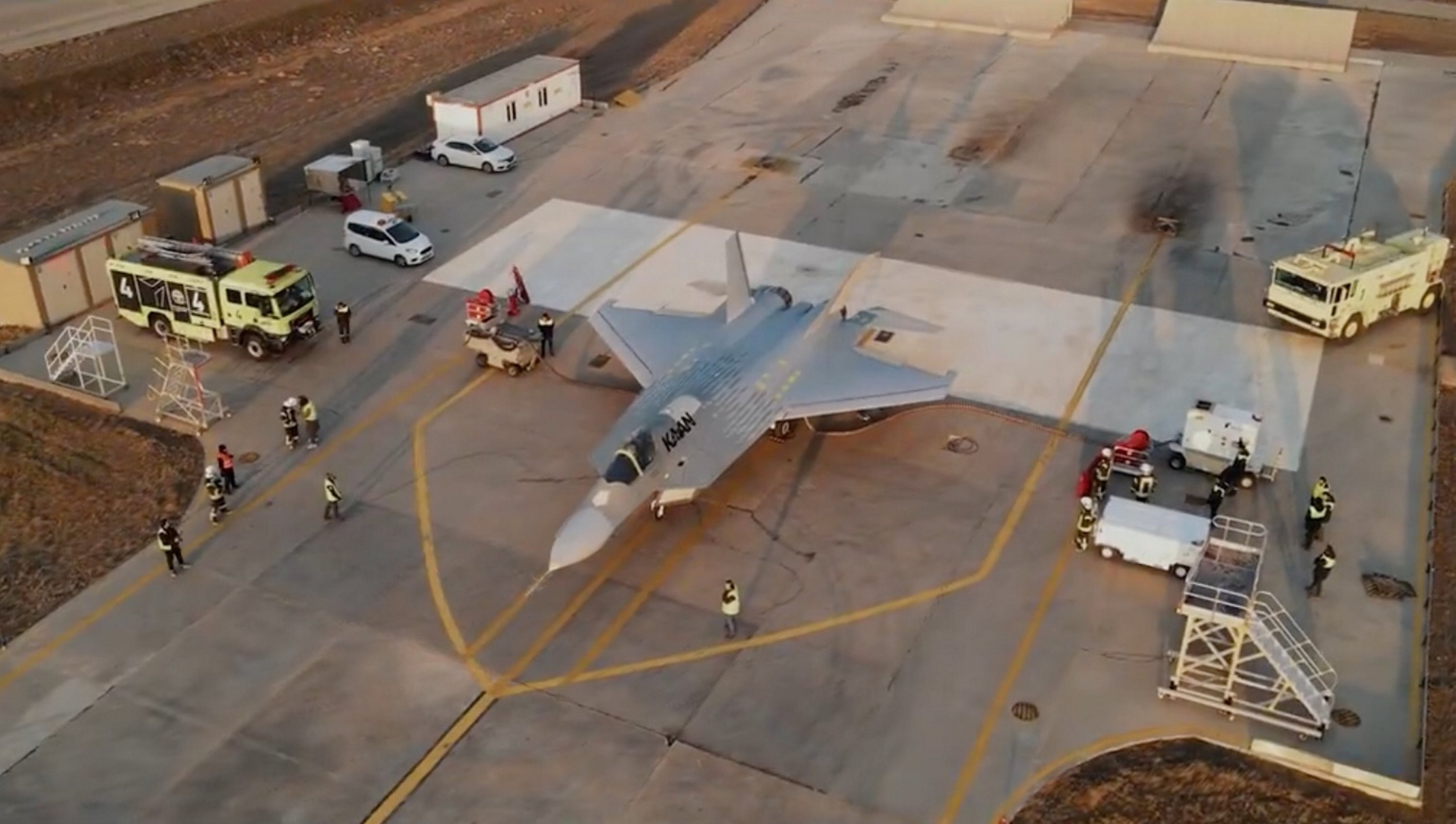
Türkiye's homegrown fifth-generation fighter jet KAAN is seen, Ankara, Türkiye, Feb. 21, 2024. (AA Photo)
by İhsan Aktaş Feb 24, 2024 12:05 am

Following the coup attempt in 2016, Türkiye decisively separated military procurement from operational capacities, catalyzing a revolutionary shift in its defense industry

In the last decade, when Türkiye set its willpower toward complete independence, it began to take unorthodox initiatives in the defense industry.

In the world order established after World Wars I and II, critical technologies, defense industry products and arms sales were under the direct control of Western states. At the same time, this defense industry monopoly was used as a direct tool to control the choice of states.

We remember the negotiations in our childhood on how much of the United States surplus military inventory would be shared between Greece and Türkiye. In the past, efforts to enhance military strength often revolved around acquiring such surplus ammunition in large quantities.

When Türkiye's borders faced missile threats during the Syrian civil war, the first reflex of the U.S. was to remove the Patriot air defense systems from out of Türkiye's borders. In fact, the Syrian civil war demonstrated not only the invalidity of the alliance but also the profound threat to Türkiye's defense industry.

We presume that NATO is a concept of ruling the member states. We might also argue that the development of the Turkish defense industry was not only prevented by the hegemony of the Western countries but also due to the petty interests of the commanders working for NATO.

Coup attempt ending military tutelage

The Gülenist Terror Group's (FETÖ) coup attempt ended the military tutelage in Türkiye, which started in the 1960s and lasted until 2015. Here, civilian politics triumphed over military custody, and FETÖ officers, who were essentially U.S. spies, were directly purged from the military.

After the July 15 coup attempt in 2016, the military equipment procurement channels and armed forces' operational capacity were separated with bold lines, while the generals were in charge of both in the past. Therefore, the civilian sector became more active in producing defense equipment and ammunition. The Turkish defense industry revolution was based on such a fact.

The Turkish army, renowned as one of the largest in the world, is shifting toward procuring most of its ammunition from domestic sources, a burgeoning sector worth tens of billions of dollars that promptly emerged within the nation's defense industry.

Then, Türkiye's civilian industrial organizations with robust industrial infrastructure joined classical Turkish defense manufacturers Machinery and Chemical Industry Corporation (MKE) and Armed Forces Foundation (TSKGV)-owned companies, which had existed since the 1970s. A wide range of defense equipment is in production today, from the navy frigates to unmanned aerial vehicle (UAV) technologies.

Alliances enabled by defense industry

Gradually, Türkiye went from being an arms-procuring state to an arms-exporting country. This does not refer to Türkiye's independence alone. It also indicates a new geopolitical formation together with the countries it supports.

When any country in Africa, for instance, procures Turkish UAVs or combat equipment, it not only provides stability against the terrorist organizations that they are dealing with but also gains an advantage over its competitors.

Today, a Turkish fifth-generation fighter jet took off and made its first flight. At the same time, the jet engines, which will be finalized in 2028, started to work. From now on, the partnerships and relations that Türkiye will establish through the defense industry in the international arena will open a new geopolitical space for Türkiye. Türkiye is poised to bolster its military might and take decisive strides toward achieving complete independence.

Certain countries, such as the U.S. and Russia, have been exerting significant influence in the global defense industry and shaping security paradigms through defense products. Similarly, Türkiye, emerging as a regional power, is undertaking analogous strides within its sphere of influence. These advancements are closely monitored, particularly by continental European nations and the United Kingdom, whose economic progress has experienced a notable slowdown.

About the author
İhsan Aktaş is Chairman of the Board of GENAR Research Company. He is an academic at the Department of Communication at Istanbul Medipol University.
  • shortlink copied
  • KEYWORDS
    turkish defense industry defense turkiye fetö 2016 coup attempt
    The Daily Sabah Newsletter
    Keep up to date with what’s happening in Turkey, it’s region and the world.
    You can unsubscribe at any time. By signing up you are agreeing to our Terms of Use and Privacy Policy. This site is protected by reCAPTCHA and the Google Privacy Policy and Terms of Service apply.
    No Image
    Eruption, Çanakkale and sandstorms: Top pictures of the week
    PHOTOGALLERY
    • POLITICS
    • Diplomacy
    • Legislation
    • War On Terror
    • EU Affairs
    • News Analysis
    • TÜRKİYE
    • Istanbul
    • Education
    • Investigations
    • Minorities
    • Diaspora
    • World
    • Mid-East
    • Europe
    • Americas
    • Asia Pacific
    • Africa
    • Syrian Crisis
    • İslamophobia
    • Business
    • Automotive
    • Economy
    • Energy
    • Finance
    • Tourism
    • Tech
    • Defense
    • Transportation
    • News Analysis
    • Lifestyle
    • Health
    • Environment
    • Travel
    • Food
    • Fashion
    • Science
    • Religion
    • History
    • Feature
    • Expat Corner
    • Arts
    • Cinema
    • Music
    • Events
    • Portrait
    • Performing Arts
    • Reviews
    • Sports
    • Football
    • Basketball
    • Motorsports
    • Tennis
    • Opinion
    • Columns
    • Op-Ed
    • Reader's Corner
    • Editorial
    • Photo gallery
    • DS TV
    • Jobs
    • privacy
    • about us
    • contact us
    • RSS
    © Turkuvaz Haberleşme ve Yayıncılık 2021