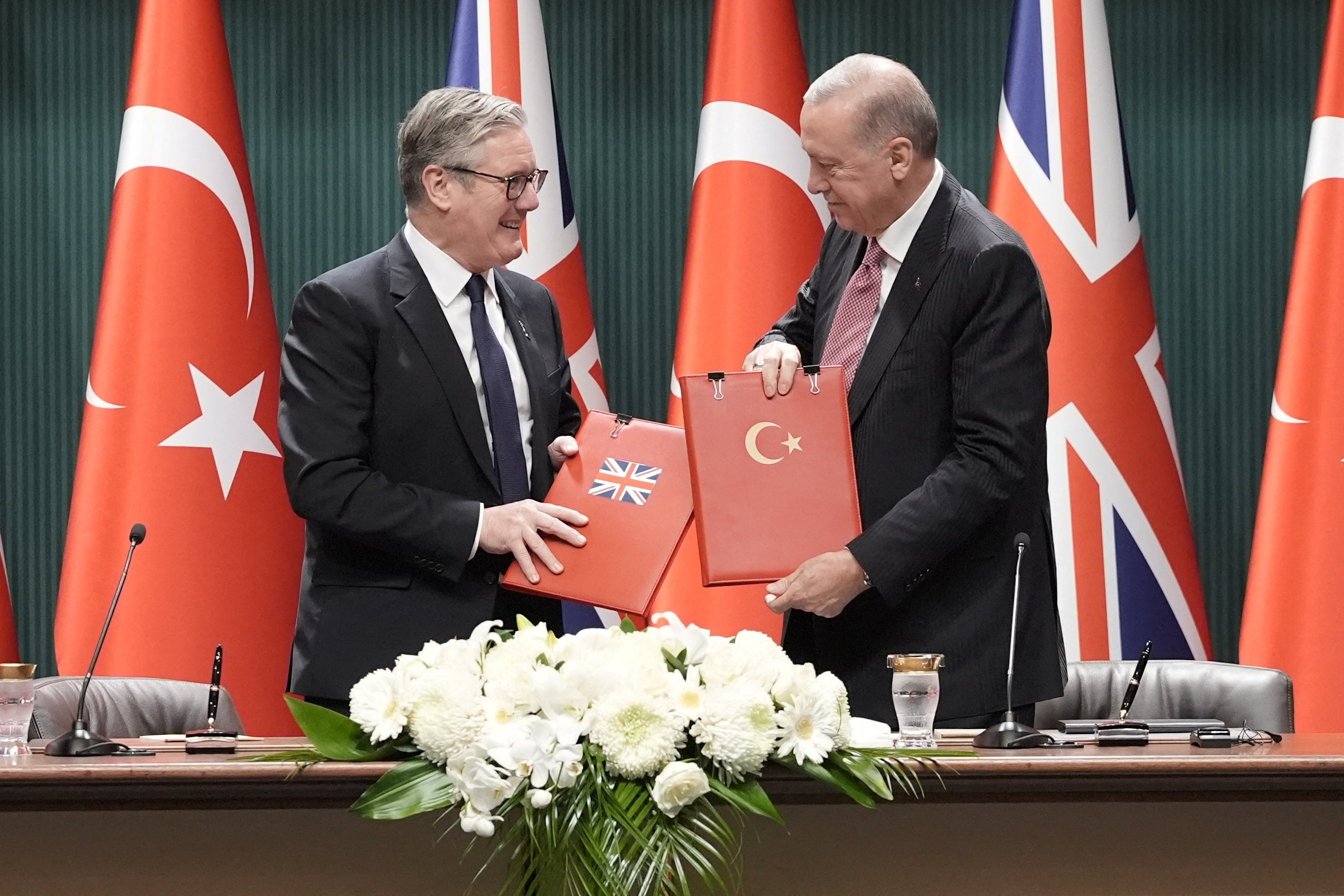
In the past week, British Prime Minister Keir Starmer visited Türkiye; subsequently, German Chancellor Friedrich Merz also traveled to Türkiye, with one of the most surprising outcomes of this visit being the sale of Eurofighter jets. This sale demonstrates that Europe-Türkiye relations have gained entirely new ground and that from now on, these relations will continue to be addressed within this framework.
Recent weeks have seen remarkable activity in European politics. The visits of Merz and Starmer are more than routine diplomacy – they signal a fundamental shift in Europe’s security landscape. Behind these visits lies the emergence of a new geopolitical order, shaped by the return of war to the European continent, ongoing energy and migration crises, and the partial retreat of the U.S. from the region. Europe is moving away from its long-standing self-image as a “continent of peace” and returning to the language of hard security. In this transformation, Türkiye is no longer just a neighbor or an EU candidate; it is becoming a central player in Europe’s security architecture.
The war in Ukraine demonstrated the vital importance of Black Sea security to NATO. Concurrently, instability in the Middle East, the escalating crisis along the Israel-Gaza line, the security of energy routes, and migration movements have rendered Europe's southern flank more fragile. Türkiye is situated directly between these two fragile fronts. Consequently, Ankara, as a country that both balances Russia on the eastern front and manages migration, energy, and terrorism risks on the southern front, has become indispensable in Europe's new security calculus. This is the significance of the successive visits by the British and German leaders.
Although the Eurofighter sale process appears on the surface to be a defense trade agreement, it is, in fact, a symbol of a new era in which Europe recognizes Türkiye as a "joint security producer." European countries no longer wish to sell arms to Türkiye; they also want to share defense technologies and jointly produce regional deterrence. Germany is engaging with Türkiye primarily through economic and industrial cooperation, while the U.K. is deepening ties in defense and intelligence. In the post-Brexit era, London is building a partnership with Ankara that would allow it to remain outside the EU while remaining within its security architecture. Berlin, for its part, is redefining its relationship with Türkiye to reduce dependence on Russia and strengthen the collective defense capacity of Europe.
This new approach is based on a functional strategic partnership that goes beyond the classical full membership debates. Concrete models of cooperation are emerging in areas such as migration, energy, the defense industry and supply chains. Europe no longer seeks to keep Türkiye at its margins but to integrate it into its own system. This shift reflects a growing recognition that every crisis on Europe’s periphery – whether in Ukraine or Gaza – undermines Europe’s internal stability as much as it directly impacts Türkiye.
The global balance is also shifting. As the U.S. reduces its burden in Europe and the Middle East, the influence of China and Russia is growing. Europe has realized it must now produce its own security. In this context, Türkiye's geographical, military, and diplomatic capacity represents a "geopolitical insurance policy" for Europe. Türkiye's weight is increasingly growing as a strong defense line on NATO's eastern flank and as a partner managing energy and migration flows on its southern flank.
In conclusion, Europe's new security architecture is placing Ankara at its center. This is not merely a tactical cooperation but a redefined geopolitical necessity for Europe. The successive visits to Türkiye by the leaders of Britain and Germany show that Europe can no longer envision its future without Türkiye. The Eurofighter negotiations will stand as a symbol of this transformation – marking Europe’s shift from engaging Türkiye at the ministerial level to embracing it as a true strategic partner.