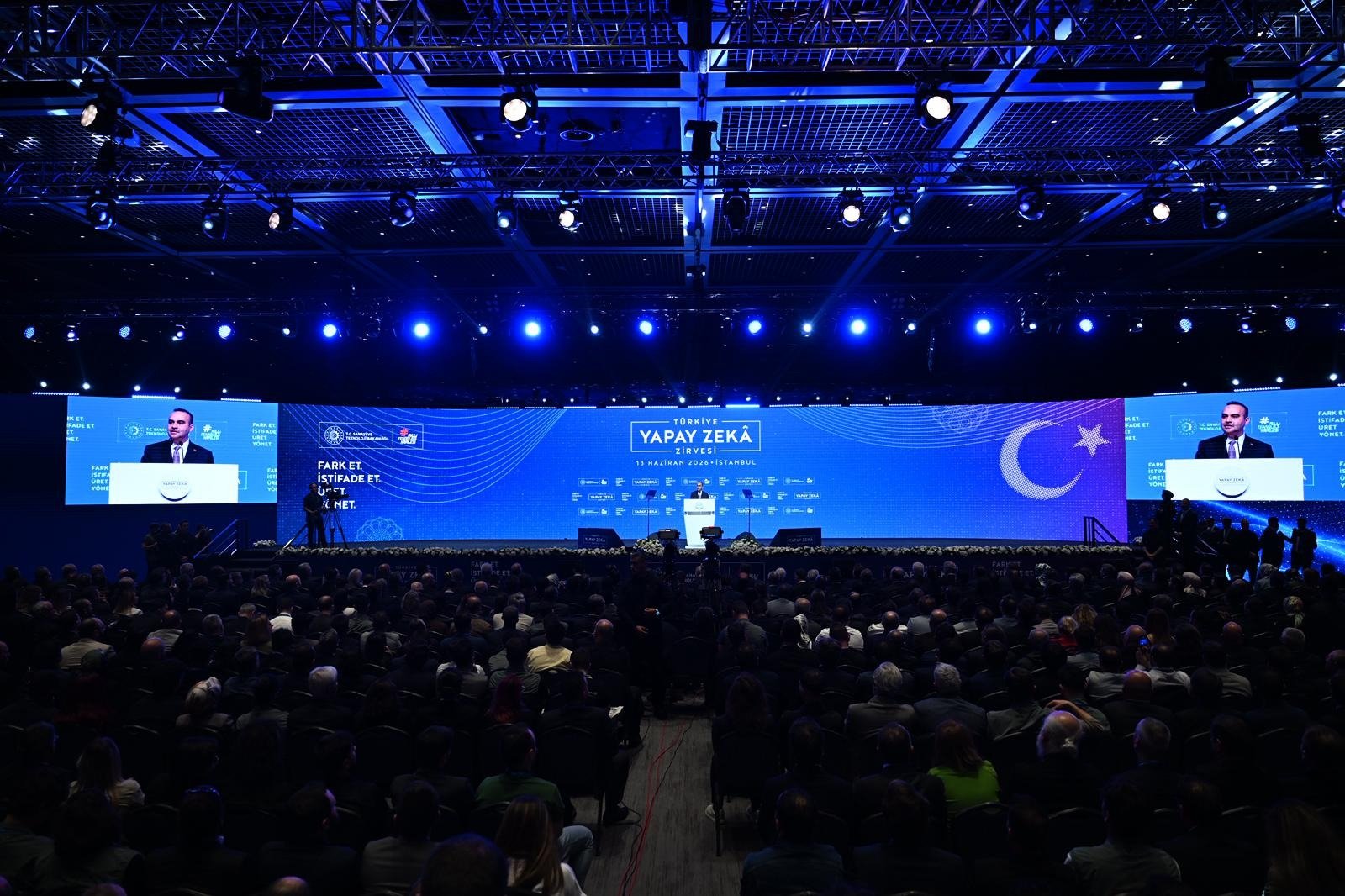
President Recep Tayyip Erdoğan’s unveiling of Türkiye’s AI Action Plan 2026-2030 was received, largely, as a technology story: investment targets, data center capacity, specialist training pipelines, and regulatory frameworks. These are real components of the AI Action Plan. But reducing the announcement to its technical parameters misses what it actually represents as a strategic act. What President Erdoğan unveiled was not primarily an industrial policy. It was a positional declaration in a competition already restructuring the international order, whose consequences will extend far beyond the states currently dominating it.
The announcement deserves to be read on its own strategic terms. In an international system where artificial intelligence increasingly determines who sets the rules of digital governance, who controls the informational environment of conflict, and who can operate with genuine autonomy in crisis conditions, a national artificial intelligence (AI) strategy is not a technology roadmap. It is a statement about what kind of state a government intends to be in the emerging order. The question is not whether Türkiye’s plan matches Washington or Beijing in scale, but whether it reflects a coherent understanding of the structural competition underway and whether its instruments are calibrated to that reality.
The transformation of AI from a domain of commercial and scientific activity into an instrument of great power competition has followed a trajectory familiar to students of international relations. Capabilities that confer decisive strategic advantage do not remain neutral for long. States with revisionist ambitions seek to acquire them; states with established positions seek to deny them to rivals; and states caught in the middle are forced to choose between managed dependence and the costly pursuit of autonomous capacity.
What distinguishes the current AI competition from earlier technological races is not its intensity but its structural depth. Control over AI is not merely about a single weapons system or a specific military application. It is about the architecture of cognition at the state level: the capacity to process intelligence faster, to compress decision cycles in crisis conditions, to sustain autonomous military operations across contested domains, and to shape the informational environment in which adversaries and partners alike form their perceptions.
Washington and Beijing have both recognized this logic, and their responses reflect it. The American AI Action Plan is not fundamentally a science policy document; it is an attempt to lock in technological primacy before the window for doing so narrows. China’s parallel initiatives serve an equivalent purpose from a challenger’s position. Each seeks to draw other states into its technological orbit, creating dependencies that translate over time into political leverage. The chip control measures, the export restrictions, the competing infrastructure financing offers flowing from Washington and Beijing to capitals across the Global South are all expressions of this underlying structural competition. Technology, in this context, is the idiom of geopolitics.
The militarization of this competition is not its distortion but its inner logic. What the Ukraine battlefield demonstrated, with a clarity that no theoretical argument could match, is that AI-enabled autonomous systems have fundamentally altered the relationship between industrial capacity, operational tempo and strategic effect. Mass drone production, AI-assisted targeting, autonomous loitering munitions that classify and engage without human intermediation: these are no longer experimental capabilities. They are the operational baseline of contemporary high-intensity conflict. States that observed the war against Iran in 2026 and drew the correct conclusions began investing accordingly. The great powers understood this earlier than most, which is why the military dimension of AI competition has accelerated at a pace that governance frameworks, alliance structures and public debate have struggled to keep pace with.
Türkiye’s AI Action Plan must be read against this structural background, not against the benchmarks of Silicon Valley or the ambitions of Zhongguancun. The plan’s four-pillar architecture, built around discovery, use, production and governance, commits at minimum ten billion dollars in predominantly private investment, targets one gigawatt of installed data center capacity by 2030, proposes a National Data Library, and aims to produce ten thousand advanced AI specialists alongside a hundred thousand application professionals. These are meaningful commitments. They are also measured against what the leading powers are mobilizing, a fraction of available resources. Honest analysis cannot obscure that gap.

But the strategically relevant question is not whether Türkiye can compete at the frontier of foundational model development. It cannot, and the attempt to do so would represent a misallocation of scarce national capacity. The relevant question is whether Türkiye can build sufficient sovereign capability in the domains that directly determine its strategic autonomy, deterrence credibility, export leverage, and negotiating position within a rapidly stratifying technological order. Measured against that question, Türkiye’s actual position is considerably stronger than aggregate investment figures suggest.
The defense dimension is where this becomes most visible. Over the past decade, Türkiye has constructed a defense industrial base whose AI integration is not aspirational but operational. Baykar’s autonomous systems have been validated across multiple theaters under genuine combat conditions. The KEMANKEŞ AI-powered cruise missile represents a qualitative threshold that only a handful of states have crossed. The Kızılelma unmanned fighter has demonstrated autonomous target acquisition in testing environments that directly anticipate the next generation of contested airspace operations. STM’s Kargu and Alpagu loitering munitions use machine-learning algorithms for target classification and engagement without GPS dependency, a capability that matters precisely where GPS denial is most likely. These systems have generated demand from over three dozen states, creating a network of defense relationships that constitutes its own form of structural influence.
Yet the plan signals ambition that extends beyond the defense perimeter. The Scientific and Technological Research Council of Türkiye (TÜBITAK)’s domestically developed large language model, Bilge, alongside parallel initiatives from Baykar, Havelsan and the T3 Foundation, represents an attempt to establish sovereign cognitive infrastructure at the civilian level. A state that cannot construct its own large language models cannot, in any meaningful sense, govern its own informational environment. The plan also envisages AI vouchers for small and medium enterprises, dedicated AI growth zones, and test laboratories to validate emerging autonomous technologies. Taken together, these constitute a deliberate attempt to build an ecosystem rather than simply procure capability.
This is where the concept of strategic autonomy becomes analytically precise rather than politically vague. The AI Action Plan extends the logic of defense indigenization into the digital domain. Its central organizing concept, digital autonomy, means the capacity to design, govern, and deploy artificial intelligence according to national priorities rather than within the constraints of imported technological architecture. This is not nationalist rhetoric. It is a strategic lesson drawn from costly experience.
The broader opportunity available to Türkiye lies in an asymmetry that the binary framing of U.S.-China rivalry consistently obscures. The plan’s most strategically interesting element may be its least commented upon: the initiative to develop a Great Turkic Language Model in partnership with the Organization of Turkic States, encompassing Oghuz, Kipchak and Karluk dialect families. This is not a cultural project with a technology label. It is an act of epistemic entrepreneurship, an attempt to shape the cognitive infrastructure of a geopolitical space stretching from the Balkans to Central Asia before it is absorbed into language model architectures designed in California or Beijing. African capitals, Gulf states and partners across the Global South, navigating the choice between Washington’s ecosystem and Beijing’s, will take note. Türkiye is one of a very small number of states capable of offering a credible third option across hard and soft dimensions of this competition alike.
The ambition embedded in the 2026-2030 plan points toward something more significant than an updated industrial roadmap. It reflects an understanding that in a world being reorganized around the control of artificial intelligence, sovereignty itself is being redefined. States that cannot generate, govern, and deploy their own AI will find that decisions most consequential for their security and political alignment are being made by architectures they did not build and cannot govern. Ankara appears to have internalized that this is the central strategic challenge of the coming decade. Translating that recognition into a durable national capability remains the harder task, one that no announcement, however well-staged, can accomplish on its own.