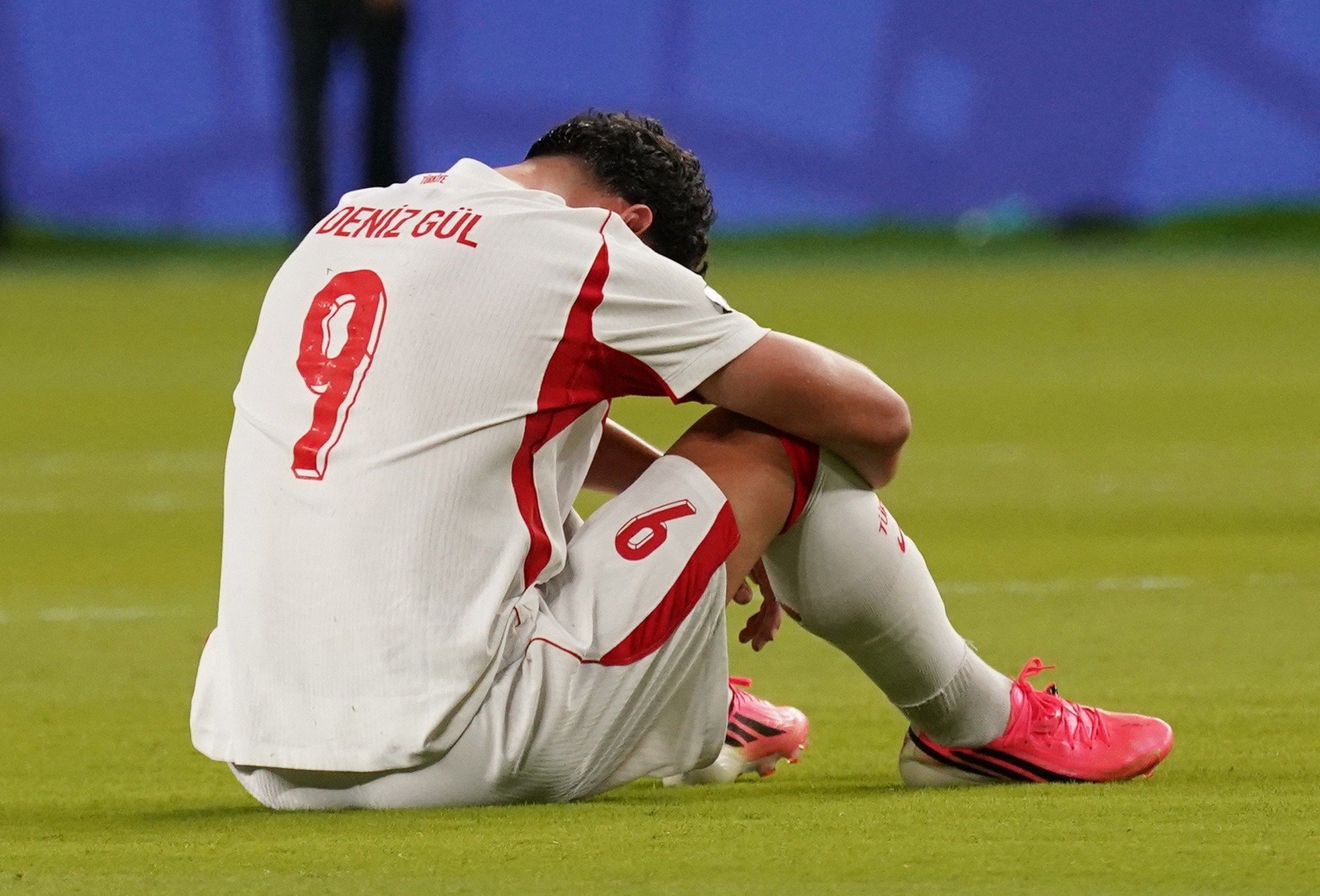
Türkiye's exit from the 2026 World Cup, two matches, zero goals, zero points, has been greeted with the kind of national mourning usually reserved for genuine catastrophe. The post-mortems are fierce, the recriminations are loud, and the question of who is to blame has already consumed more column inches than the matches themselves. All of this is understandable. None of it is particularly honest.
The first failure of this World Cup campaign was not what happened on the pitch but the story that the Turkish Football Federation and the broader football establishment told the country about who we were and what we were going to do in North America.
It was, to put it plainly, a communications catastrophe dressed up as patriotic confidence.
Türkiye ended a 24-year absence from the World Cup finals. Let that number sit for a moment. Twenty-four years. Arda Güler and Kenan Yıldız weren't even born the last time we played at a World Cup. This is a country that has qualified for the tournament exactly three times in its history. The language of conquest, the martial framing, the talk of raids and campaigns, the barely concealed implication that the knockouts were a formality, was not confidence. It was delusion packaged as ambition.
There is a word for this in political communications: expectation mismanagement. And in football, as in politics, it has consequences.
Consider, for a moment, Bosnia-Herzegovina. They were making only their second-ever World Cup appearance, a nation of three million people with a recent history of war, political dysfunction, and stalled EU accession. Their approach to the tournament could not have been more different from ours.
A Bosnian rock band called Dubioza Kolektiv had released a satirical song back in 2011 called "USA," a tongue-in-cheek commentary on the Balkan tendency to emigrate in search of a better life, with a chorus that goes "I am from Bosnia, take me to America." When Bosnia qualified, fans unfurled a banner with those lyrics at the playoff match, and the song was suddenly reloaded with completely new meaning, from a lament about emigration to a collective shout of joy about actually going to America. By the time the tournament started, Thierry Henry and Zlatan Ibrahimović were repeating the chorus live on television. It became, as fans around the world noted, the "actual World Cup song" of the tournament.
Nobody told Bosnia they were going to win it. They showed up with a song, a sense of humor about themselves, and genuine joy at being there. That is the correct emotional register for a nation attending only its second World Cup.
Back to the 2002 third-place finish, the great lodestone of Turkish football mythology. It was a genuine achievement, extraordinary even, and it deserves its place in the national memory. But what the myth-making around 2002 obscures is the uncomfortable question it raises: if the Turkish national team is what the establishment insists it is, why did we spend the next 24 years not qualifying?
The previous generation of Turkish footballers was arguably no less talented: Arda Turan, who played for Atletico and Barcelona, and Burak Yılmaz, who eventually won the French Ligue 1 with Lille, immediately come to mind. Five consecutive tournaments missed. That was a structural, sustained absence from the world's biggest stage.
That absence tells us something about the actual level of Turkish football that the triumphalism around this qualification chose to ignore.
This squad does have genuine talent, Arda Güler at Real Madrid, Kenan Yıldız at Juventus and Hakan Çalhanoğlu, captaining the side with Champions League finals on his CV. Nobody is disputing the individual quality. The dispute is with the gap between individual quality and collective tournament readiness, a gap that the Turkish Football Federation's (TFF) communications apparatus pretended did not exist. When you frame a qualification playoff victory over Kosovo as the beginning of a historic campaign, you are not inspiring your players. You are building a pyre and handing the opposition the matches.
Against Paraguay, a side that had just been humiliated 4-1 by the United States, Türkiye dominated possession, generated chance after chance, and lost 1-0 to ten men. The numbers are almost comedic in their cruelty. But the players who produced those numbers were not frauds. They were young men playing in only their country's third World Cup, under the weight of expectations calibrated for a perennial contender. They are not that. Not yet. Perhaps not for a while. Perhaps not ever, by the way!
Güler's emotional apology after the final whistle was gracious and entirely unnecessary. He is 21 years old. Yıldız is 21. They were asked to carry something that no pair of 21-year-olds should be asked to carry, the weight of a mythology their federation constructed and the media amplified without scrutiny. The honest framework for this tournament was always a learning experience for a young squad returning to a stage they had not seen in a generation. That framing was available. The TFF chose a different one.
There is a structural lesson here that goes beyond football. Institutions that manage national expectations, whether in sport, in politics, in diplomacy, have a responsibility to their publics that extends beyond generating enthusiasm. The enthusiasm was real. The foundation it was built on was not. And when the foundation crumbles, as it did in Vancouver and Santa Clara, the disappointment is not proportional to the actual result. It is proportional to the distance between the promise and the reality.
Türkiye will co-host Euro 2032 alongside Italy and qualify automatically. Güler and Yıldız will be 27. The conditions for a genuine run at something meaningful are, actually, taking shape. But they will only materialize if the institutions responsible for the national team develop the honesty to match their ambition, to tell the country not what it wants to hear, but what it needs to understand.
Bosnia came to America with a banger and a smile. We came with a war drum and left with nothing. Maybe next time, the TFF might consider that knowing who you are is not a weakness. It is the only foundation worth building on.