As the world witnesses a technological rupture driven by artificial intelligence – one fundamentally different from previous turning points – it is simultaneously experiencing two deep-seated transformations: the energy transition and the deepening of digitalization. The energy transition, which aims to steadily reduce the share of conventional energy sources and elevate clean energy sources to the status of primary energy providers, has now become a central objective for most countries. The deepening of digitalization, on the other hand, is less a transition than the inevitable outcome of accelerating technological progress. Interestingly, both transformations rest on – and are therefore dependent upon – the same foundation: rare metals and rare earth elements. It is hardly surprising that in recent years, from the U.S. to China and across the European continent, the explicit political positions of leaders have increasingly been shaped by the drive to secure control over these metals and elements.
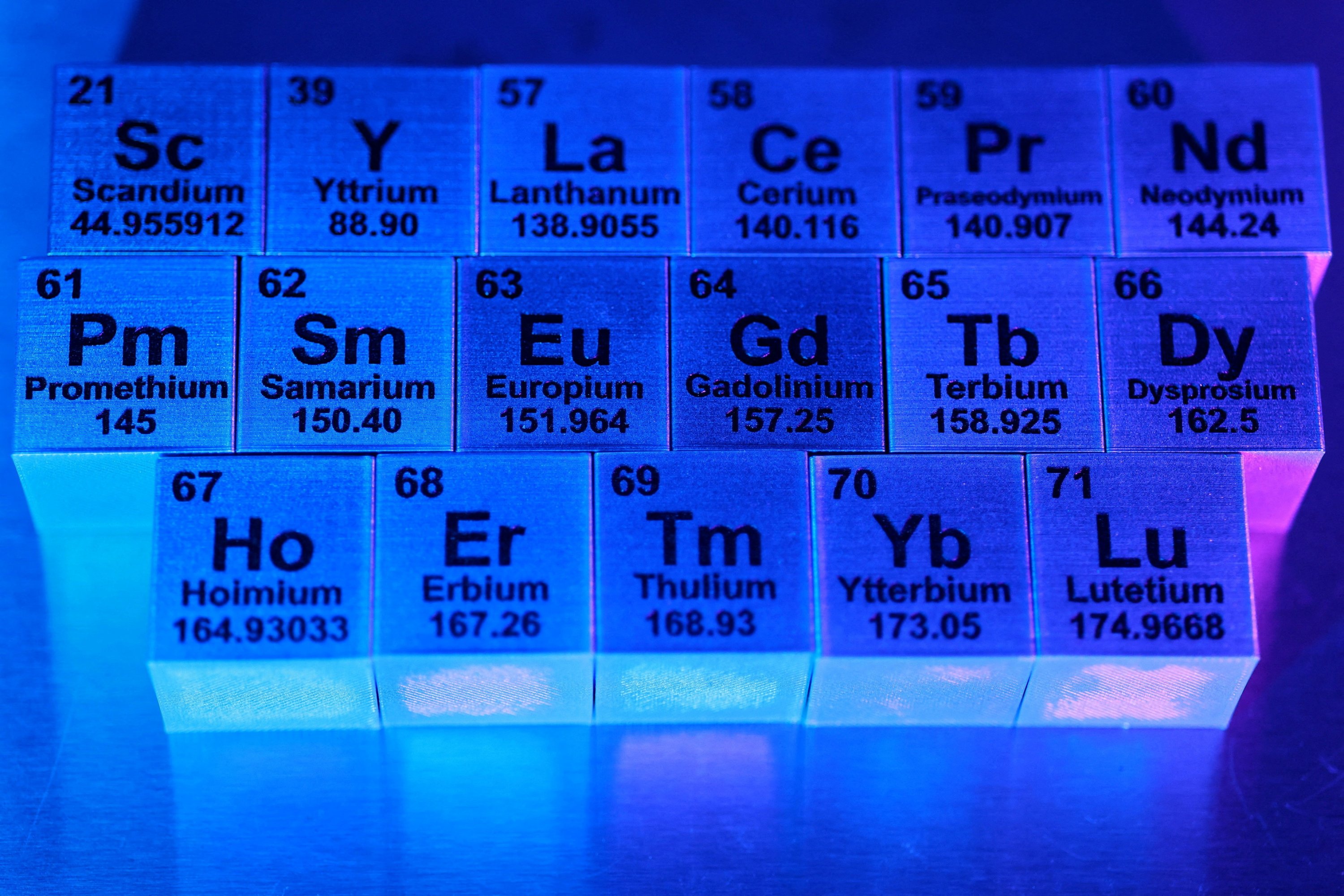
In his book "The War for Rare Metals: The Dark Side of the Energy Transition and Digitalization," Guillaume Pitron opens a window into the scale of the struggle over rare metals on which these two transformations depend. Rare metals are widely used across nearly all components of these transformations, from expanding the capacity of digital technologies to chip manufacturing, the aerospace industry, the blades of wind turbines, solar panels and electric vehicles, as well as their batteries. Consequently, the sustainability of both transformations hinges on access to rare earth elements. What makes these elements attractive are their magnetic, optical and catalytic properties. Rare metals occur in nature in association with more abundant metals; however, because they are present only in extremely small proportions within these materials, they are classified as “rare.” As a result, extracting them requires highly demanding processes. For example, “to produce 1 kilogram of vanadium, 8.5 tons of rock must be processed; for 1 kilogram of cerium, 16 tons; for 1 kilogram of gallium, 50 tons; and for 1 kilogram of lutetium – an even rarer metal – an astonishing 1,200 tons of rock must be refined.”
When the future of an environmentally conscious energy transition – one that has triggered a global transformation with the Paris Agreement – depends on rare metals, and when these rare metals are, as noted above, indeed extremely scarce, how can their regular supply be ensured? More critically, what kinds of costs does the procurement of these metals entail? Pitron’s book offers particularly illuminating insights precisely on these questions. First, it points out that rare metals are not centralized in the West but instead distributed across a vast geography, stretching across South Africa, Russia, Mongolia, Türkiye, China, Kazakhstan, Brazil, Bolivia, Chile, Argentina and the Democratic Republic of Congo. Consequently, there is no Western dominance when it comes to rare metals.
On the other hand, the extraction of rare metals requires chemical processes that cause lasting damage to the environment. Moreover, the emissions generated during the extraction of the rare metals that are supposed to enable an energy transition aimed at reducing carbon emissions are significantly higher than the emissions produced in the extraction of conventional energy sources. Energy consumption is also extremely high. For example, “the production process of an electric vehicle alone consumes more energy than the production process of a conventional automobile.”
Furthermore, the extraction of these metals involves an extremely high demand for water, which has now become a strategic resource. The pollution of the water used causes severe environmental damage: “And it does not end there: refining each ton of rare earth elements requires more than 30,000 cubic meters of water, and this water is immediately laden with acids and heavy metals once it is used.” Consequently, there is a serious paradox at play. In Pitron’s words, “Any solar panel, wind turbine, electric car, or energy-efficient light bulb carries an ‘original sin’ even before it is put into service: it displays a dismal balance in terms of energy and environmental impact.”
Here, too, the West displays a hypocritical stance. To spare their own countries from experiencing this environmental devastation, Western states have gradually abandoned the extraction of these minerals within their own borders, choosing instead to focus on sourcing them at low cost and on developing high technologies that rely on these inputs. In other words, during the energy transition, Western countries have preferred to pass on the environmental costs of extracting rare metals to non-Western countries. Pitron explicitly points to this hypocrisy: “In this sense, the transition to digital and new energy technologies is a transition for the wealthiest classes: It removes pollution from richer urban centers and relocates it to the most destitute and remote regions, where its real impacts and burdens are fully felt.”
Consequently, the West’s calculation is clear: to shift the costs of rare metals onto non-Western countries and to use the returns to pull Western economies out of the long-standing economic stagnation that has constrained them. They have not even felt the need to conceal this approach. As Pitron notes, the “Summers Memo,” signed in 1991 by World Bank Chief Economist Lawrence Summers, argued, “Advanced economies should export polluting industries to poor countries – above all to sparsely populated African countries where environmental pollution is relatively low.” This recommendation has borne fruit: “For example, Europe, which accounted for more than 60% of global mineral production in the mid-19th century, today represents barely 3%. The same observation applies to the United States; its share, which stood at 40% in the aftermath of World War II, has now fallen to less than 5%.”
However, the West is now confronting the economic costs of this choice. China, having turned this policy into an opportunity, has quietly become the primary monopoly in rare metals: “Beijing produces 54% of the antimony consumed worldwide, 58% of indium, nearly 66% of fluorine, 67% of vanadium, and 73% of natural graphite. China produces 67% of silicon and 83% of germanium. These figures rise to 86% for tungsten and range from 85% to 100% for rare earth elements.” Moreover, the main suppliers of rare earth elements are not limited to China alone: “The Democratic Republic of Congo supplies 63% of cobalt; South Africa provides 71% of platinum, 93% of iridium, 81% of rhodium, and 94% of ruthenium; Brazil supplies 92% of niobium. ... Russia, which alone supplies 40% of palladium, and Türkiye, which meets 48% of global boron demand, are also among these countries.”
On the other hand, China did not treat monopolization merely as a one-dimensional policy in a field abandoned by the West. On the contrary, through patient and long-term strategies, it set in motion a series of interlinked policies aimed at transforming the sector in depth. First, as it consolidated its monopoly over rare metals, it imposed low-level embargoes on their supply. The objective was to compel companies facing supply constraints to relocate their production facilities to China. As producers dependent on these materials struggled to secure raw inputs under the embargo, they were gradually pushed toward the outcome China desired: “Either remain in their home countries and operate industrial facilities at a sluggish pace due to insufficient access to raw materials, or move their operations to China and gain unrestricted access to the necessary commodities.” Most companies chose the latter option and relocated their manufacturing plants to China. For instance, Magnequench, a leading magnet manufacturer, closed its factory in 2006 and moved to Tianjin, southeast of Beijing.
At this stage, China’s second strategy comes into play. It launches joint investment initiatives with companies that relocate their production facilities to China, thereby initiating joint technological innovation efforts. Thus, the objective goes beyond the mere relocation of production to encompass the sharing of technology and patents as well. China’s ultimate goal is not only to secure supremacy as the primary supplier of these products, but also to gain dominance in high-technology manufacturing based on rare metals. The strategy it pursued for this purpose proved effective. For example: “Beijing first lured or coerced foreign industrialists into relocating to its territory, formed partnerships with them through joint ventures, and then launched a process of ‘joint innovation’ or ‘re-innovation,’ thereby appropriating the technologies of Japanese and American super-magnet manufacturers.”
Consequently, as China increasingly pulled global production into its own territory, it also gained access to this opportunity through the massive budgets it was already allocating to research ($500 billion in 2021). Moreover, China does not limit itself to these coordinated policies; it also continues to import rare metals produced outside its borders: “For example, it imports cobalt from the Democratic Republic of Congo (80% of which is exported in raw form and refined in China), nickel (Beijing refines 35% of this metal), and lithium (between 50% and 70% of global production has been processed in China).” In other words, China not only holds the monopoly over the rare metals required for the two major transformations of our time – namely, the energy transition and the deepening of digital technologies – but also continuously increases its share in the development and manufacturing of the technologies that depend on these metals.
In short, at this juncture, the world is experiencing an economic bottleneck, and as the gap between developed and developing countries has narrowed in recent years, it is clear that the West needs a new lever to reverse this convergence in its own favor. Given that digital technologies already largely remain an area of Western dominance, the decisive rupture in favor of the West is expected to be achieved through the energy transition. Thus, the energy transition appears not merely as an expression of environmental sensitivity, but as a new and highly long-term strategic move aimed at restoring Western technological superiority. However, this will not be an easy move. In this context, the West has not only suffered a significant loss of ground to China, but political transformations and the rise of local production approaches in other producer countries have further widened this loss of position: “This newly emerging ‘metal risk’ does not depend solely on China’s export policies. In Asia, Africa and Latin America, growing and strengthening nationalism around mineral resources is steadily weakening Western positions.” Consequently, the rare metal wars unfolding today – and those that will continue in the period ahead – will be directly linked to these lost positions.