Daily Sabah logo

Politics
Diplomacy Legislation War On Terror EU Affairs Elections News Analysis
TÜRKİYE
Istanbul Education Investigations Minorities Expat Corner Diaspora
World
Mid-East Europe Americas Asia Pacific Africa Syrian Crisis Islamophobia
Business
Automotive Economy Energy Finance Tourism Tech Defense Transportation News Analysis
Lifestyle
Health Environment Travel Food Fashion Science Religion History Feature Expat Corner
Arts
Cinema Music Events Portrait Reviews Performing Arts
Sports
Football Basketball Motorsports Tennis
Opinion
Columns Op-Ed Reader's Corner Editorial
PHOTO GALLERY
JOBS ABOUT US RSS PRIVACY CONTACT US
© Turkuvaz Haberleşme ve Yayıncılık 2026

Daily Sabah - Latest & Breaking News from Turkey | Istanbul

  • Politics
    • Diplomacy
    • Legislation
    • War On Terror
    • EU Affairs
    • Elections
    • News Analysis
  • TÜRKİYE
    • Istanbul
    • Education
    • Investigations
    • Minorities
    • Expat Corner
    • Diaspora
  • World
    • Mid-East
    • Europe
    • Americas
    • Asia Pacific
    • Africa
    • Syrian Crisis
    • Islamophobia
  • Business
    • Automotive
    • Economy
    • Energy
    • Finance
    • Tourism
    • Tech
    • Defense
    • Transportation
    • News Analysis
  • Lifestyle
    • Health
    • Environment
    • Travel
    • Food
    • Fashion
    • Science
    • Religion
    • History
    • Feature
    • Expat Corner
  • Arts
    • Cinema
    • Music
    • Events
    • Portrait
    • Reviews
    • Performing Arts
  • Sports
    • Football
    • Basketball
    • Motorsports
    • Tennis
  • Gallery
  • Opinion
    • Columns
    • Op-Ed
    • Reader's Corner
    • Editorial
  • TV
  • Opinion
  • Columns
  • Op-Ed
  • Reader's Corner
  • Editorial

When foreign patronage becomes political poison

by İhsan Aktaş

Jan 10, 2026 - 12:05 am GMT+3
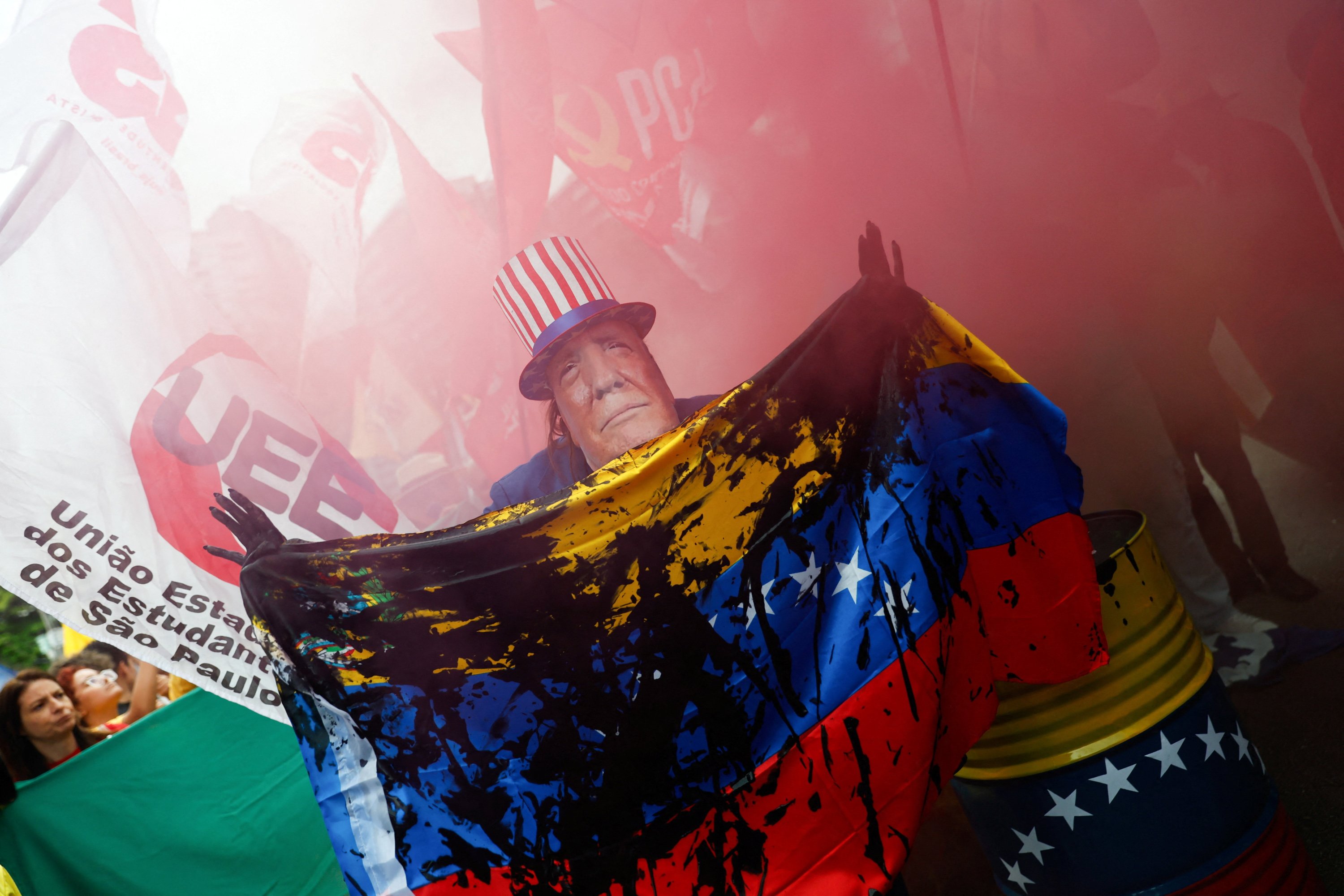
A man wears a mask depicting U.S. President Donald Trump during a protest against U.S. strikes on Venezuela and the capture of its President Nicolas Maduro, Sao Paulo, Brazil, Jan. 5, 2026. (Reuters Photo)
by İhsan Aktaş Jan 10, 2026 12:05 am

U.S. power politics are eroding the legitimacy of opposition movements that rely on Western support, reshaping global political dissent

The kidnapping of Venezuelan President Nicolas Maduro and his wife will be debated extensively in the period ahead. However, I would like to approach the issue from a different angle: the future of political opposition within countries. Until now, there has been a culture of opposition shaped by a reliance on the EU or the U.S., grounded in the discourse of democracy and liberal economics. This understanding of opposition generally sought legitimacy through legal frameworks and relationships established with the Western allies.

U.S. President Donald Trump’s intervention involving Caracas and Maduro has made one reality unmistakably clear: as a global power, the U.S. is no longer primarily motivated by democracy, the rule of law or freedom, but by the acquisition of territory, country, minerals and oil. As a result, we are entering a period in which classical notions of international relations have largely lost their meaning.

A striking remark made by a professor of international relations captures this shift briefly: “All textbooks on international relations must now be thrown away and a new paradigm rewritten.” This observation inevitably confronts us with the fact that we are facing an updated version of the era of ruthless colonialism.

In particular, neoliberal currents once fostered a distinct culture of opposition worldwide. At times supported from Europe, at times from the U.S., individuals, civil society organizations or political parties in various countries were encouraged to criticize existing systems in the name of democracy, under the assumption that such efforts would bring freedom and democratic governance to those societies.

Yet today, one conclusion has become unavoidable: from this point forward, which country can rely on an external power, engage in dialogue with it and carry out opposition politics? This reality reveals a deeply critical and unsettling truth.

Actors who position themselves in opposition to their own governments while aligning with Europe or the U.S. – presenting themselves as “defenders of democracy” – are now likely to be perceived by their societies as traitors. Indeed, we live in a world where even a woman awarded the Nobel Peace Prize, Venezuelan opposition leader Maria Corina Machado, is no longer taken seriously, but is instead viewed merely as an actor seeking the occupation of her own country.

For this reason, Trump’s latest move will undoubtedly be widely discussed, debated and remain on the agenda for a long time. Small- and medium-sized states, meanwhile, will increasingly recognize that their very existence is under direct threat. Alliances across the world will be reshaped, because any state can be targeted for virtually any reason – sometimes through conventional military intervention, and at other times not by organizing opposition, but through a centralized operation aimed directly at a head of state.

At this point, the fundamental question that must be openly debated is this: Will those who engage in opposition politics in their own countries do so based on their domestic realities, or will they act in the hope of support from the U.S. or the EU, even to the extent of expecting an operation against their own head of state one day? This is a question of vital importance.

Many may approach the issue from the perspective of international relations. In my view, however, the real matter lies elsewhere: the culture of externally supported opposition is now producing deep and widespread distrust worldwide.

From now on, no one should assume that relying on the U.S., Trump, the EU or any European country to wage political struggle against their own nation, state or leadership will come without consequence.


About the author
İhsan Aktaş is Chairman of the Board of GENAR Research Company. He is an academic at the Department of Communication at Istanbul Medipol University.
  • shortlink copied
  • KEYWORDS
    venezuela-us relations nicolas maduro donald trump world politics
    The Daily Sabah Newsletter
    Keep up to date with what’s happening in Turkey, it’s region and the world.
    You can unsubscribe at any time. By signing up you are agreeing to our Terms of Use and Privacy Policy. This site is protected by reCAPTCHA and the Google Privacy Policy and Terms of Service apply.
    No Image
    Once picnic zone near Japan nuclear plant now a no-go zone
    PHOTOGALLERY
    • POLITICS
    • Diplomacy
    • Legislation
    • War On Terror
    • EU Affairs
    • News Analysis
    • TÜRKİYE
    • Istanbul
    • Education
    • Investigations
    • Minorities
    • Diaspora
    • World
    • Mid-East
    • Europe
    • Americas
    • Asia Pacific
    • Africa
    • Syrian Crisis
    • İslamophobia
    • Business
    • Automotive
    • Economy
    • Energy
    • Finance
    • Tourism
    • Tech
    • Defense
    • Transportation
    • News Analysis
    • Lifestyle
    • Health
    • Environment
    • Travel
    • Food
    • Fashion
    • Science
    • Religion
    • History
    • Feature
    • Expat Corner
    • Arts
    • Cinema
    • Music
    • Events
    • Portrait
    • Performing Arts
    • Reviews
    • Sports
    • Football
    • Basketball
    • Motorsports
    • Tennis
    • Opinion
    • Columns
    • Op-Ed
    • Reader's Corner
    • Editorial
    • Photo gallery
    • DS TV
    • Jobs
    • privacy
    • about us
    • contact us
    • RSS
    © Turkuvaz Haberleşme ve Yayıncılık 2021