The Middle East region has been in political instability since the eruption of the Arab insurgencies and revolutions in 2011. All regional actors, especially the Arab states, directly or indirectly have suffered from this prolonged instability. Most observers accept that the longer the instability persists, the more vulnerable the regional states will become. Therefore, most regional states ask Israel to stop its atrocities in Palestine and accept a cease-fire.
Arab states such as Qatar and Egypt, the two key states that play a mediatory role between Israel and Hamas, have been asking Israel to stop its aggression against the Palestinians. According to a handout by the Egyptian presidency, Egyptian President Abdel-Fattah el-Sissi explained that it is necessary to declare a cease-fire in Gaza and pave the way for the implementation of a two-state solution. During a meeting with Danish Foreign Minister Lars Lokke Rasmussen in Cairo, el-Sissi pointed out that there is an “utmost necessity” to prioritize the path of stability in the area.
Similarly, Qatar has been striving to achieve an “immediate cease-fire” in Gaza to calm the escalating tension. Recently, Qatari Prime Minister and Foreign Minister Sheikh Mohammed bin Abdulrahman bin Jassim Al Thani has repeated Qatar’s call for an end to Israel’s atrocities in Palestine. Qatar continues its coordination and consultation efforts to stop the Israeli violence in Gaza, which is the precondition of achieving a lasting peace in the region. For the Qatari government, avoiding escalation of atrocities and achieving regional stability is possible only by ensuring an immediate cease-fire in Palestine.
Many other regional states such as Türkiye and Lebanon have been insistently warning about the negative implications of the Israeli genocidal policies in Palestine. Lebanon, which has been targeted by Israel quite often, has been suffering from Israel’s aggressive policies. Lebanese officials such as Foreign Minister Abdallah Bou Habib explain their concern about the Israeli attacks against Lebanon. The continued violence in Palestine has further complicated Lebanese security.
Türkiye also fears a broader regional or even a global war. Turkish officials, especially President Recep Tayyip Erdoğan and Foreign Minister Hakan Fidan, have been warning all relevant actors about the spread of the violence. During the news conference following a Cabinet meeting, Erdoğan called for establishing regional solidarity against the Israeli aggression and potential threats emanating from this aggression. Erdoğan, who has warned that the continuation of Israel’s attacks poses threats to the regional states, has called on the Islamic Cooperation Organization to take immediate action against Israel.
Likewise, Fidan, who called Israeli Prime Minister Benjamin Netanyahu the main criminal behind the genocide in Gaza, has accused him of spreading violence to stay in power. Fidan has condemned Israel for its military actions in Palestine and neighboring states and has accused Netanyahu of obstructing the cease-fire negotiations. He called on the international community to act against Netanyahu and thus prevent the spread of violence in the broader region.
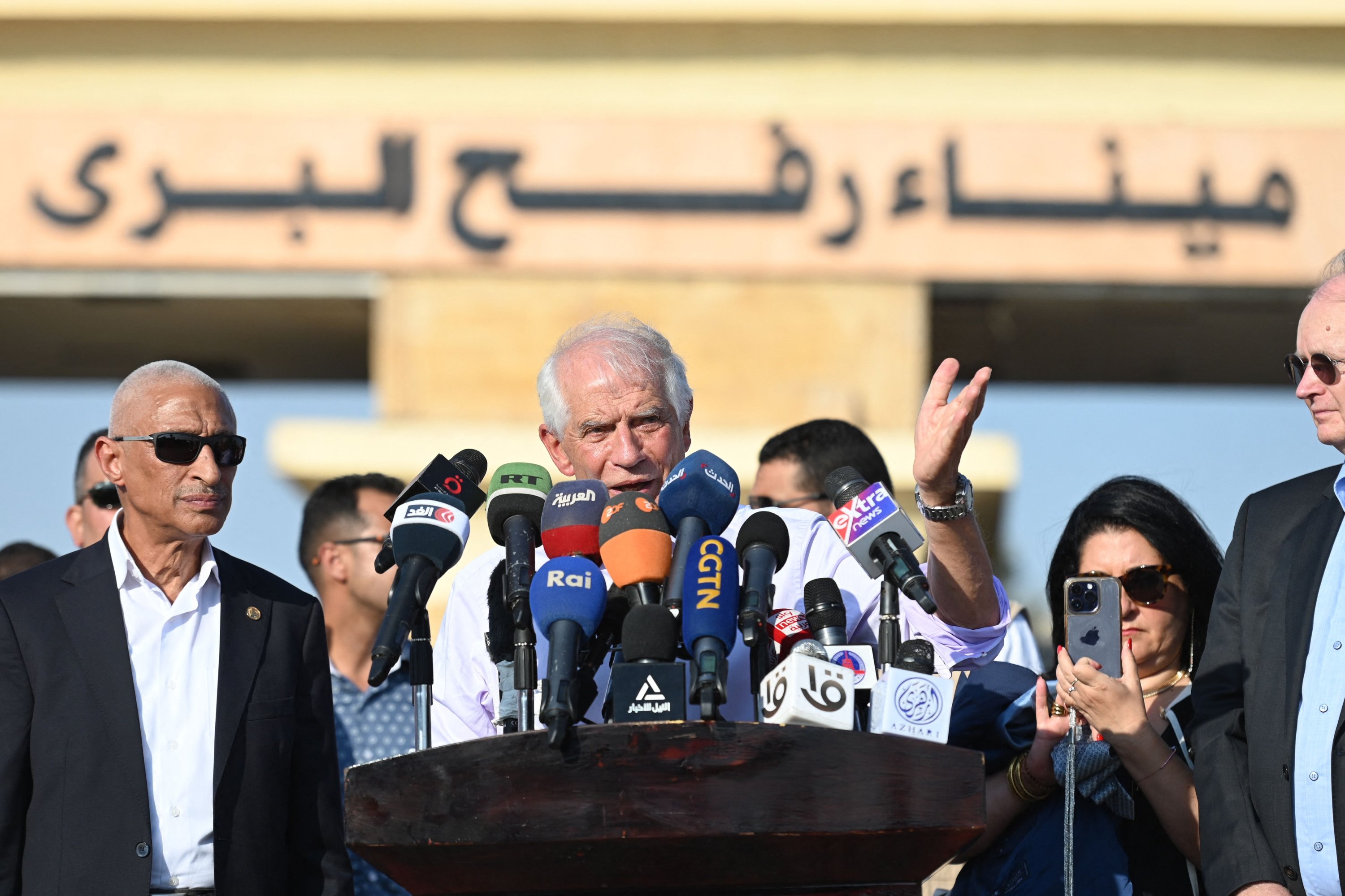
Even the European countries have been trying to discourage the Israeli aggression. Unlike their initial reactions to the developments in Palestine, European Union officials have begun to call on Israel to accept a cease-fire. They know that a large part of the European public has turned against Israel due to its ongoing genocide. More recently, the EU’s foreign policy chief Josep Borrell, who has visited Egypt, explained in a post on X that he has held talks with el-Sissi in Cairo on the crisis in Palestine. Borrell has said that they need to work to prevent further escalation of violence in the region. Unfortunately, the EU institutions cannot act independently of the large member states such as Germany and France, all of which largely remain dependent on the U.S. perspective and Israel’s narrative.
However, Israel and the U.S. are the main actors not prioritizing regional stability. On the one hand, Israel continues to violate the main principles of international law. As mentioned by the United Nations High Commissioner for Human Rights Volker Türk, Israel continues to disregard the very basic principles of international law. Although many international institutions, including the International Court of Justice (ICJ), have passed decisions asking Israel to respect international law, Israel insistently continues to undermine these decisions. Israel did not comply with orders of the ICJ, which called Israel’s occupation illegal and asked Israel to withdraw from the occupied territories.
On the other hand, the U.S. government continues to give unconditional support to Israel’s aggressive policies against innocent defenseless Palestinian people living in both the Gaza Strip and the West Bank. The U.S. government gives an open check to Israel, it remains indifferent to any Israeli atrocity. Thus, it causes a global-scale political leadership crisis.