
In Gaza, despite various violations by Israel, a cease-fire has been in effect since Oct. 10, 2025. The first phase of the cease-fire process, built on Trump's 20-point plan, which envisaged the mutual release of hostages and prisoners, has been largely completed. Therefore, it is now necessary to implement the second phase, which includes Israel's complete withdrawal from Gaza, Hamas laying down its arms, and the reconstruction of Gaza.
However, it appears that there is resistance to moving to the second phase of the cease-fire, both due to the personal interests of Israel's genocidal Prime Minister Benjamin Netanyahu and due to certain developments that are likely to occur in domestic politics if the second phase is implemented.
The cease-fire that was finally achieved after two years of immense suffering and heavy sacrifices by the people of Gaza can only be sustained and progress to the next stage if it is supported not only by the Palestinians but also by all conscientious countries and international organizations that have witnessed Israel's massacre and genocide against the people of Gaza. Indeed, U.S. President Donald Trump has taken on considerable responsibility regarding the Gaza cease-fire and is exerting intense pressure on Netanyahu to prevent the collapse of the Gaza cease-fire, which he views as his personal achievement.
Given this situation, it would be beneficial to highlight the uncertainties surrounding the second phase of the Gaza cease-fire, which has captured the world's attention, and to share recommendations on how these uncertainties can be resolved and how the second phase can be implemented soundly.
In fact, one of the most important reasons for the failure to move to the second phase of the cease-fire agreement is Israel's negative stance. Although it is said that Israel's main motivation for accepting the cease-fire was the rescue of hostages, it is known that the real compelling reason was Trump's pressure. For this reason, it is evident that almost all actors in Israeli politics, both in power and in opposition, want the agreement to be broken at the first opportunity after the hostages are rescued and for a renewed, full-scale attack on Gaza. This is likely why, despite taking full advantage of the cease-fire, Israel has violated it almost daily since the process began. Nevertheless, each time, it has managed to escape Trump's reaction by blaming Hamas.
One of the uncertainties facing the second phase is the resistance stemming from Israel's failure to achieve the goals announced after Oct. 7. In the two years since then, neither has Hamas been eliminated, nor has Gaza been completely evacuated. Therefore, it seems unlikely that Israel will accept a process that would enable the complete withdrawal of the Israeli army from Gaza and the reconstruction of the city, or even make it possible to implement a two-state solution plan from there. Likewise, anticipating that there would be no turning back from this point if such a process were to begin, even with Trump's support, the Israeli administration is trying to dash expectations by prolonging the process.
The other reason behind Israel's foot-dragging on the second phase is the potential developments in domestic politics. The involvement of Türkiye and Qatar as guarantors in the process is already seen by the Israeli opposition as a failure of Netanyahu, while it is known that National Security Minister Itamar Ben Gvir and Finance Minister Bezalel Smotrich, the far-right partners in the coalition, are also opposed to moving to the second phase. It is a well-known fact that Ben Gvir and Smotrich, who demand the complete evacuation of Gaza and the elimination of Hamas, gave Netanyahu conditional support even for the first phase and want the army to resume its attacks after the release of the hostages.
Therefore, despite all these objections, if the cease-fire moves to its second phase, it is possible that these two actors could withdraw from the coalition and withdraw their support for the government. In such a case, the election planned for November 2026 could be brought forward. In fact, given that Israeli politics is known to become even more hawkish during election periods, it is unlikely that the cease-fire would hold or that the second phase would be implemented in the event of a possible early election. Therefore, this process must be managed very carefully. In other words, Netanyahu's political blackmail should be ignored, and one should not be fooled by the manipulation of perceptions that the current government is the only viable option.
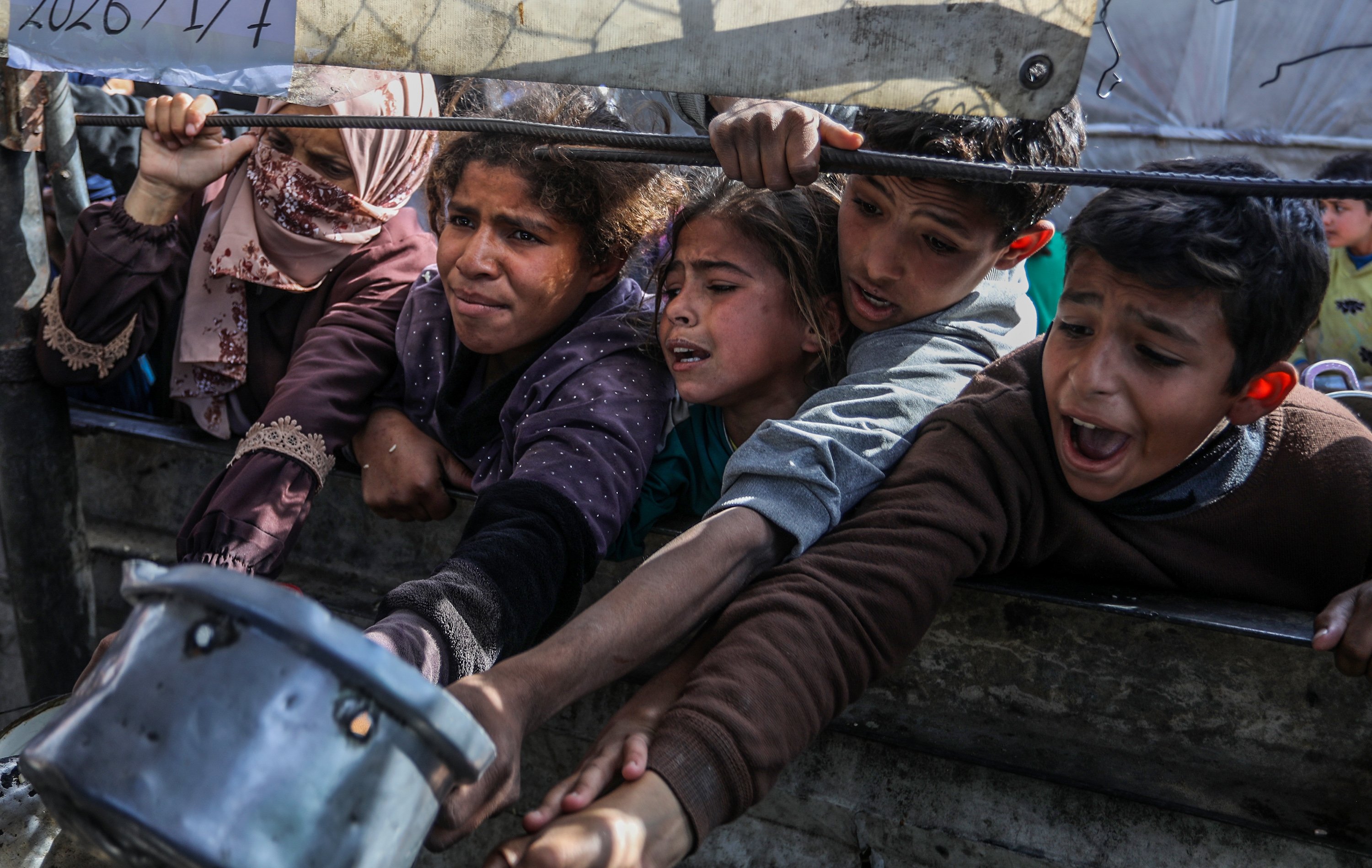
Although three months have passed since the cease-fire agreement came into effect, the lack of clarity regarding the “board of peace” and “international stabilization force” outlined in Trump's plan remains one of the most significant uncertainties preventing the transition to the second phase of the cease-fire. This is because it is not possible to move to the second phase without establishing the board of peace and determining which countries will participate in the stabilization force.
Although the American media reported that Trump would announce who would be on the board of peace this week, there has been no concrete development on this issue so far. The only exception to this is that the name of former British Prime Minister Tony Blair, who was previously rumored to be replacing Trump on the board of peace, has completely disappeared, and instead, the name of Bulgarian politician and diplomat Nickolay Mladenov, the former United Nations Special Representative for the Middle East Peace Process, has been mentioned. Mladenov himself visited Netanyahu last week, held a brief meeting, and outlined what he would do if appointed to the role.
However, it is still not officially clear which countries or individuals will be included in the board of peace. In particular, whether President Recep Tayyip Erdoğan will be part of the board of peace remains one of the most pressing questions.
Another uncertainty is which countries will be part of the international stabilization force that will operate under the command of the board of peace, and how much each country will contribute to this force. Furthermore, uncertainty persists regarding the authority and responsibilities of this force.
The Israeli government has objected from the outset to both President Erdoğan's participation in the board of peace and Türkiye's involvement as a stabilizing force, stating that this will never be permitted. However, despite Israel's objections, it is known that many countries, primarily the U.S., want Türkiye to participate as a stabilizing force. Indeed, one of the most important demands of Hamas, which is a party to the cease-fire, is for Türkiye to be part of the stabilization force. It is even said that if this is not possible, Hamas will not be very willing to lay down its arms or hand over the administration of Gaza. Therefore, despite Israel's objections, for Hamas to remain part of the process and for the cease-fire to hold, Türkiye's participation in both the board of peace and the stabilization force is a necessity that stands before us.
Uncertainty regarding the authority and responsibilities of the stabilization force is also causing the process to stall. Israel wants the stabilization force to contribute to the disarmament of Hamas and, if necessary, to fight Hamas, while Hamas demands that the stabilization force be deployed to protect Gazans and prevent attacks by the Israeli army, even intervening against the occupying Israeli army within the framework of U.N. engagements if necessary.
However, neither the practices of the U.N. peacekeeping missions nor the reality on the ground are capable of meeting the demands of both sides. This is because the current U.N. peacekeeping missions can only serve as a buffer between the conflicting parties; they do not have the mandate to fight one side for the benefit of the other. Therefore, when defining the authority and responsibilities of the stabilization force, decisions must be made based on the realities on the ground, not on past precedents, and a force must be established to protect Gazans from genocide. Otherwise, there is a risk that Israel's crimes of genocide will be repeated, which would undermine the credibility of the U.N. mission.
Furthermore, the stability force should include not only countries close to Israel, such as India, but also Muslim countries that do not recognize Hamas as a terrorist organization and support the Palestinian cause, such as Türkiye, Pakistan, Indonesia and Malaysia.
As a result, due to Israel's negative stance toward continuing the cease-fire and the uncertainties in Resolution 2803, adopted by the U.N. Security Council on Nov. 17, 2025, based on Trump's 20-point cease-fire plan, it has not been possible to move to the second phase of the cease-fire. Conversely, it is believed that if Muslim countries continue their engagement with Trump and Trump stands behind his own plan, all the uncertainties listed above can be overcome, and the second phase of the cease-fire, which is believed to bring comprehensive peace to the region, can be reached. However, all actors must be prepared for Israel's possible sabotage and avoid any actions that could distract attention.


