On the 40th day of the U.S.-Israel-Iran conflict, Washington and Tehran announced a 15-day cease-fire. Israel was reportedly unhappy, yet it could not stop the deal. From the beginning, however, it was unclear whether this cease-fire could last. What we see today is not a true pause in fighting.
Violence continues on several fronts. Israel intensified its operations in Lebanon, striking civilian areas and infrastructure in Beirut. In response, Hezbollah and Iran launched missile attacks on Israel. Israel then hit an oil refinery in Iran, which led Tehran to target pipeline infrastructure in Saudi Arabia. The United Arab Emirates (UAE) also entered the picture, striking Iranian energy facilities. Since then, Iran has expanded its attacks with missiles and drones against the UAE, Qatar, Kuwait and Bahrain. Besides, Iran has warned that it will leave the cease-fire if Israel continues its attacks in Lebanon.
The U.S., meanwhile, has said it will keep targeting Iran if Tehran escalates under the pretext of Lebanon. In other words, the cease-fire exists on paper, but not fully on the ground.
The situation in the Strait of Hormuz shows how fragile this arrangement is. Although the waterway remains officially open, Iran now holds effective control. The Islamic Revolutionary Guard Corps (IRGC) Navy has restricted maritime traffic by releasing new mine maps and forcing ships into narrow routes. This has slowed the passage of ships.
For Gulf countries, the situation is especially difficult. They are under pressure from Iran but are not fully included in talks about the future of the strait or Iran’s regional role.
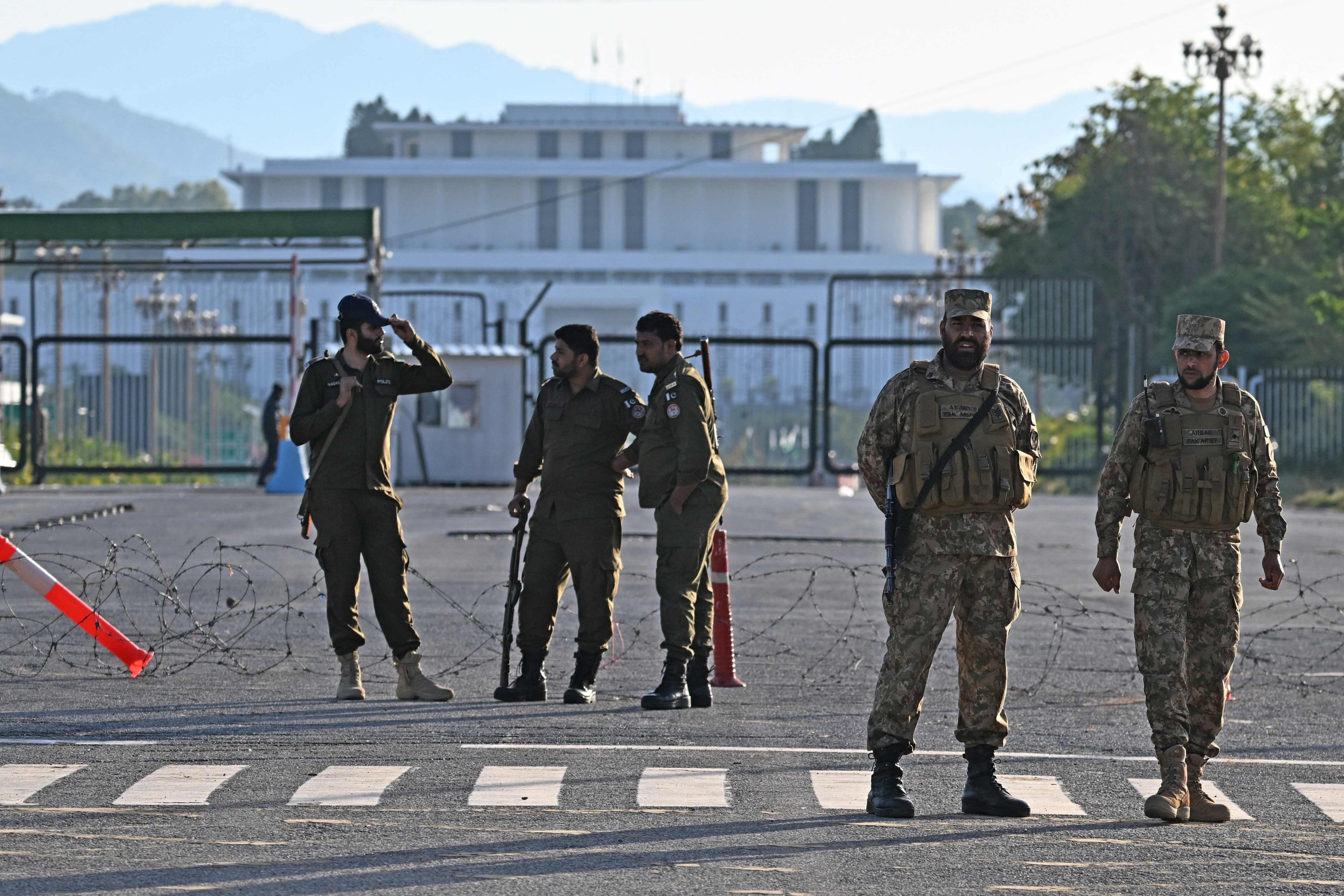
In short, the cease-fire is weak and inconsistent, but it has not collapsed. Despite ongoing tensions, the sides are expected to meet in Islamabad.
The timing of the cease-fire is not accidental. It reflects a moment where both sides face rising costs and limited gains. Neither the U.S. nor Iran has achieved a clear victory, but both have paid a price.
This situation can be explained by the idea of a “mutually hurting stalemate,” a concept developed by William Zartman. It describes a stage in conflict, where neither side sees clear benefits in further escalation, yet neither is willing to concede.
For the U.S., simply withdrawing was not a realistic option. Leaving the Strait of Hormuz under Iranian control while the conflict continued would have risked a serious strategic loss. At the same time, Washington had a clear goal at the start of the conflict, which was mainly to reduce Iran’s war-making capacity to zero. Failing to meet it would damage its credibility as a great power.
Before the cease-fire, the Trump administration signalled that it could escalate further, threatening to destroy Iranian civilization. However, such a move carried major risks, including wider regional instability and domestic political pressure.
Iran, on the other hand, showed that it was willing to continue the fight. It did not signal any intention to surrender. Still, a longer war also carried risks for Tehran. While escalation gave Iran some leverage, further conflict, especially if the U.S. increased pressure, could have weakened its position.
As a result, neither escalation nor withdrawal seemed like a good option. Once both sides recognised this, a cease-fire became possible. At the same time, regional actors such as Türkiye, Egypt, Saudi Arabia and Pakistan have engaged in mediation efforts. They have warned that a wider regional war would benefit no one but Israel and could have long-term consequences for all.
Both sides are now trying to present the cease-fire as a sign of victory, but neither has fully reached its goals. U.S. President Donald Trump said that Iran’s 10-point proposal could be negotiable. However, Iran’s demands are strong and difficult to accept. Tehran demands a new status for the Strait of Hormuz, recognition of its right to uranium enrichment and an end to Israeli operations in Lebanon. In return, Iran has said it will keep the Strait of Hormuz open. Yet this also means accepting Iran’s continued influence over this critical route.
From Iran’s point of view, it may seem close to victory. However, later statements from Washington have made the situation less clear. The U.S. has said the cease-fire will be “messy,” that Lebanon is not included, and that Iran will not be allowed to continue uranium enrichment. This suggests that Iran’s gains are not secure.
The U.S. also faces challenges in presenting the situation as a success. Some observers see Washington’s willingness to engage with Iran’s proposal as a sign of weakness. Still, the U.S. can argue that its military pressure forced Iran to come to the negotiating table. While this is not a full victory, it may be enough till the midterm elections.
Overall, both sides now seem to understand that continued escalation would be costly and uncertain. This has led to a shift in strategy. A return to full escalation is still possible. However, for now, the cease-fire has created space for talks. Whether this will lead to a lasting agreement remains unclear. What is certain is that the conflict has entered a new and more interesting phase.