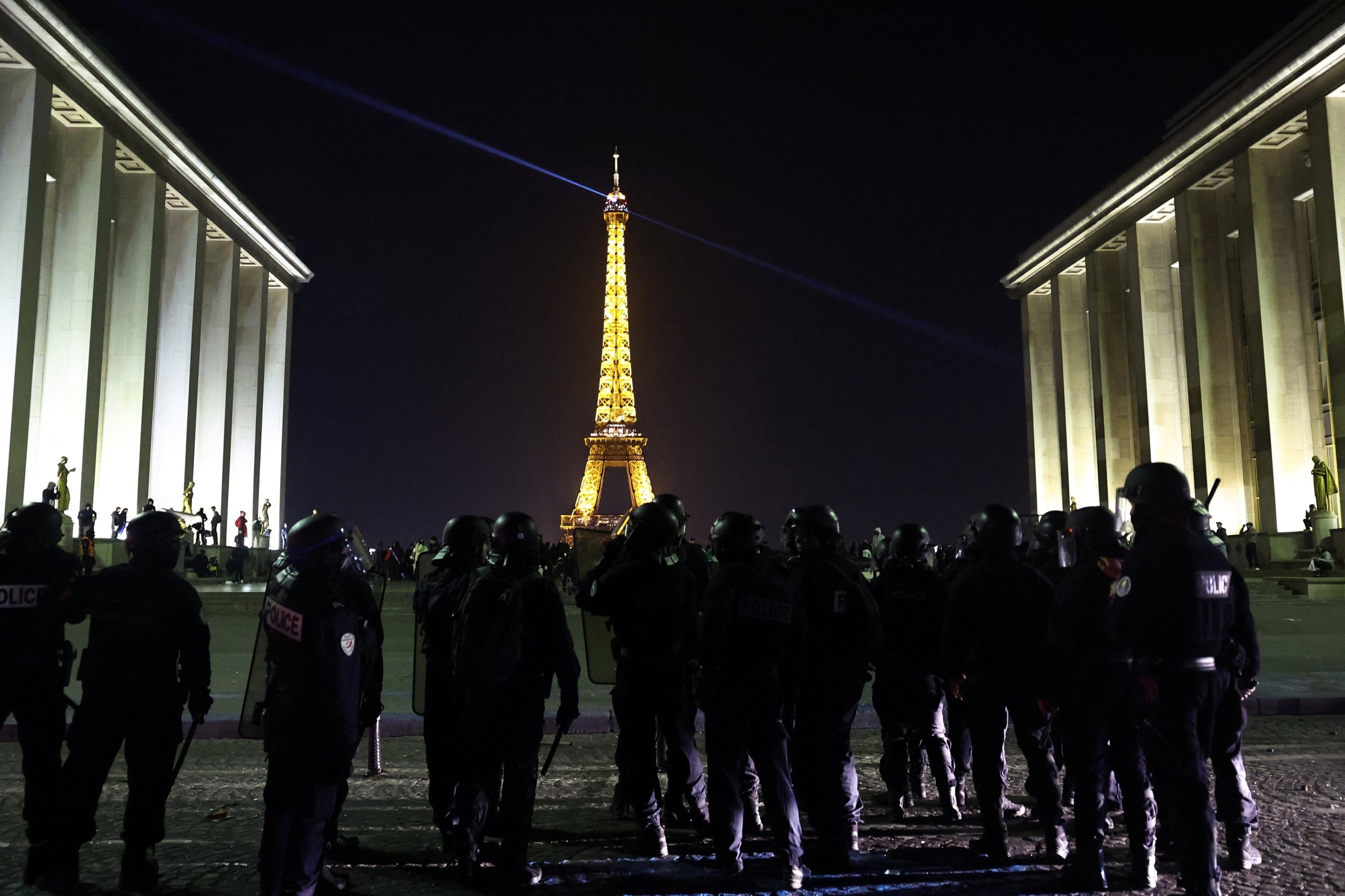
During this and the previous weekend, the second and third rounds of protests took place in France. In the second round, nearly 410,000 people – 800,000 according to the CGT trade union – marched through the streets across the country. The French Interior Ministry reported that the third round of protests drew 320,000 demonstrators nationwide, 70,000 of whom took to the streets in Paris.
The protests first erupted on Sept. 17, when students' demands became the focal point of demonstrations that sparked widespread unrest. During the subsequent rounds of protests, trade union flags were prominent across the country, reflecting support for the students' demands. Palestinian and Algerian flags were also spotted among the demonstrators.
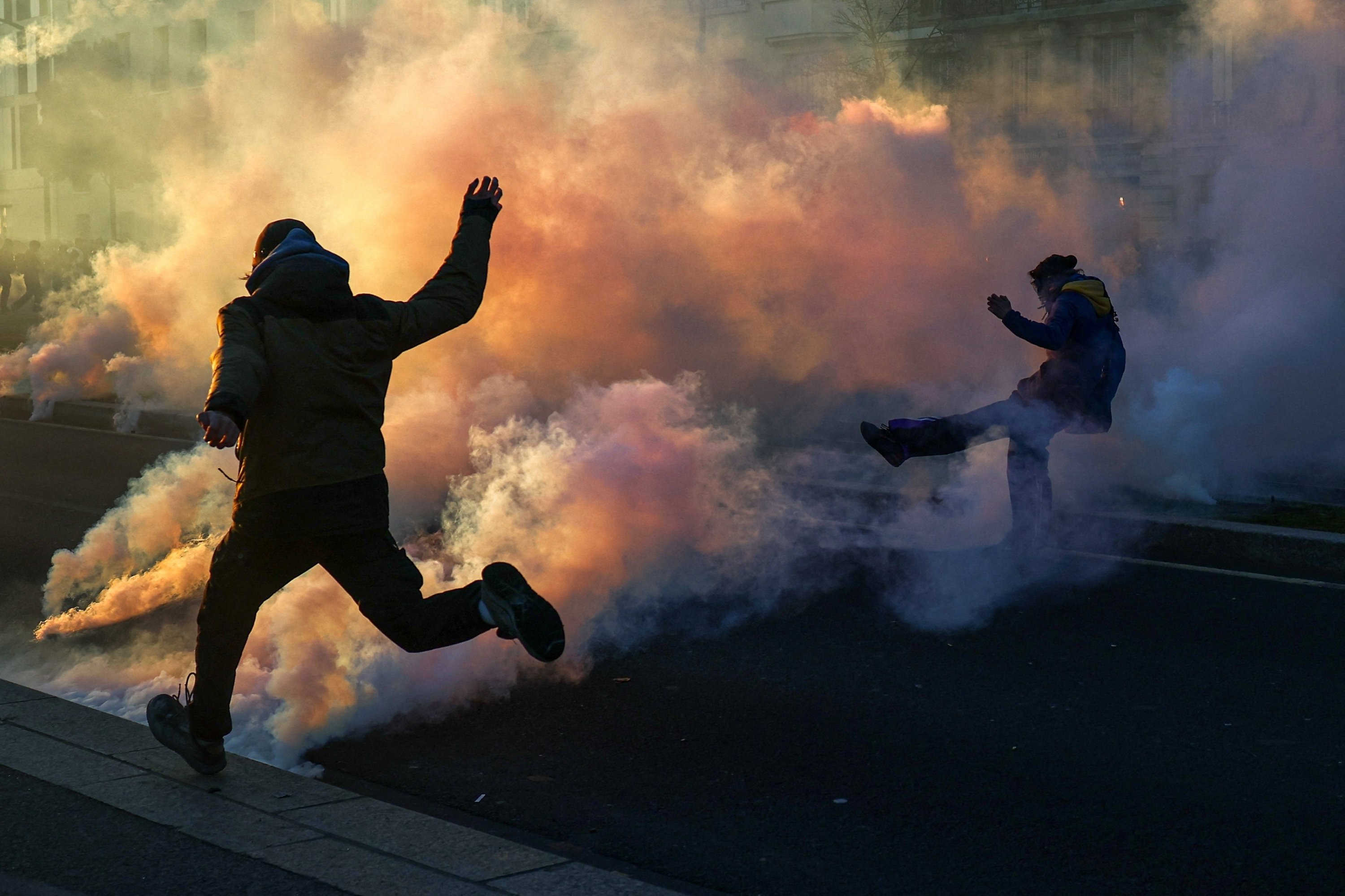
During the second and third rounds of protests, clashes and other incidents were less severe than those witnessed on Sept. 17. This was largely because shopkeepers were better prepared, having boarded up their storefronts with plywood, while several luxury brands hired private security firms to protect their premises against looting and property damage rather than relying solely on law enforcement, according to sources familiar with the matter.
Some argue that citizens have every right to protest, given the dire conditions facing even France’s most prestigious educational institutions. They also emphasize that peaceful protest is a constitutional right deeply rooted in the French political tradition. Others, however, insist that these demonstrations are far from innocent and serve a hidden agenda, warning that “anarchy is knocking at the door.” While some blame extremist outsiders and immigrants for hijacking the streets from peaceful protesters, others point to a consumerist mindset that has failed to promote integration in an already deeply fragmented society.
The two extremes of the political spectrum have taken starkly contrasting positions on the protests. On the one hand, Jean-Luc Melenchon, leader of the far-left France Unbowed (LFI), fully endorsed the civic uprising, linking student demands with those of immigrants under pro-Palestinian slogans. Meanwhile, Marine Le Pen, parliamentary party leader of the radical-right National Rally (RN), held its annual Congress in Orleans, where she officially launched her presidential campaign the day after the second round of the protests, drawing more than 8,000 supporters. She and her allies, including Nice Mayor Eric Ciotti and RN leader Jordan Bardella, declared that France is in peril and that law and order must be restored.
According to public opinion polls, Le Pen now holds a strong lead with 33% support, while Melenchon secures 17%, placing him ahead of Edouard Philippe, a key centrist figure and ally of President Emmanuel Macron. Interestingly, both Le Pen and Melenchon have united around one core demand before and after the Sept. 17 protests: the resignation of Macron. For some observers, the protests are thus being used to signal the end of Macronism ahead of the elections.
Amid this confusion, I spoke to my dear friend professor Ellen Wasylina, founder and director of the Trocadero Forum Institute (TFI) based in Nice, to ask what is happening in France, and why everything seems to have erupted so suddenly.
According to Wasylina, France has been in crisis for a long time, and none of this happened overnight. France's national debt increased during the Covid-19 pandemic and has yet to be cleared. Food inflation has bitten hard over the past couple of years, affordable housing is exceptionally difficult to find, and tax burdens remain heavy. The economic model of Macronism relied heavily on attracting foreign investment, an area where Wasylina notes Macron succeeded. However, to remain attractive to foreign investors and retain major companies, including luxury brands, in the French market, concessions were made in terms of wealth distribution. As a result, the wealthy grew immensely richer, while lower-income citizens felt increasingly marginalized under heavy taxation.
Amid ongoing crises, ranging from COVID-19 to the war in Ukraine, critical sectors such as aerospace, pharmaceuticals, vaccines, and high-tech industries require targeted support and protective measures against fierce global competition. Ultimately, while Paris managed to retain its luxury brands and highly skilled engineers, it lost the French youth. Young people feel they have no future, Wasylina remarked, adding that children of the bourgeoisie are notably absent from the crowds marching in the streets.
The artificial intelligence (AI) revolution is further pushing young people to the margins. On the one hand, AI is replacing entry-level positions that traditionally serve as stepping stones for beginners. On the other hand, youth engagement has shifted toward social media rather than direct civic connection. Wasylina noted that the number of cafes, traditionally the heart of Parisian social life, has declined rapidly over the past decade as virtual interactions take precedence.
All of this has set the stage for what social scientists call “horizontalism” in public movements, a trend that gained prominence during Occupy Wall Street and the Arab Spring. Organized through social media, diverse segments of society, predominantly young people, launch uprisings to express collective frustration. Such protests typically lack a formal leader or a unified political and economic program, yet they evolve and often radicalize around a shared demand for change.
In this context, all eyes are on Macron. They want Macron out before the elections, Wasylina explained. But the question is: why?
Political analysts argue that France has been locked in a political crisis since the 2024 parliamentary elections. After Macron’s centrist Ensemble alliance lost its parliamentary majority, the presidency struggled to govern effectively. Rather than entering into negotiations with the far-left or far-right through cohabitation, Macron pushed for centrist coalition arrangements. This approach led to the appointment of four successive prime ministers, reinforcing the perception of weak governance.
He still lacks a majority in the National Assembly and remains deeply unpopular in public polls. He appears powerless with only six months remaining in his final presidential term. Why, then, are the far-right, far-left, and street protesters conjoining around his political demise?
According to Wasylina, Macron sought to establish Macronism, a framework that hollows out the political center and replaces it with a personal political brand, as a lasting legacy capable of surviving his tenure. Now, the social and political forces driving the protests are actively working to dismantle that vision. Macron's address to the nation from the Elysee Palace on Oct. 18, wearing a black suit and tie, was described by some as carrying a “funeral tone,” which may also reflect his legacy to France.
During the Oct. 18 speech, another point that drew attention was Macron's vow to track down and punish all masked, black-clad looters. Indeed, numerous observers noted that the many looters operated with professional, military-like efficiency, suggesting prior organization.
According to Wasylina, external actors also have a stake in destabilizing France. Russia remains a prime suspect as Moscow seeks to pressure Western European nations into reducing support for Ukraine. Others point to the United States under President Donald Trump. Seizing on the looting incidents in France, Trump posted anti-immigration commentary on social media.
Both Russia and Trump’s U.S. have overtly and covertly supported far-right groups to undermine Europe’s centrist establishment. France is not the only European country where the far-right movement is aligning to pave the way for its own political gains.
Ultimately, Wasylina emphasizes, France is now a deeply fragmented and polarized country. Three ongoing conflicts, Gaza, Ukraine and Iran, have exacerbated internal divisions, creating a fragile environment ripe for exploitation by both foreign and domestic actors.