A full-scale war between Iran and Israel, alongside U.S. interventionist pressure on Iran, has pushed the region into an increasingly complex phase with profoundly destabilizing effects. These consequences extend beyond traditionally affected arenas such as Iraq and Yemen, reaching the wider Gulf region as well. However, among all states, Lebanon continues to experience the most immediate and severe impacts of regional polarization and conflict.
Although officially seeking to remain outside regional wars and confrontations, Lebanon’s fragmented political structure and the presence of powerful non-state armed actors, most notably the Shia Islamist Hezbollah, frequently draw the country into broader regional dynamics. This structural vulnerability has repeatedly resulted in Lebanon’s entanglement in regional conflicts, including its recent indirect involvement in the latest Israel-Iran escalation and wider cycles of confrontation.
Before the eruption of the current conflicts between Iran and the U.S.-Israel alliance, it was evident that Lebanon would constitute one of the primary arenas in which these confrontations would unfold. Unlike other regions that have also been affected by the destructive impacts of recent conflicts, such as the Gulf, Iraq and Yemen, Lebanon, from the outset of the escalation, emerged as a central hotspot due to intensified confrontations between Hezbollah and Israel. Despite the degradation of its deterrent capability following the most recent confrontation with Israel before the cease-fire reached at the end of November 2024, Hezbollah appeared to recover part of its organizational, military and economic losses.
In this context, and in close alignment with Iran, Hezbollah interpreted recent developments as an existential threat, particularly the possibility of regime collapse in Iran, which it perceives as tantamount to the defeat of the broader Iran-led “resistance bloc,” of which Hezbollah is a key component. In other words, Hezbollah traditionally tied its survival and operational strength to the continuity of the Iranian state, highlighting the depth of its strategic, political and military integration within the regional balance between major and minor powers.
Therefore, unlike the Gaza invasion process that broke out in October 2023, Hezbollah did not opt for a gradual or indirect form of confrontation with Israel and instead immediately engaged the Israeli front from Lebanese territory, specifically South Lebanon.
In response to this new escalation, Israel, already inclined to contain and, if possible, eliminate Hezbollah, launched a series of aggressive incursions, initially targeting South Lebanon and subsequently extending operations toward Beirut.
Despite Israel’s previous effectiveness in intelligence-driven strikes and aerial operations, Hezbollah demonstrated a higher level of resilience in this round of confrontation, surprising many analysts and political observers and openly defying Israel’s military pressure on Lebanon. Consequently, while the U.S.-Israel alignment faced significant setbacks in its attempts to destabilize the Iranian regime, Israel’s unilateral military operations in Lebanon also failed to deter Hezbollah or achieve its strategic objectives, thereby encouraging Hezbollah forces to impose higher operational costs on Israel.
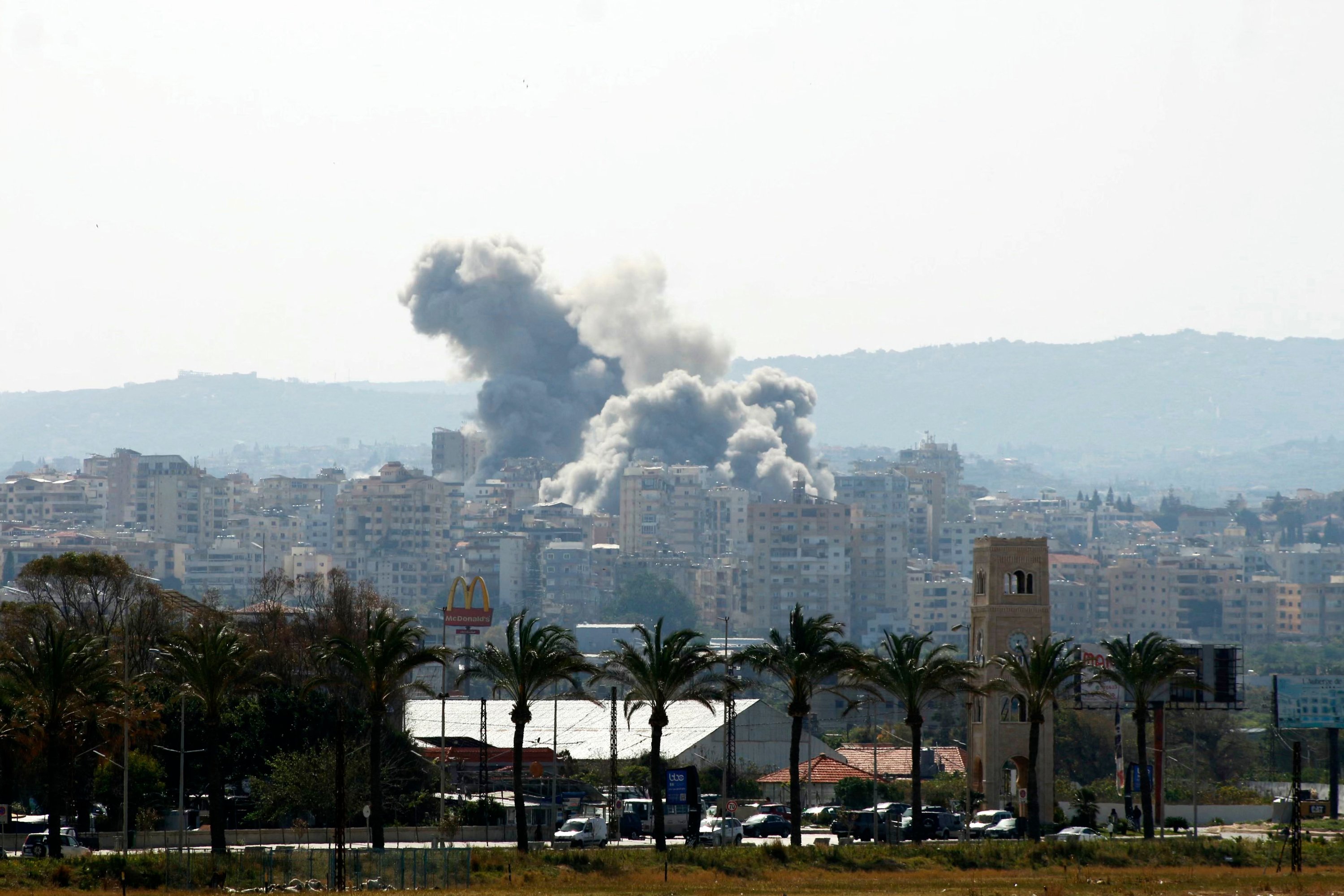
In this third encounter between Hezbollah and Israel, the first being in 2006 and the second in 2024, Hezbollah demonstrated its regional capability by responding to Israel’s superior military technology and by increasing the costs of any Israeli incursion into Lebanon. However, growing frustration over the prolonged conflict and the absence of a rapid military victory led Israel to intensify its attacks, including more extensive and less restrained strikes on civilian areas in Lebanon, resulting in a severe humanitarian catastrophe.
In its latest attack before the onset of direct negotiations between the U.S. and Iran and possible cease-fire developments, Israel demonstrated its determination to sustain intensive aerial operations through heavy bombardments.
The operation, referred to as “Eternal Darkness,” involved over 100 strikes within approximately 10 minutes, resulting in severe destruction in Beirut. The city, historically regarded as a center of rich civilizations and cultural traditions, experienced extensive infrastructural damage and significant civilian casualties, including women and children.
This is not an unprecedented pattern for Beirut, which has repeatedly borne the costs of regional polarization, hegemonic rivalries, sectarian conflicts and external military interventions. However, this new phase reflects an escalation in Israel’s efforts to assert unilateral regional dominance, while Hezbollah’s deep strategic integration with Iran, rather than Lebanese state institutions, continues to generate additional layers of instability for the Lebanese population.
The core problem arises from Israel’s refusal to include Lebanon within any potential cease-fire framework, arguing that its conflict with Hezbollah constitutes a separate arena from its broader confrontation with Iran and its alignment with the U.S.
From Tehran’s perspective, however, the so-called “resistance bloc” represents an integrated strategic alliance, in which no single component can be isolated from broader cease-fire or peace arrangements.
This fundamental disagreement is emboldened by the U.S.’ recent position, which largely aligns with Israel by seeking to exclude Lebanon from ongoing negotiations over an initial cessation of hostilities and possible peace arrangements.
In response, the Lebanese government, while rejecting both Israeli military operations and Hezbollah’s confrontations with Israel by siding with Iran, intensified its diplomatic efforts to facilitate potential direct negotiations between Lebanon and Israel.
A central point of contention in these discussions concerns the disarmament of Hezbollah, which Israel identifies as a primary condition for any agreement. While the Lebanese government frames this issue as an internal matter and emphasizes the need to respect Lebanon’s sovereignty, territorial integrity and political centrality, Israel seeks to subdue Hezbollah through its own military instruments.
Within this complex configuration, Hezbollah still remains one of the most resilient and influential domestic actors in Lebanon, sustained by extensive regional alliances. Its position further illustrates the fragility of the Lebanese political and security landscape.
In conclusion, despite Lebanon’s historical resilience in the face of repeated cycles of regional conflict and external intervention, the interaction between regional power struggles and local allied actors repeatedly constrained its possible alternative journey. In this sense, Lebanon’s trajectory is often shaped less by sovereign choice than by externally imposed constraints and internally conflictual actors, resulting in recurrent cycles of instability and destruction.