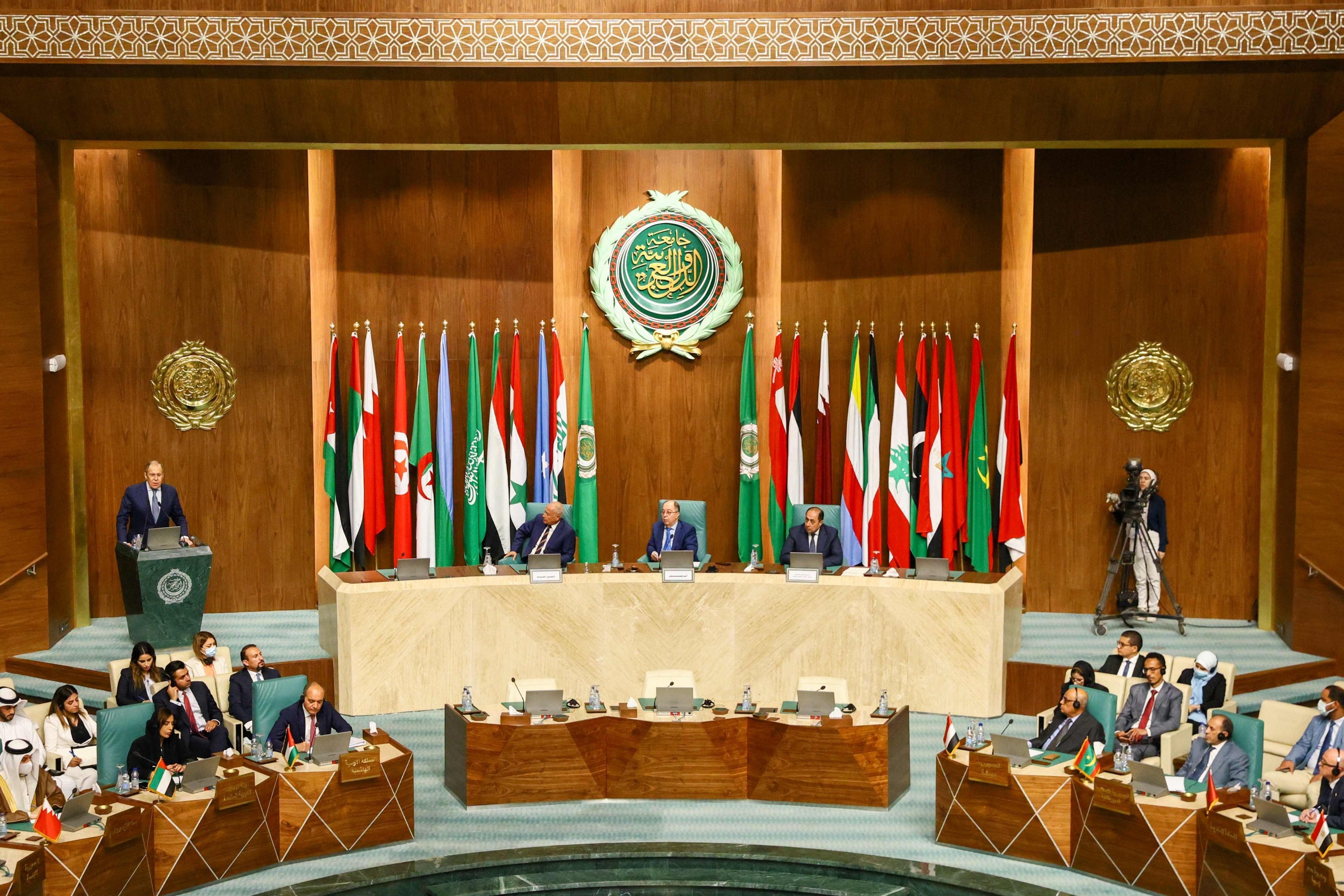
The Arab League underscored recently the need to boycott the Israeli regime as a means to force it to end the occupation of Palestine.
In the final statement of its 95th meeting, the Liaison Officers of the Arab Boycott Offices in Cairo affirmed the importance of reinforcing the Arab efforts and activities intended to implement the boycott of Israel, and at the same time, they pointed out that such a boycott would be consistent with the decision of the Arab League Summit held on March 31, 2019, in Tunisia.
On his part, the Arab League’s Assistant Secretary-General Saeed Abu Ali has called for the strengthening of the Arab boycott of Israel as an effective tool to confront the Israeli occupation.
“This meeting comes as the Israeli occupation authorities are still continuing their systematic campaign of aggression against the Palestinian people, their sanctities and their property,” he said.
“These ongoing crimes require the intervention of the international community, especially the Security Council and regional and international organizations, to assume their responsibilities and stop the policy of double standards,” he added.
“Hundreds of relevant international resolutions... calling for stopping the aggression against the Palestinian people and ending the Israeli occupation” have been issued but not implemented, Abu Ali said, and called for pressure, primarily economic, to force Israeli compliance.
On his part, the head of the Palestinian delegation at the meeting, Muhannad al-Aklouk, urged states, parliaments and civil society to join a boycott similar to that against apartheid South Africa.
On the other hand, Abu Ali praised the Norwegian government’s decision to label the products of Israeli settlements on occupied Arab territories.
Abu Ali's comments reaffirmed the pan-Arab organization’s historic position advocating the Palestinian cause, which has become less vocal on this issue as it nears 55 years of subjugation and military oppression.
For the past 55 years, Israeli occupying policies, practices and violence toward Palestinians in the West Bank, Jerusalem and Gaza Strip amounts to the crimes of apartheid and persecution as defined under international law.
According to the U.N. human rights report last April, the level of violence required by Israel to maintain its occupation has been steadily increasing over the past few years and last year marked the highest number of Palestinian deaths resulting from confrontations with Israelis related to the occupation since 2014.
Besides, the incidents of settler violence toward Palestinians or their property in 2021 were the highest since statistics were first gathered in 2017 and the number of Palestinian homes demolished as a result of Israeli orders in 2021 was the most since 2016.
Moreover, Israeli forces have significantly escalated the killing and repression of Palestinians in the West Bank East Jerusalem and Gaza in the past few months, and around 150 Palestinians including women and children were killed by Israeli forces in various incidents since January 2022.
Although the Israeli army policy of shooting was already flexible and often led to killings of Palestinians without any justification or proportionality, the new instructions approved by the Israeli army on Dec. 20, 2021, gave the green light to soldiers in the West Bank to open fire on Palestinian youth who throw stones, which made pulling the trigger an easy matter for the soldiers, in light of the presence of a supportive official decision and procedures that protect them from any accountability.
As a result, the killings witnessed a remarkable increase.
The Arab League boycott of Israel has been a systematic effort by Arab League member states to isolate Israel economically in support of the Palestinians by preventing Arab states and discouraging non-Arabs from providing support to Israel and adding to Israel's economic and military strength.
While small-scale Arab boycotts of Zionist institutions and Jewish businesses began before Israel's founding, an official organized boycott was only adopted by the Arab League after the 1948 Arab-Israeli War. The implementation of the boycott has varied over time among member states with a number of member states of the Arab League no longer enforcing the boycott after normalizing relations with Israel.
Officially, the Arab League boycott covers three areas: Products and services that originate in Israel (referred to as the primary boycott and still enforced in many Arab states), businesses in non-Arab countries that do business with Israel (the secondary boycott) and businesses that ship or fly to Israeli ports (the tertiary boycott).
The Arab League established in March 1945, has seen more than its share of disunity regarding many critical cardinal Arab issues, especially the Palestinian issue and the normalization of ties with Israel that the Arab citizens never accepted and turned away from their governments, which had their own agendas and interests forgetting the plight of Palestinians or the risks involved with normalizing relations with Israel.
Judging from previous meetings and pronouncements, the decisions Arab leaders make are unlikely to lift the organization from its nadir or chart a more positive or pivotal role for the 22-member organization, and as the league limps through its eighth decade, its problems increase in number and intensity while the Arab state system continues to be burdened with political, economic, social and developmental challenges.
The Arab League’s main failure since its establishment toward the Palestinian issue has been to find the right formula and strategy to address the Palestinian question, which at present is quickly moving toward an Israeli-imposed solution at the expense of the Palestinian people, their land and existence.
The Palestinian plank is a repeated theme in the League proclamations, especially the restatement of the 2002 Arab Peace Initiative that rests on the idea of a Palestinian state in the occupied West Bank and Gaza with East Jerusalem as its capital, which was never implemented.
Such a position is now under tremendous danger with the ongoing and increased Israeli settlement activity in the West Bank and Jerusalem and with then U.S President Trump’s illegal recognition of Jerusalem as Israel’s capital, besides the normalization agreements between some Arab States and Israel.
Although thus far, the Arab political order is steadfast in insisting on Palestinians’ national rights to independence and a state, it has not employed collective and unified action to exercise meaningful pressure on Israel or the U.S. and international community.
As long as the Palestinian issue is disregarded and Israel exploits Arab weaknesses, hope for a Palestinian state remains remote and Israel’s annexation of the West Bank draws near.
These conditions and inter-Arab disagreements make the boycott, a "wake-up call" and an opportunity for immediate, serious and crucial Arab League action to reverse the dangerous Israeli trends undermining the outcome of a two-state solution, with a contiguous, independent, viable and sovereign Palestinian State with East Jerusalem as its capital.
The eventual establishment of an independent Palestinian state appeared indisputable and inevitable when the Arab League wrote its charter in 1945 and this goal must be realized and become a reality as soon as possible.