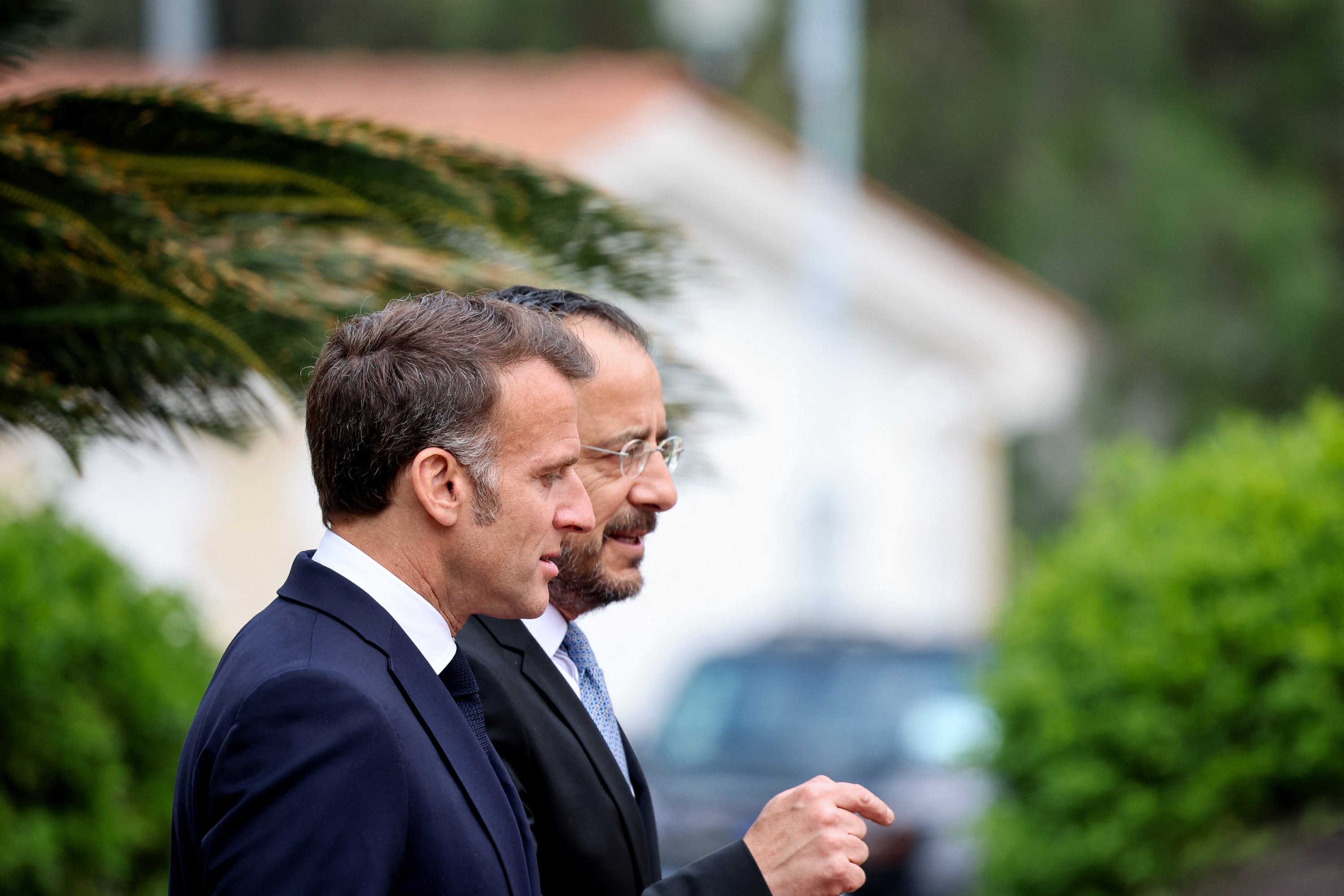
In 45 days, French President Emmanuel Macron visited the Greek Cypriot administration twice, deployed a carrier strike group and signed a defense pact. He called it "European solidarity." Ankara calls it encirclement. The 1960 Treaty of Guarantee calls it legally questionable. Choose your preferred framing.
The Eastern Mediterranean has, over the centuries, attracted a remarkable variety of outside powers, each arriving with a somewhat different explanation for why their presence was stabilizing. France is the latest. It is also, in one important respect, the most transparent: It is not even pretending to be disinterested.
On March 1, an Iranian drone struck the RAF Akrotiri airbase in the Greek Cypriot administration. Two days later, Macron ordered the Charles de Gaulle – then moored in Malmö, Sweden, as part of NATO exercises – to set course for the Eastern Mediterranean.
On March 9, Macron flew to the Paphos military base to meet Greek Prime Minister Kyriakos Mitsotakis and Greek Cypriot leader Nikos Christodoulides, the carrier already deployed and operational. He dispatched a frigate, ground-based air defense systems and declared that an attack on Cyprus was an attack on all of Europe.
On April 23, he returned for an official state visit, the first by a French head of state since 1960. By then, the French nuclear-powered aircraft carrier Charles de Gaulle had been operating continuously in the Eastern Mediterranean for weeks.
Christodoulides described two visits in 45 days as evidence of "strategic proximity." It is also, one might observe, an unusually energetic schedule for a country whose presence on the island has no basis in the 1960 constitutional framework that defines Cyprus’ legal existence. Paris is apparently not deterred by this detail.
To understand this move, one must first understand what France has spent a decade trying to build: a Europe capable of acting militarily without Washington’s permission. Macron has been the most consistent advocate of European strategic autonomy since 2017. He has also been, until recently, its most frustrated one.
U.S. President Donald Trump's second term changed the arithmetic. U.S. financial support for Ukraine has effectively dried up. The trans-Atlantic relationship is at its most strained in decades. Into this opening, the Greek Cypriot administration presented itself as the ideal location for Macron.
The Evangelos Florakis naval base sits 229 kilometers (142 miles) from Lebanon’s coast. The Andreas Papandreou air base is being expanded with U.S. European Command funding. And the island has, since the Israeli strikes on Iran’s nuclear facilities in June 2025 and the broader 2026 Iran war that followed, served as a transit and staging hub for both Israeli and American operations.
France, which has consistently taken a more sceptical line toward Israeli military conduct than Washington, now shares the same bases. Paris is not positioning itself alongside Washington and Tel Aviv. It is positioning itself as the European alternative to them with its own carrier in the water and its own flag on the island.
There is also the matter of Türkiye. France’s influence across the Sahel, particularly over Mali, Burkina Faso and Niger, has collapsed spectacularly over the past four years. Ankara moved into the vacuum with Bayraktar TB2 combat drones, now actively deployed in counterterrorism operations across all three countries, Turkish Airlines routes and considerably less colonial baggage. The France-Türkiye rivalry, which French policymakers spent years politely denying, is now too visible to deny, and the Eastern Mediterranean is where Paris has chosen to respond.
Into this context arrived the European Commission president. On April 19, speaking at the 80th anniversary of the German newspaper Die Zeit, Ursula von der Leyen declared that Europe “must succeed in completing the European continent so that it does not fall under Russian, Turkish or Chinese influence.” Four days later, Macron landed in Lefkoşa (Nicosia) for his state visit.
On April 25, two days after Macron’s state visit to the Greek Cypriot administration, he signed an Enhanced Comprehensive Strategic Partnership with Greece in Athens, including a mutual defense clause. The sequence was not accidental.
Greece’s role in this arrangement is subtler than France’s and, in some respects, more consequential. Athens does not merely participate in the framework. It legitimizes it, and, in doing so, pursues its own carefully calibrated interests.
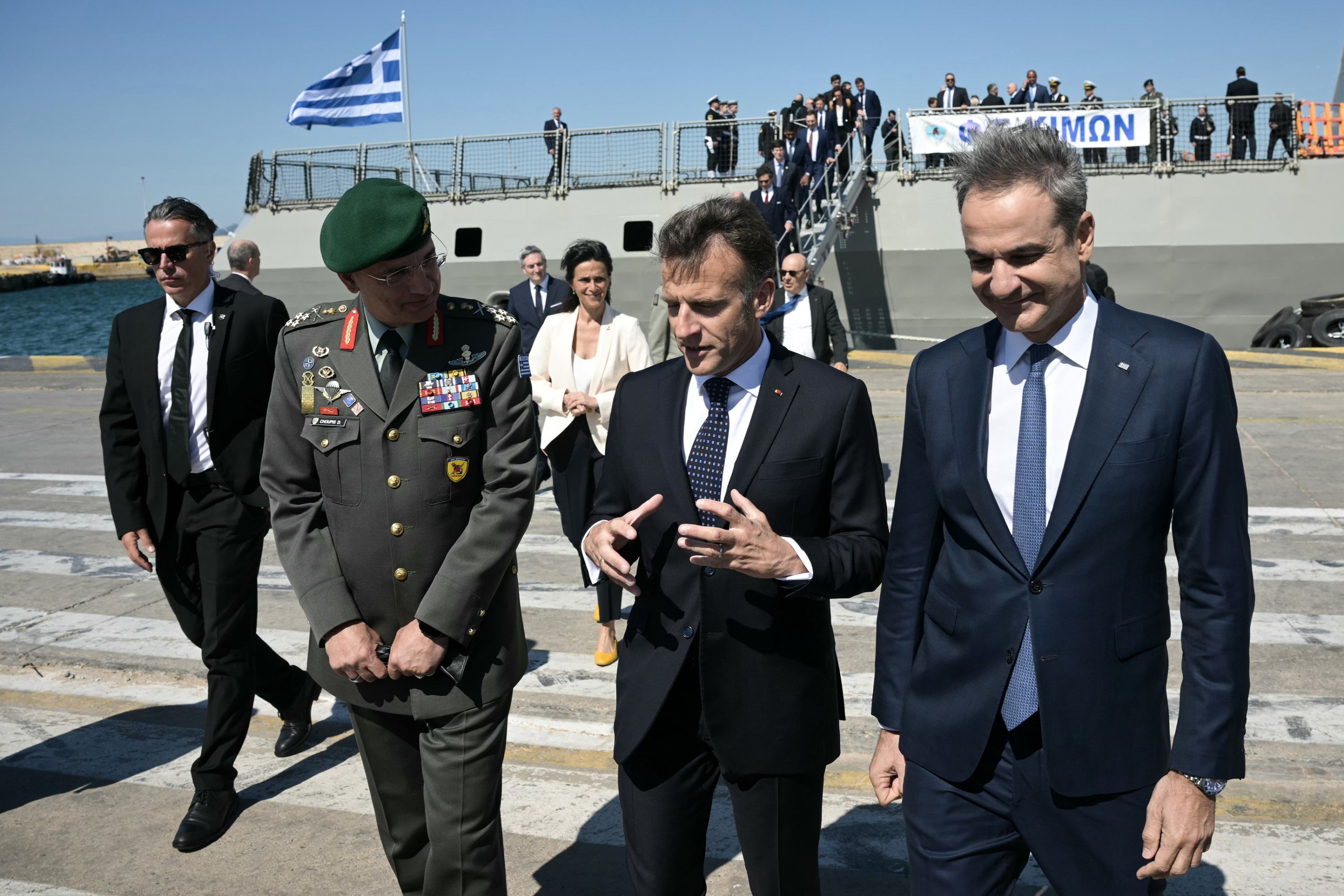
Through the mutual defense clause signed in Athens, Greece yet further imports the strategic weight of the European Union’s sole nuclear power into long-standing bilateral disputes, over Aegean airspace, continental shelf delimitation and island entitlements that Türkiye has consistently refused to accept as settled. These disputes do not become multilateral by nature. They become multilateral by design, repackaged inside a European security framework in which alignment functions as a substitute for negotiation. The practical effect is pre-delegitimization: before any disagreement reaches a table, one side has already been positioned as a deviation from an established order. Ankara is the "disruptor." Athens helped write the order.
The context matters here. Greece is already deeply embedded in the U.S. military infrastructure. Under the Mutual Defense Cooperation Agreement, Washington has access to four Greek bases, among them Souda Bay on Crete, one of NATO’s most strategically positioned naval facilities in the Mediterranean, and Alexandroupolis in northern Greece, a logistics hub that sits uncomfortably close to Türkiye’s border and has become a principal transit point for NATO materiel moving into Eastern Europe. Between 2019 and 2021 alone, the U.S. authorized over $465 million in direct defense exports to Greece. Greece is, in short, already a heavily Americanized strategic landscape.
France’s arrival, in this context, was not an invitation. It was a decision. Paris identified Greece, as it identified the Greek Cypriot administration, as a location where permanent presence serves two simultaneous purposes: a counterweight to Washington’s dominance of the regional architecture and a forward position against Türkiye.
The pattern is identical in both cases. France arrives, wraps its presence in the language of solidarity and installs itself at the intersection of every dispute that matters. Athens acquires the strategic cover of a nuclear power without abandoning Washington, diversifying its dependencies while compounding pressure on Türkiye from yet another direction. For France, Greece provides the regional legitimacy and geographic reach that Paris could not otherwise sustain. Both parties benefit. The question of who bears the cost is, characteristically, not on the agenda.
Greece has also deepened defense cooperation with Israel in recent years, with joint exercises, intelligence sharing and growing military-industrial ties. From Ankara’s vantage point, the geometry is difficult to ignore: French forces in the Aegean and Greek Cypriot administration, Greek frigates off its western and southern coast, Israeli cooperation to the south-east, and U.S. as well as NATO infrastructure throughout. Foreign Minister Hakan Fidan has given this geometry a name. It is, at minimum, a striking coincidence of alignments.
Christodoulides has executed a remarkable diplomatic transformation. In less than three years, the Greek Cypriot administration has – to name some – secured a French military presence and a U.S.-funded heliport at the Evangelos Florakis naval base. They were part of a broader military infrastructure program across both bases, with the naval upgrade alone estimated to exceed 200 million euros ($235.33 million) (financed through a combination of U.S. funding, EU SAFE program loans and Nicosia's own budget), occasional naval deployments from Italy, the Netherlands, Spain and Greece, and the informal EU defense ministers' meeting scheduled for Nicosia in June 2026. So, the U.S., France, Israel, Italy, Germany, the Netherlands, Spain and Greece now have some form of military engagement with or through the island. For humanitarian purposes, naturally.
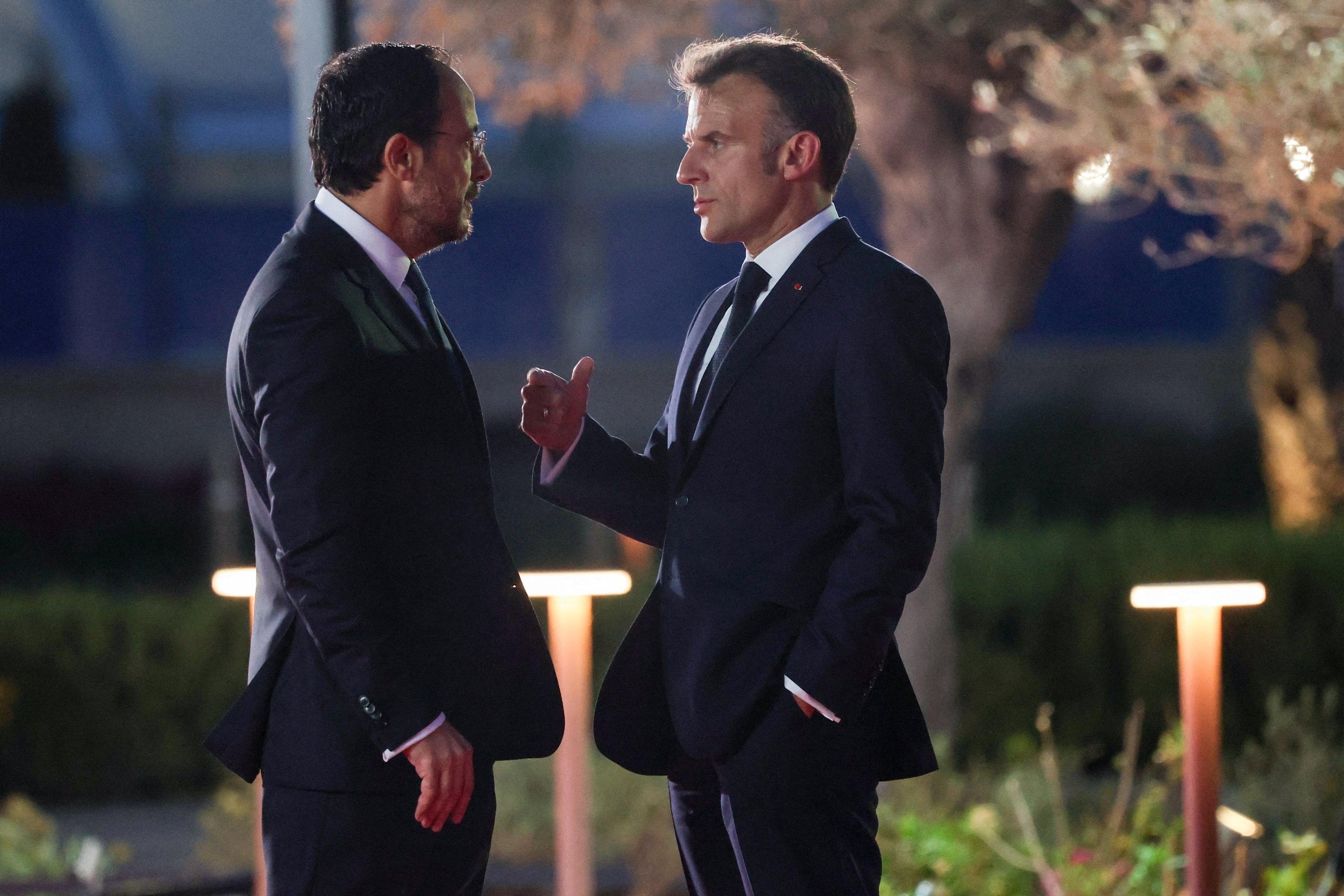
Christodoulides has described his country as "the closest EU member state to crisis zones in the Middle East." This is geographically accurate. It is also, framed differently, a description of an island that has systematically converted its proximity to instability into a platform for Western military power projection, without, at any point, asking the roughly half a million people in the northern half of the island whether they consented to the arrangement. There is, of course, a prior irony: Cyprus joined the EU in 2004 as a divided island, through political engineering on the EU's part. Twenty-two years later, it has apparently concluded that the appropriate response is to station French troops there.
When asked about Türkiye’s reaction, Christodoulides noted that Ankara had been invited to participate in the Greek Cypriot administration’s EU Council presidency framework but declined. This is, rhetorically, a useful response. It reframes a question about treaty obligations as a question about Turkish attitude. These are not the same question. But it is a considerably more comfortable one.
The 1960 Treaty of Guarantee is one of the founding documents of the Cypriot state. Article I prohibits Cyprus from participating in any political or military union with any other state. Article II requires the guarantor powers, which are Greece, Türkiye and the United Kingdom, to guarantee the independence and security of Cyprus. Article IV reserves for those three powers, and only those three, the right to take unilateral action to re-establish the state of affairs established by the treaty.
France signed none of this. France is not a guarantor power. The Status of Forces Agreement – a SOFA, the standard legal framework governing foreign military personnel on a host nation’s soil, covering jurisdiction, taxation and conditions of deployment – being finalized between Paris and the Greek Cypriot administration establishes a permanent French military presence on the island, including facility access and transit rights.
It has been negotiated without reference to the Treaty of Guarantee, without consultation with Türkiye as its third guarantor and without any multilateral framework that would bring the Greek Cypriot administration’s legal architecture into alignment with its rapidly expanding military reality.
Ankara has noted this directly. Türkiye has warned that a French military deployment to the Greek Cypriot administration risks upsetting the sensitive security balance of an island where Türkiye maintains an estimated 50,000 troops in the north and holds explicit treaty-based rights in the south. Fidan has spoken publicly of "visible areas of encirclement created to Türkiye’s detriment" and warned that if diplomacy fails, military institutions become relevant. This is not bluster. It is a legal and strategic argument. It has not received a legal or strategic answer.
What has been constructed around the Greek Cypriot administration is strategically deliberate, legally dressed and internally coherent among its members. It is also constructed entirely without the participation of Türkiye, the Turkish Republic of Northern Cyprus (TRNC) or the guarantor framework that has governed the island’s legal existence for 66 years. This is presented, in European discourse, as an oversight on Ankara’s part.
A durable settlement in the Eastern Mediterranean requires Ankara and the TRNC at the table, not as problems to be managed but as parties whose interests must be accommodated. It requires honest negotiation on maritime boundaries rather than the habit of drawing lines and then stationing frigates nearby to discourage questions. It requires someone, at some point, to read the 1960 Treaty of Guarantee aloud in a room where decisions are being made.
This is not happening. What is being built instead is a very particular kind of order: selective in its membership, ambitious in its reach, and elevated at precisely the altitude required to remain, for now, comfortable.
The ground is still there. Ankara is standing on it. The TRNC is standing on it.
And unlike the architecture being assembled above them, they are not going anywhere.