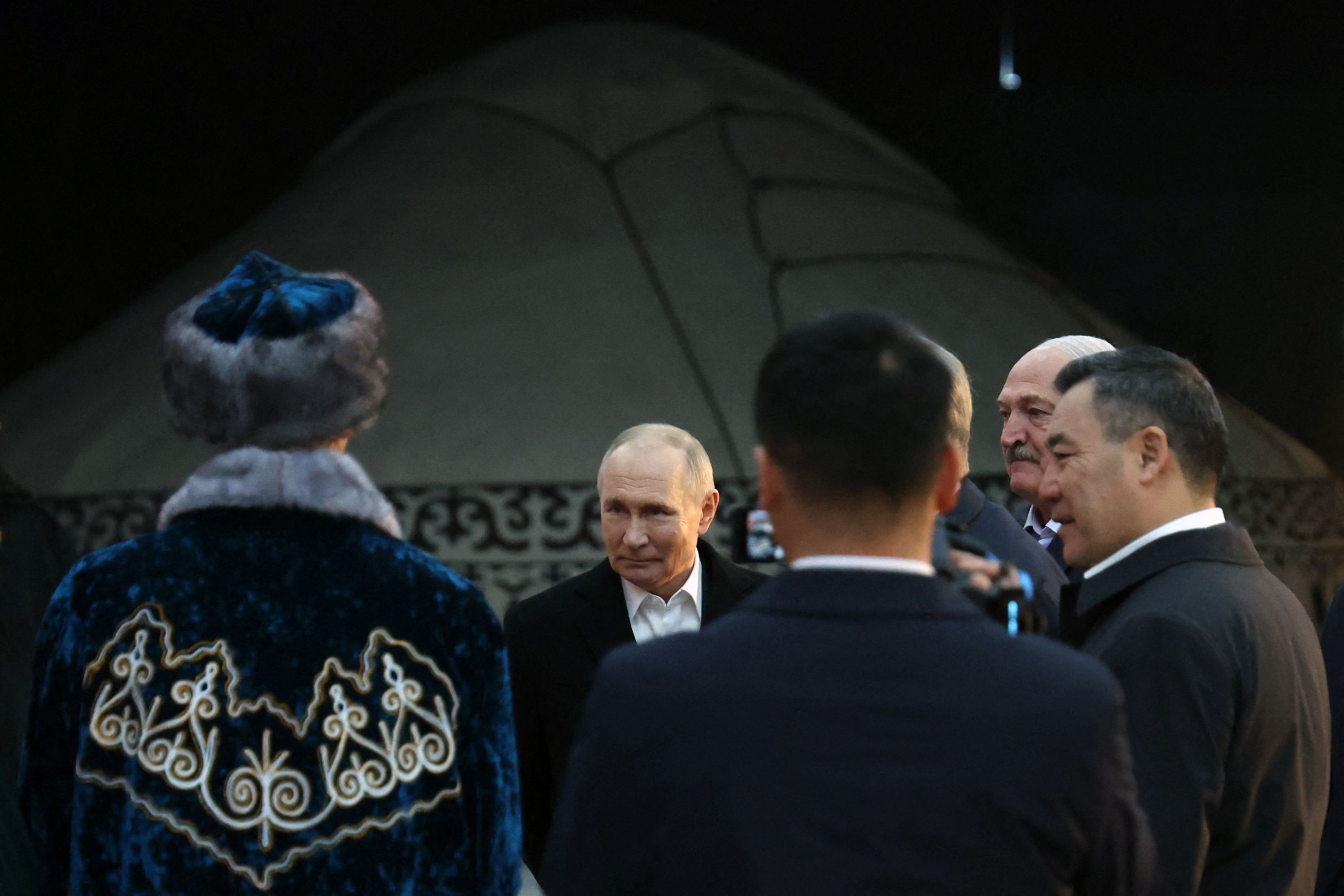
The recent Collective Security Treaty Organization (CSTO) Summit stood out as a critical meeting, delivering important messages about regional strategic balances at a time when the Eurasian security architecture is undergoing a rapid transformation. The leaders of Russia, Kazakhstan, Belarus, Tajikistan and Kyrgyzstan gathered in Bishkek to reassess the organization's current direction and solidify security projections for the coming years.
Armenia's decision not to attend the summit, however, brought the CSTO's cohesion issues back to the fore, highlighting the organization's fragile structure. Nevertheless, the comprehensive package of documents adopted by the leaders demonstrated the continued commitment to strengthening the alliance's collective security capabilities, updating its decision-making mechanisms, and modernizing its organizational functions.
One of the most noteworthy aspects of the summit was Russia's assumption of the presidency for the 2026 term. This transformed the meeting from a routine leaders' summit into a strategic platform laying the groundwork for Moscow's new vision for the Eurasian security architecture.
Russian President Vladimir Putin's speech at the summit provided important clues as to how the CSTO will be positioned in the near future. Putin's approach of “Collective Security in a Multipolar World: Common Goals, Shared Responsibility” demonstrates that Russia views the organization as a strategic lever for shaping new global power balances.
While preserving the CSTO's current functions, Moscow is attempting to institutionalize an Eurasia-centered geopolitical architecture by transforming the organization into a more comprehensive security mechanism. Within this framework, the Kremlin is constructing a multilayered security vision that both deepens military integration and strengthens ideological and knowledge-based infrastructure.
The most visible element of the Kremlin's vision is undoubtedly the restructuring of military modernization and operational capacity around Russian technological superiority. Putin's message that CSTO forces must be equipped with Russian weapons that have “proven their effectiveness in the field” clearly reflects the goal of integrating the organization more closely into Russia's defense ecosystem. This aims to enable the CSTO to respond more quickly in times of crisis, operate with joint command and control systems, and possess an intervention capacity aligned with Russia's regional security strategies.
The reorganization of air defense elements, the modernization of air forces, and the expansion of peacekeeping mechanisms are strong indicators of Moscow's intention to turn the organization into a security actor capable of intervening directly in conflict zones when necessary.
The second area of focus emphasised by Putin is the new institutional structure centralizing the CSTO's information and analysis infrastructure. The Information and Analytical Department established within the organization will not only coordinate intelligence flows; it will also serve as a permanent pool of expertise producing strategic assessments, threat analyses and policy recommendations.
Putin's proposal for a “Union of Analytical Centers” reflects the CSTO's long-term quest to build its own intellectual ecosystem as an alternative to the intellectual superiority of the Western security community.
The third component of the strategy is the adoption of a joint and institutionalized approach to combating hybrid threats. The diversification of the terrorist threat, the regional repercussions of instability originating in Afghanistan, the pressure exerted by drug trafficking routes on Central Asia, and the increase in cybersecurity risks have clearly demonstrated that the CSTO cannot be a structure focused solely on conventional military threats.
Therefore, the fact that the counterterrorism and organized crime plans for the period 2026-2030 offer an expanded security framework is a concrete expression of Moscow's determination to make the organization a coordination center in the fight against hybrid threats.
Russia's new strategy for the CSTO indicates that the organization will evolve into a more centralized, operational and Russia-focused security structure in the future. This transformation strengthens the institutional foundation of Moscow's multipolar vision while deepening efforts to reshape the security architecture in Eurasia in line with Russia's priorities. Consequently, the future of the CSTO will be shaped by the level of military cooperation among member states and Russia's role in global power competition.

The Bishkek Summit marks a period in which the transformation in the Central Asian states' view of the CSTO, which has become apparent in recent years, has now become more visible. Statements by Kazakhstan, Kyrgyzstan and Tajikistan reveal that the region's security priorities are becoming increasingly complex, and that the CSTO is positioned as a functional security umbrella within this framework.
Today, the primary concern of Central Asian capitals is not limited to traditional military threats; it also encompasses cross-border radicalization, organized crime networks, drug trafficking routes, uncertainty stemming from Afghanistan, and the pressure created in the region by increasingly fierce competition between major powers. For this reason, the CSTO has begun to assume the role of a “security insurance” for the countries of the region in political, military and institutional contexts.
The country where this trend is most evident is undoubtedly Tajikistan. President Emomali Rahmon's call at the summit to strengthen the Afghan border demonstrates the depth of Dushanbe's strategic expectations of the CSTO.
Tajikistan is the actor most likely to receive operational support from the organization, due to both the unpredictability of the post-Taliban era and the fact that the Afghanistan-Tajikistan border forms Central Asia's most fragile security corridor. Cyber threats, infiltration attempts by radical groups, and drug trafficking reveal that Tajikistan views the CSTO as a complementary component of its national security.
For Kazakhstan, however, the value of the CSTO lies more in terms of institutional stability and regime security. During the internal unrest in 2022, the CSTO's rapid deployment of peacekeeping forces brought the situation in Kazakhstan under control within a short period of time, fundamentally changing Astana's strategic approach to the organization.
The Tokayev administration strongly supported the modernization of the CSTO and the enhancement of its operational capacity at the Bishkek Summit, reaffirming that the organization is a critical tool both for maintaining internal stability and for deterring external threats. Kazakhstan's stance demonstrates that the logic of “supporting regional stability in Central Asia at no cost with external resources” is becoming increasingly institutionalized.
Kyrgyzstan's approach, on the other hand, focuses more on regional coordination and military integration. The emphasis by President Sadyr Japarov, who hosted the summit, on how joint exercises conducted throughout the year have strengthened military cohesion among member states points to Bishkek's goal of enhancing both its military capacity and diplomatic visibility through the CSTO.
The fact that the new secretary general, Taalatbek Masadykov, is from Kyrgyzstan has further strengthened the country's position within the organization. Kyrgyzstan views the CSTO as a complementary extension of its national defense capabilities, particularly due to border disputes and security vulnerabilities.
In light of all these developments, the CSTO has become much more than a military alliance for the Central Asian states. Fragilities stemming from Afghanistan, the need to maintain internal stability, and the increasing pressure of hybrid threats have turned the countries of the region into more active and demanding actors within the CSTO. While Russia's chairmanship has centralized the organization's structure, Central Asian states are also seeking to deepen the security guarantees they derive from this new institutional order.