We are going through a period in which new formations are becoming as influential as ruptures in the international system. Shifts in the distribution of power are prompting questions about existing security arrangements, while leading states are developing new partnerships and redefining their regional responsibilities. Developments unfolding in rapid succession, particularly those led by Türkiye across the Afro-Eurasian axis, show that security concerns in different regions are becoming increasingly interconnected.
The signing of the Mecca Joint Defense Agreement between Türkiye, Saudi Arabia and Pakistan in August was one of the major developments in the region’s emerging geopolitical landscape. Taking shape around collective deterrence and security cooperation, this process reflects the willingness of regional countries to assume greater responsibility for their own security. Indeed, the parties’ joint statement emphasized regional ownership, the peaceful resolution of crises and the de-escalation of tensions, demonstrating that security capabilities and the pursuit of diplomatic solutions are being addressed within the same framework.
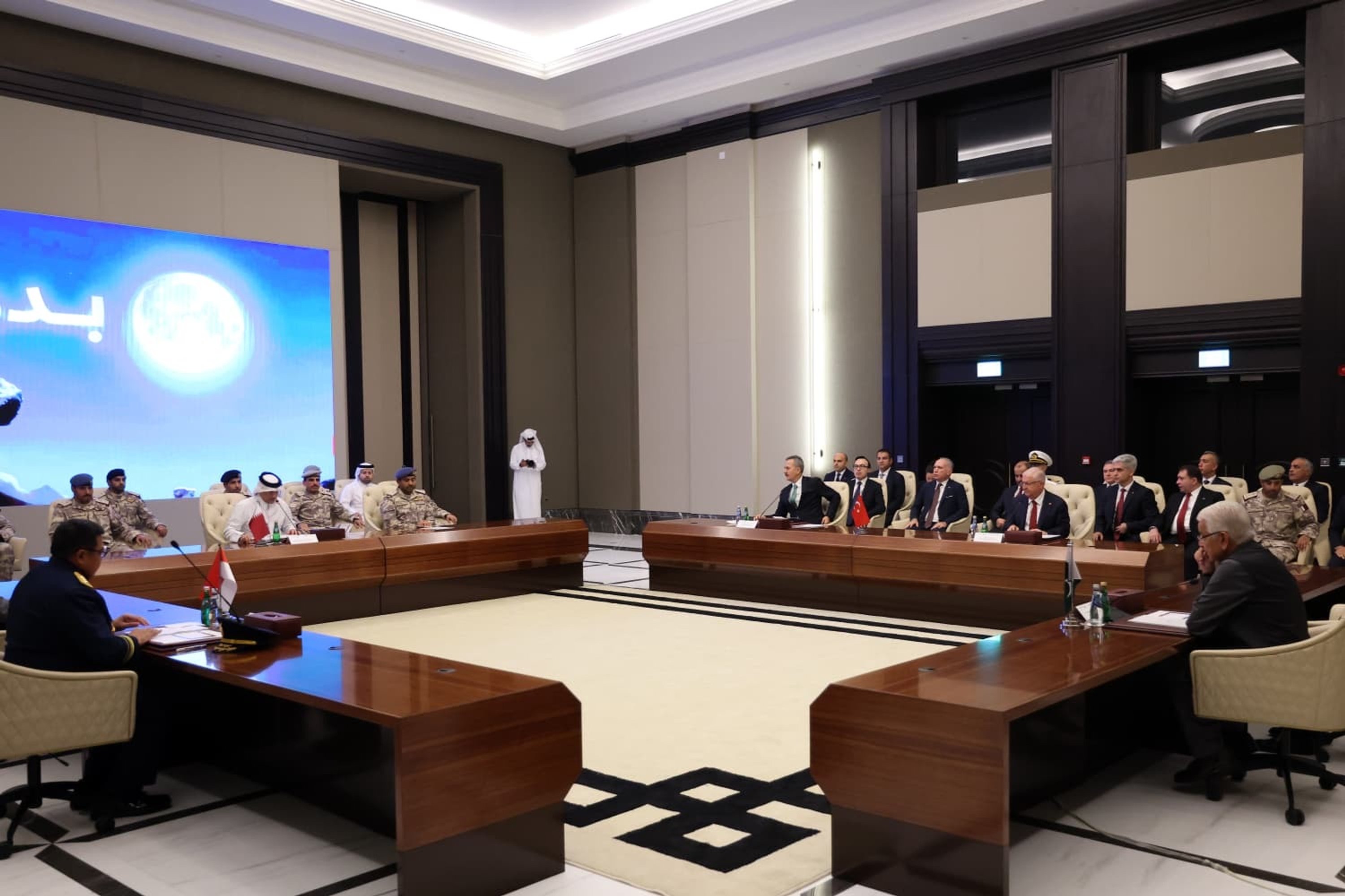
Following this development, the Libyan House of Representatives’ approval in October of the maritime jurisdiction agreement signed with Türkiye in 2019, and the subsequent signing of the Badr Memorandum of Understanding (MoU) between Türkiye, Qatar, Pakistan and Indonesia, once again brought Türkiye’s initiatives across different regions to the center of attention.
For many years, we have been told that “geography is destiny.” While geography shapes the threats states face, the resources they can access and the relationships they can develop, managing these conditions depends on political will and institutional capacity. Türkiye seeks to turn geographical vulnerabilities into opportunities through partnerships. The destiny it challenges is not the map itself, but the passive position it is thought to impose on the country.
Türkiye’s partnerships, stretching from North Africa and the Eastern Mediterranean to the Gulf and from South Asia to Southeast Asia, reflect its growing role across Afro-Eurasia. Recognizing that its security is closely linked to regional stability, Türkiye seeks to become a diplomatic hub by promoting cooperation, respecting partners’ sovereignty, containing conflicts and safeguarding human security.
The needs that gave rise to the Badr pact must be considered against the backdrop of overlapping crises in the international system. The Russia-Ukraine war, the security and supply crisis in the Strait of Hormuz, and Israel’s continuing occupation of Palestinian territory and military actions that deepen regional tensions are reshaping states’ security priorities. These developments demonstrate that conflicts do not remain confined to the geographical areas in which they occur; their consequences extend from access to energy and trade routes to production and the everyday lives of societies. In an environment where problems reinforce one another, the instruments developed to address them must also be mutually reinforcing.
The emergence of the Badr pact can be understood through four fundamental needs concerning how security is established and sustained.
The first is security of supply. Acquiring a defense system does not, in itself, secure the ability to use it. The central issue is whether that system can be deployed when needed and kept operational throughout a crisis. When ammunition cannot be replenished, spare parts cannot be obtained, and maintenance and software support are interrupted, the effectiveness of existing military capabilities diminishes. Continuity in production and logistical support is therefore an integral part of national security. Badr pact’s significance in this respect lies in its potential to enable the participating states to draw on one another’s capabilities and meet their defense needs through a more resilient framework of cooperation.
The second need is to translate access to technology into domestic capability. States want the resources they allocate to defense to support the training of their own engineers, the development of research institutions and the strengthening of their industrial infrastructure. The emphasis placed on research and development, technology transfer, investment and manufacturing cooperation in the Indonesian Ministry of Defense’s statement clearly reflects this expectation. The strategic issue is to meet today’s needs while building tomorrow’s defense capabilities. Developing technological expertise domestically can give states greater room for manoeuvre in their future choices.
The third need is to share the growing costs of defense and the burden of development. Developing a new defense system requires years of research, skilled personnel, sustained financing and a strong industrial base. Joint projects and procurement orders can help distribute this burden and expand the scale of production. From this perspective, Badr pact’s economic significance lies in its capacity to bring the resources of different countries together around a shared commitment to production. Whether this potential translates into tangible gains will depend on how financing, the division of responsibilities and technology sharing are organized.
The fourth need is for actors whose foreign policy objectives and security priorities converge to translate that convergence into lasting mechanisms. As regional threats evolve, states’ approaches to security and their choices of partners are also being reshaped. In this process, actors are establishing frameworks for cooperation that reflect their own needs, historical experiences and strategic priorities. Among the developments considered here, the Mecca Joint Defense Agreement signed by Türkiye, Saudi Arabia and Pakistan marked an important step toward institutionalizing this shared resolve through collective deterrence and political-military coordination. Its emphasis on regional ownership and institutionalization reflects the parties’ pursuit of greater responsibility in shaping their own security environment.
The most significant aspect of the Badr pact is its potential to support a shared commitment to strengthening defense capabilities through sustainable production and technological capabilities. Across Afro-Eurasia and the Mediterranean, Mecca alliance's framework for collective deterrence, Badr pact’s defense-industrial cooperation and the stronger political support for the Libya MoU offer an important opportunity for the future of regional relations. These initiatives remain legally and institutionally distinct, but their objectives may reinforce one another through stronger capabilities, sustained dialogue and practical cooperation.
As I have consistently emphasized in my articles for Daily Sabah, just as wars spread, the search for stability tends to spread as well. Yet, the spread of stability requires political will that brings shared interests together, reliable relationships and functioning institutions. The R4+E3 meetings (R4 countries: Türkiye, Egypt, Pakistan and Saudi Arabia and the E3 countries: Britain, Germany and France, with Italy also participating) in Istanbul bring regional actors and their European counterparts onto a common diplomatic platform, creating an opportunity to translate this political will into broader cooperation.
It is particularly meaningful that these developments have gathered momentum around the anniversary of the founding of the United Nations. The gap between the U.N.’s founding objectives of maintaining peace and security and its capacity to prevent and resolve crises has become one of the central problems of the international system. Within the Security Council, diverging great-power interests and the deadlock caused by the veto mechanism constrain the potential for collective action. When the mechanisms entrusted with preserving peace remain inactive, their dysfunction deepens insecurity and exacerbates human suffering on the ground. The international system therefore needs mechanisms of cooperation that uphold the principles of international law in practice, ensure accountability and deliver tangible results.