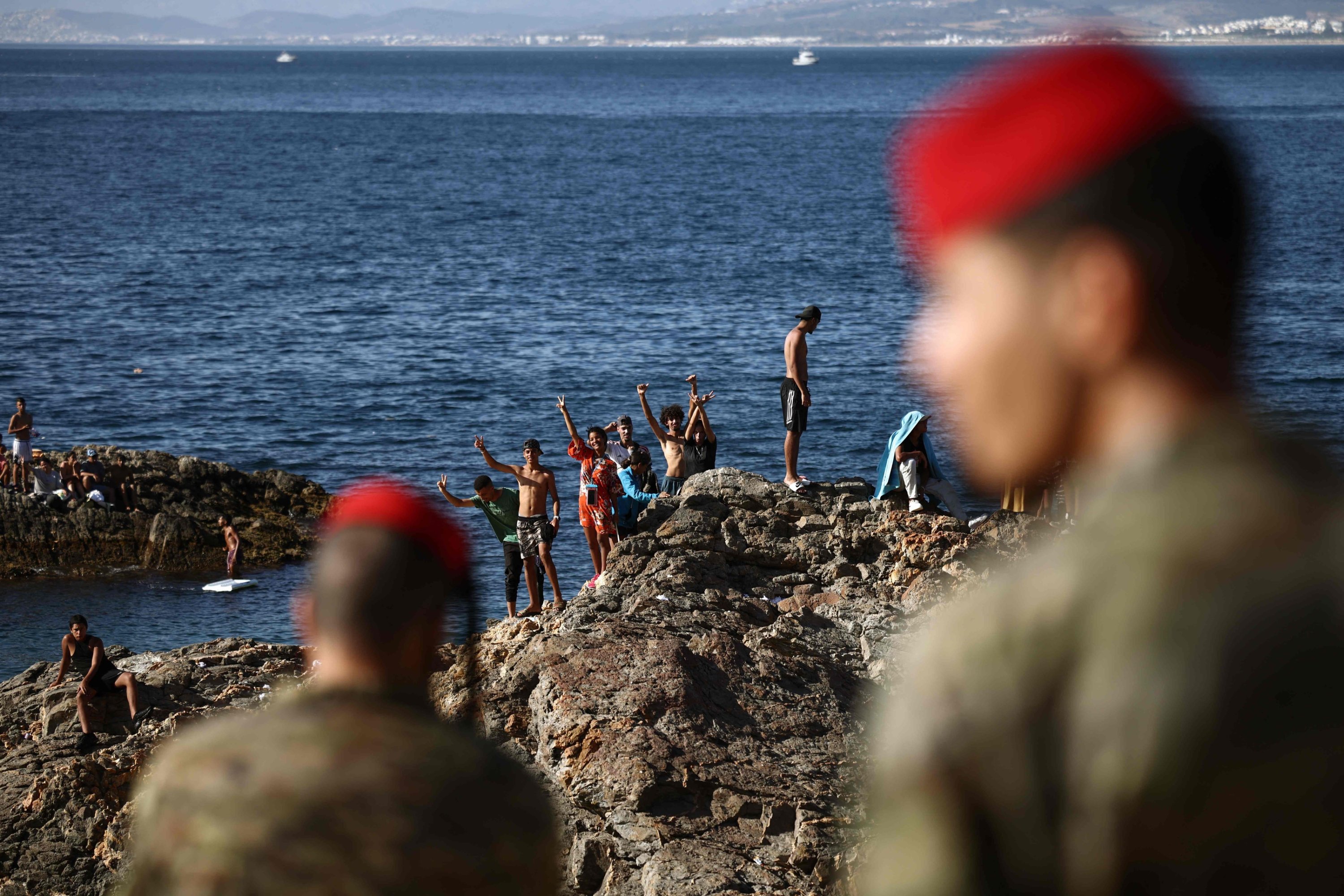
On the morning of July 30, the border separating Fnideq on Morocco’s northern coast from Spanish-administered Ceuta became effectively permeable within a matter of hours. More than 50,000 people entered the city, known in Morocco as Sebte, by land and sea. Ceuta’s president, Juan Jesús Vivas, said the total may have approached 60,000.
Many crossed by swimming around the Tarajal breakwater, walking through shallow waters or exploiting gaps in the land barrier. By Aug. 2, the confirmed death toll on the Spanish side had reached at least 72, while medical teams had treated more than 1,000 people. Madrid responded with police and military reinforcements, while Rabat increased its security presence to disperse the crowd gathered around Fnideq.
More than 48,000 of those who crossed returned to Morocco within two days. A movement on this scale cannot be explained by a single court ruling or one diplomatic calculation. In Ceuta, legal uncertainty, mounting social pressure, rapidly circulating images and a management vacuum during the first hours converged to produce the crisis.
The immediate factor accelerating the movement was a ruling issued by Spain’s Supreme Court at the end of June. The court held that people attempting to reach Ceuta or Melilla by swimming could not be immediately turned back under the special “border rejection” procedure applied at the land fences. The ordinary return procedure remained available. It nevertheless required safeguards including identity verification, access to a lawyer and interpreter, examination of protection requests and a reasoned decision.
Once it reached social media, this technical distinction was reduced to a much broader claim: “Those who reach Ceuta by sea cannot be returned.” Incomplete information about Spain’s 2026 regularization program then began to circulate. The program applied to people who had been in the country before Jan. 1, 2026, and could prove five months of uninterrupted residence. Anyone crossing at the end of July therefore fell outside its scope.
As videos of the first groups reaching the shore spread, the calculation of those waiting began to change. People arrived in Fnideq by car from nearby towns, while some young people followed mountain trails. Even as the crowd grew, no clear evidence emerged of a central command directing the movement.
Smuggling networks turned this misleading information to their advantage. Yet the fact that Moroccan forces halted further crossings in the following hours weakens any firm conclusion that the border had been deliberately left open.
Many people entering Ceuta expected to reach mainland Spain, find employment or eventually secure residency. Yet identity checks remained in place on ferries and flights leaving the city for the mainland. Irregular entry into Ceuta did not provide a right to move freely within the Schengen Area.

The large-scale return within two days showed how quickly this reality became clear. Those who went back described difficulties finding food and shelter, tensions inside the city and the absence of any clear route forward.
Nor does an asylum application provide a direct path to residency. Morocco has been included on the European Union’s list of safe countries of origin since June 12. Applications can therefore be examined through an expedited procedure. Claims involving a personal risk of persecution or serious harm must still receive individual assessment, although economic motives on their own do not constitute grounds for refugee status.
An asylum applicant may obtain the right to work six months after formally submitting a claim. Those granted protection can begin working immediately, while rejected applicants may face return proceedings subject to appeal and individual review. The “arraigo” pathways that become available after two years of uninterrupted residence require further conditions involving employment, education or social integration, while the family-based route follows separate rules.
By June, 422,347 Moroccan citizens were registered in Spain’s social security system. A valid residence and work permit provides access to registered employment and social security. Children can enter the education system, while health care is available even without legal residence, subject to an administrative recognition procedure. Employment opportunities are concentrated in agriculture, construction, hospitality, transportation and care work. Even for those with legal status, however, high rents, low wages, informal employment and the limited recognition of professional qualifications complicate daily life.
Morocco’s labor force survey for the first quarter of 2026 placed nationwide unemployment at 10.8% and urban unemployment at 13.5%. The rate reached 29.2% among people aged 15-24 and 16.1% among women. The predominantly young profile of those arriving on the coast reflects these figures.
Morocco continues to attract substantial investment in automotive production, tourism, renewable energy and infrastructure. Yet, the regional distribution of employment does not correspond to young people’s expectations of a stable income. In the north, seasonal employment and low wages remain important sources of pressure.
In Fnideq, the economic damage had begun years earlier. When the tax-free “suitcase trade” through Bab Sebta was closed in 2019, thousands of households lost an important source of income. The support programs that followed never fully made up for that loss.
The timing was bound to attract attention. Pedro Sanchez had visited Algeria just 10 days before the incident. Morocco’s rivalry with Algeria and the memory of the 2021 Ceuta crisis made it easy to draw a connection. Yet no clear evidence has emerged that Rabat organized the crossing. Madrid and Rabat continued to cooperate as the crisis unfolded, which makes that explanation harder to sustain.
Those who crossed had different reasons for doing so. Some hoped to send money home, while others were looking for steadier work or a chance to continue their education. Much of the information available to them was incomplete, but they had still weighed what they might gain against the risks they could see.
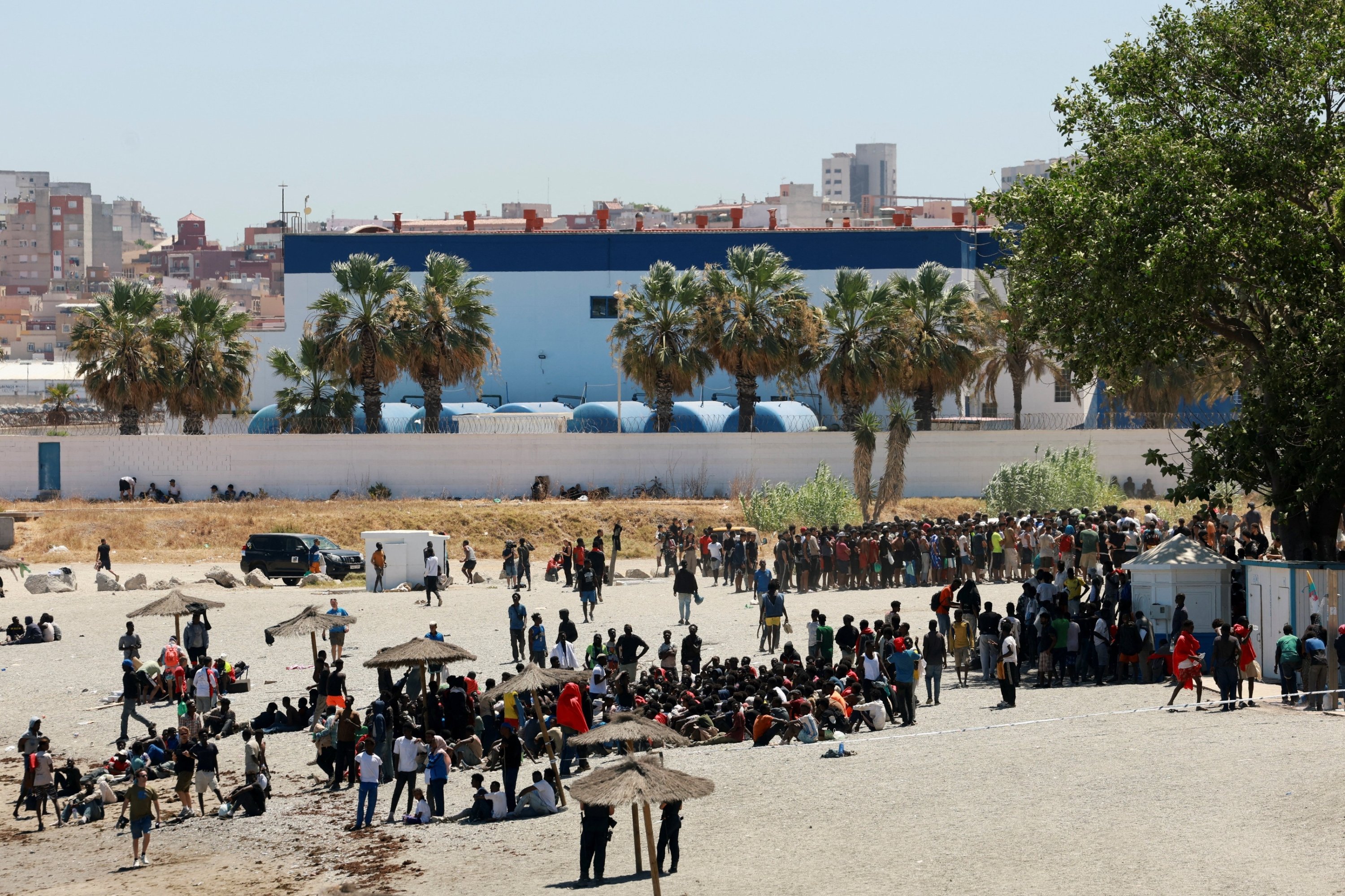
The Spanish government’s 2026 regularization program for irregular migrants already living in Spain had drawn criticism from the opposition. By the time applications closed on June 30, the program had received 1,174,978 submissions. Images from Ceuta then reinforced claims that regularization was encouraging further crossings.
Although the time requirement does not support this claim, public confidence can erode faster than a legal distinction can be explained. In a May poll, 60% of Spanish citizens said there were too many migrants in the country. The events in Ceuta will therefore provide right-wing parties with greater space to advance a security-centered message.
Twenty-two member states called for coordinated measures at the EU’s external borders. Italy went further by suspending passport-free travel arrangements with Spain for one month. While the crisis represents one of the first major tests for the Migration and Asylum Pact, the Schengen decision appeared to be driven more by domestic political concerns.
Spain’s labor needs, however, remain part of this debate. Foreign workers account for 44.5% of the jobs created since the labor market reform. As Madrid expands legal channels, it must manage irregular entry through a predictable legal framework, since a debate limited to complete closure or unlimited admission addresses neither labor demand nor border security.
What happened in Ceuta cannot be reduced to a single failure that one decision could correct. The misreading of the court ruling that fueled the rumors has now been clarified, while most of those who crossed have returned to Morocco with nothing to show for the risk they took.
The pressures that led tens of thousands to take that risk have not disappeared. Morocco is still struggling to create enough steady work for its young population, while Fnideq has yet to fully recover from the income losses it suffered after 2019. Securing legal status in Europe, meanwhile, requires time, documents and conditions that no sudden crossing can satisfy.
Madrid may further reinforce its coastal controls, while Brussels implements its new migration pact. Yet, people in Fnideq’s cafés and courtyards will continue to weigh the uncertain prospect of reaching Europe against the limited opportunities around them. With those pressures still in place, another rumor could again draw people to the shore.