The Black Sea is no longer simply a body of water separating Russia, Ukraine and NATO’s eastern flank. Since Russia launched its full-scale invasion of Ukraine on Feb. 24, 2022, it has become one of Europe’s most consequential security arenas. Military power, commercial shipping, energy security, food supplies, maritime law and emerging technologies now converge in the Black Sea.
For Türkiye, the transformation is particularly significant. Türkiye controls the Turkish Straits, is bound by the Montreux Convention, is a NATO member and maintains working relations with both Moscow and Kyiv. Few countries possess this combination of geography, legal authority and diplomatic access. This gives Ankara more than a stake in the Black Sea. It gives Türkiye an opportunity and responsibility to help shape the security order that emerges from the war.
The most important change may be the transformation of maritime warfare itself. Ukraine’s use of unmanned surface vessels, long-range missiles, drones and satellite-enabled reconnaissance has demonstrated that a country does not need a traditional blue-water navy to challenge a much stronger naval force.
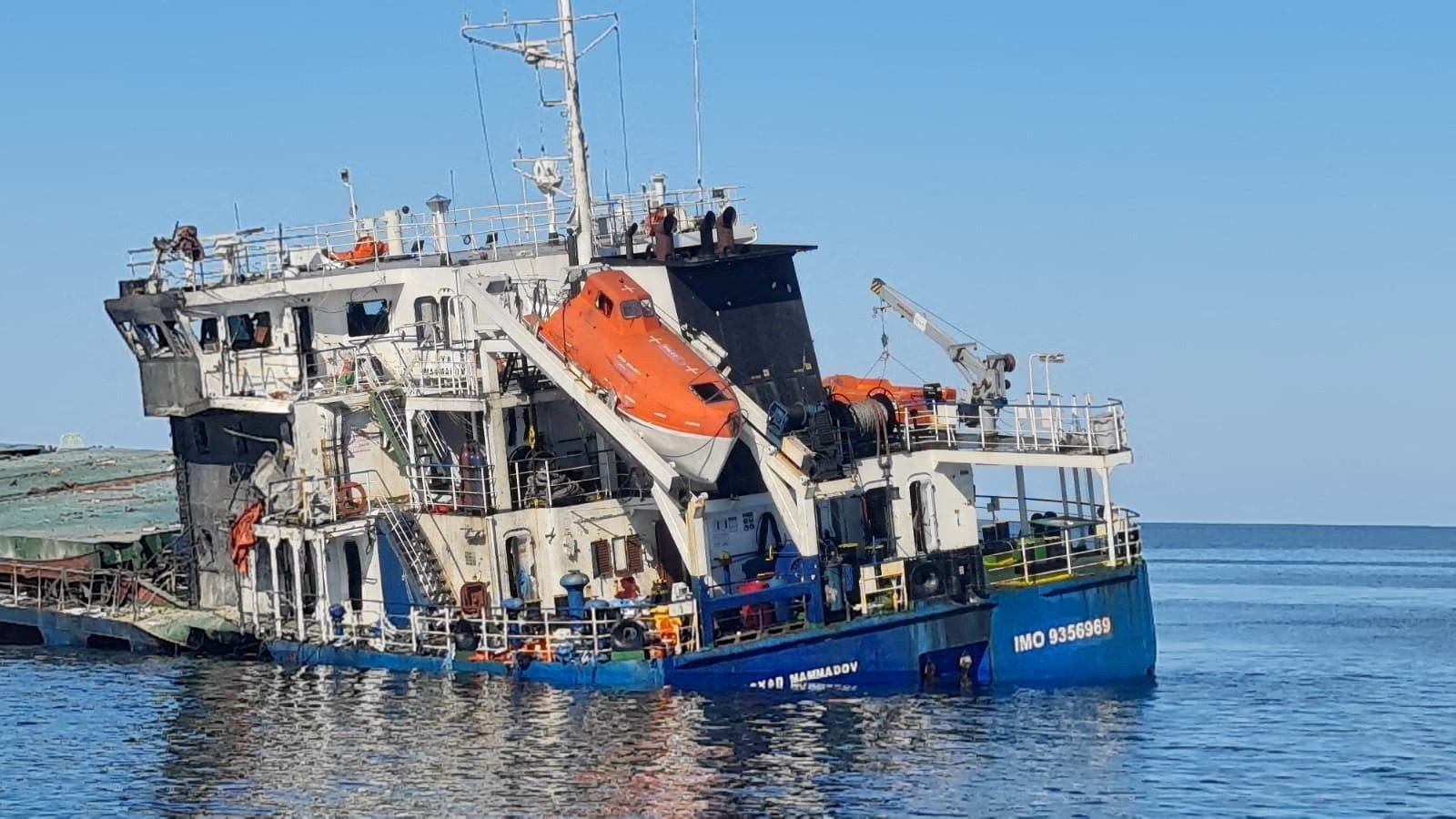
The Black Sea has become a testing ground for a new model of warfare in which relatively inexpensive unmanned systems can threaten warships, ports and commercial vessels. The reported 2025 attacks on the tankers Kairos and Virat highlighted another dimension of the problem. Their reported association with Russia’s “shadow fleet” and their presence in Türkiye’s exclusive economic zone brought the consequences of the war closer to Turkish waters.
The lesson is clear: Maritime security can no longer be understood simply in terms of warships and territorial waters. It must also include unmanned systems, maritime surveillance, commercial shipping and critical infrastructure.
Türkiye has responded with a careful balancing policy. Ankara has supported Ukraine’s sovereignty and territorial integrity while maintaining diplomatic and economic channels with Russia. It has supported Kyiv without becoming a party to the conflict and has preserved communication with Moscow. That position gives Türkiye diplomatic leverage that few other actors possess. But Ankara’s role should go beyond managing a difficult balance. Türkiye can use its position to promote practical rules and mechanisms that make the Black Sea safer and more predictable.
At the center of this approach is the Montreux Convention. The 1936 convention regulates passage through the Turkish Straits and places important restrictions on warships during wartime. Its strategic importance has become even clearer since Russia’s invasion. Türkiye’s implementation of Montreux has limited the ability of the warring parties to reinforce their naval presence while also restricting the ability of non-Black Sea powers to introduce unlimited naval forces into the region. The convention therefore remains a pillar of Black Sea stability. Its 90th anniversary in 2026 provided another reminder of its enduring importance. Türkiye’s objective should not be to replace Montreux, but to build upon the stability it provides. Any new maritime security arrangements should reinforce, rather than undermine, the existing legal framework.
The war has also changed the meaning of naval power. Unmanned surface and underwater vehicles, precision weapons, electronic warfare and advanced surveillance are challenging traditional measures of fleet strength. A navy’s effectiveness can no longer be judged simply by the number of frigates, submarines or corvettes it possesses. The ability to detect threats, process information, operate unmanned platforms and strike accurately is becoming equally important.
Türkiye’s naval modernization programs – including MILGEM, Reis-class submarines, the MILDEN national submarine project, TF-2000 and MUGEM – should therefore be viewed within this wider transformation. Future naval power will increasingly depend on integrated networks of manned and unmanned systems. For Türkiye, this is both a defense requirement and a strategic opportunity.
The war has exposed another vulnerability: underwater infrastructure. Submarine cables, pipelines, energy facilities and other critical assets are essential to modern economies but difficult to monitor and protect.
The Black Sea Mine Countermeasures Task Group established by Türkiye, Romania and Bulgaria provides an important example of regional cooperation. Its activation under Turkish command in June 2026 demonstrated that practical security cooperation remains possible despite severe geopolitical tensions. Such cooperation could be expanded beyond mine clearance to include maritime domain awareness, protection of underwater infrastructure, search and rescue, and crisis communication.
The strategic importance of the Black Sea is not limited to military affairs. The Black Sea Grain Initiative demonstrated how directly regional security affects global food markets. Before the arrangement ended in July 2023, approximately 33 million tons of agricultural products reached international markets. More recent attacks on port infrastructure around Novorossiysk have again illustrated the vulnerability of commercial supply chains. Damage to major terminals can reduce export capacity even when fighting takes place far from the markets ultimately affected.
For Türkiye, securing the Black Sea therefore means protecting not only naval vessels but also the commercial routes and infrastructure connecting producers to global markets. This points to the need for a durable maritime security framework covering commercial navigation, mine clearance, unmanned systems, underwater infrastructure, energy routes and crisis prevention. Such a framework does not need to become another military alliance. It could instead be based on practical cooperation among the Black Sea littoral states, supported by international law and designed to reduce the risk of escalation.
The security consequences of the war will remain even after the fighting eventually ends. Mines will have to be cleared. Unmanned weapons will remain part of the military equation. Underwater infrastructure will require protection. Naval balances will have changed. Commercial navigation will need reliable security arrangements. The fundamental question is therefore not simply who wins the war, but what kind of Black Sea emerges afterward. A permanently militarized and divided Black Sea would create long-term risks for Türkiye. A more predictable maritime environment, supported by regional cooperation and international law, would better protect Türkiye’s security and economic interests.
Türkiye is uniquely positioned to influence which future emerges. Its geography cannot be replicated. Its authority under Montreux cannot easily be substituted. Its NATO membership provides access to a wider security network, while its relations with Moscow and Kyiv provide diplomatic channels unavailable to many other actors. These advantages should form the basis of a comprehensive Black Sea strategy.
The objective should not be to dominate the region. It should be to help shape a security environment in which Türkiye’s core interests – territorial security, freedom of navigation, energy security, commercial trade and regional stability – are protected.
The Black Sea has already entered a new era. The war has changed the regional balance of power, transformed naval warfare and exposed the vulnerability of commercial and underwater infrastructure. The next stage will determine whether these changes produce permanent instability or a new regional security order. Türkiye cannot afford to be merely an observer.
The Black Sea is directly connected to Türkiye’s security, economy and foreign policy. Ankara therefore has both the opportunity and the responsibility to help define the rules of the next Black Sea era.
The war may eventually end. But the struggle over the future of the Black Sea has already begun, and Türkiye is uniquely positioned to shape its outcomes.