For decades, Europe’s security architecture has been built largely on American military power. In the post-Cold War era, as European countries prioritized economic prosperity and adopted a security approach centered on welfare and stability, Washington assumed the role of the continent’s military backbone.
Today, however, this order is being seriously shaken. The security crisis triggered by the Russia-Ukraine War, U.S. President Donald Trump’s harsh rhetoric toward NATO and pressure on Europeans to shoulder a greater share of Europe’s security burden, as well as the rise of China, have confronted Europe with a new strategic reality. It is precisely for this reason that Germany appears to have entered a military transformation of historic proportions.
Berlin is no longer content to remain merely Europe’s economic engine. It is also positioning itself as the continent’s military center. The defense strategy announced by Friedrich Merz’s government late April, along with transforming the German armed forces (Bundeswehr) into “Europe’s strongest conventional army,” signals that Germany is beginning to move away from the limited military role it adopted in the post-Cold War era.
In particular, the "Responsibility for Europe" (Verantwortung für Europa) strategy announced by Defense Minister Boris Pistorius is a historic document that formally institutionalizes Berlin’s ambition to become the central power in European defense. Within this strategy, Germany has effectively declared that it is preparing to assume a far more central role in Europe’s security architecture by 2035-2039.
This transformation is no longer confined to political rhetoric. It is now directly reflected in the Bundeswehr's institutional doctrine. The German military’s use of the concept of "Army of the Future" (Heer der Zukunft) demonstrates that Germany is seeking to move beyond its traditional understanding of defense and to adapt to future warfare concepts. Drone warfare, AI-supported operations and high-intensity conflict scenarios have become central to the Bundeswehr’s new strategic vision.
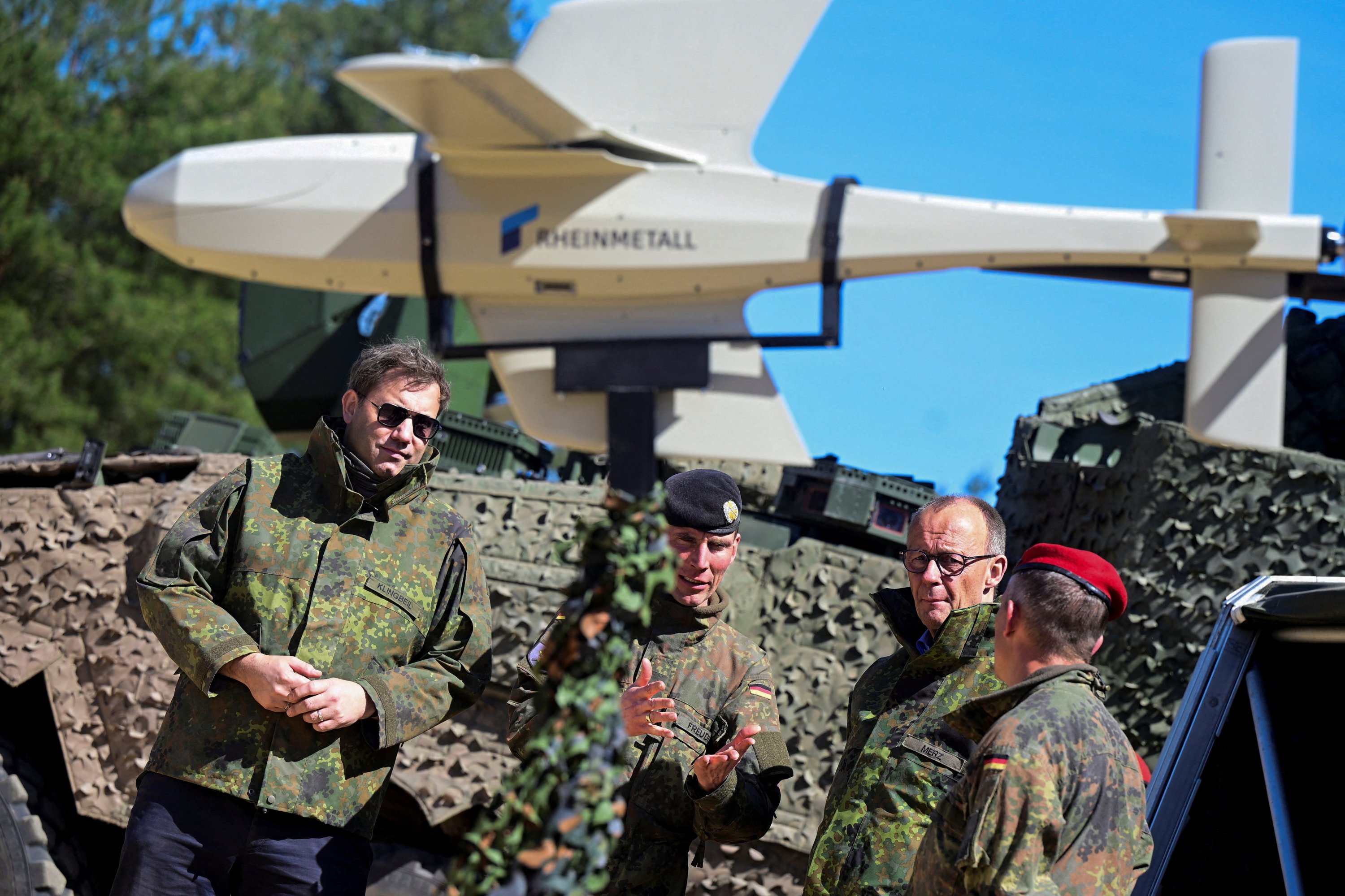
Chancellor Friedrich Merz’s use of the phrase "fight tonight" during his visit to the Bundeswehr likewise reveals that Germany is no longer acting solely in response to theoretical threats but increasingly in response to direct security risks. Similarly, his statement, "Germany must be capable of defending itself so that it does not have to defend itself," reflects a new German security understanding centered on deterrence.
This is precisely where the fundamental question arises: Can Germany truly become Europe’s security leader? More importantly, as the United States gradually reduces its military presence in Europe, does Germany have the military capacity to protect the continent?
Given the current situation, it is difficult to give a clear “yes” to these questions in the short term. Germany’s primary challenge is not merely a shortage of tanks or personnel. The real issue is that Europe’s security architecture remains structurally dependent on American military power.
It is precisely for this reason that Germany today faces a profound strategic dilemma. On the one hand, Berlin seeks to strengthen Europe’s defense capacity and enable the continent to act more independently in security matters; on the other hand, it continues to regard its military partnership with the U.S. as a strategic necessity.
While Merz's government argues that Europe must develop a stronger security capacity, it simultaneously acknowledges that American military support remains indispensable for European security. For this reason, Germany’s short-term objective is not to replace the U.S. but to become a stronger European actor within NATO.
In this regard, it is particularly noteworthy that during his visit to Bundeswehr units in Münster on April 30, Merz emphasized the importance of a “strong and united NATO” and specifically underlined that this would be achieved “shoulder to shoulder with the United States.” Despite increasingly powerful debates over “strategic autonomy” in Europe, this approach demonstrates that Germany’s understanding of security remains fundamentally centered on NATO and the U.S.
Indeed, this is precisely where Berlin’s core contradiction is visible today. Although Germany is attempting to transform its economic power into military capacity, Europe’s security architecture still rests on American military power, NATO infrastructure and the transatlantic alliance. NATO’s nuclear deterrence, strategic airlift capabilities, intelligence network and missile defense systems remain largely under Washington’s control. Therefore, even if Berlin may eventually emerge as Europe’s military center, Germany and Europe as a whole would need a structural transformation to reach a level at which they can fully guarantee their own security without American support, a process likely to take many years.
The tensions between Trump and Merz have, in fact, made this structural dependency visible once again. Trump’s announcement that he could withdraw 5,000 American troops from Germany created considerable concern in Germany and across Europe. From a military perspective, however, withdrawing 5,000 troops would not fundamentally alter the balance of power, given that approximately 35,000-36,000 American troops are currently stationed in Germany. The crucial issue here is not the number of troops, but rather the strategic value of the American military infrastructure in Germany.
In particular, Ramstein Air Base is far more than a mere American base in Europe. It is a central hub for logistics, communications and command for U.S. operations in the Middle East, Africa and Eastern Europe. The American military presence in Europe serves vital functions not only for the United States European Command (EUCOM) but also for Middle Eastern operations conducted under the United States Central Command (CENTCOM).
For this reason, Trump’s threat to withdraw troops should largely be interpreted as a tool of political pressure, psychological deterrence, or even “punishment.” A complete American withdrawal from Germany’s strategic military infrastructure appears unrealistic, not only in the short term but also in the long term.
At the same time, Trump’s remarks have created a significant psychological rupture in Europe. For the first time, Europeans have openly begun to realize that American security guarantees are not unconditional.
The roots of Europe’s security concerns lie not only in current developments but also in historical memory. In particular, Germany and France, unlike the U.S., continue to view the Russian threat as a long-term, structural geopolitical challenge.
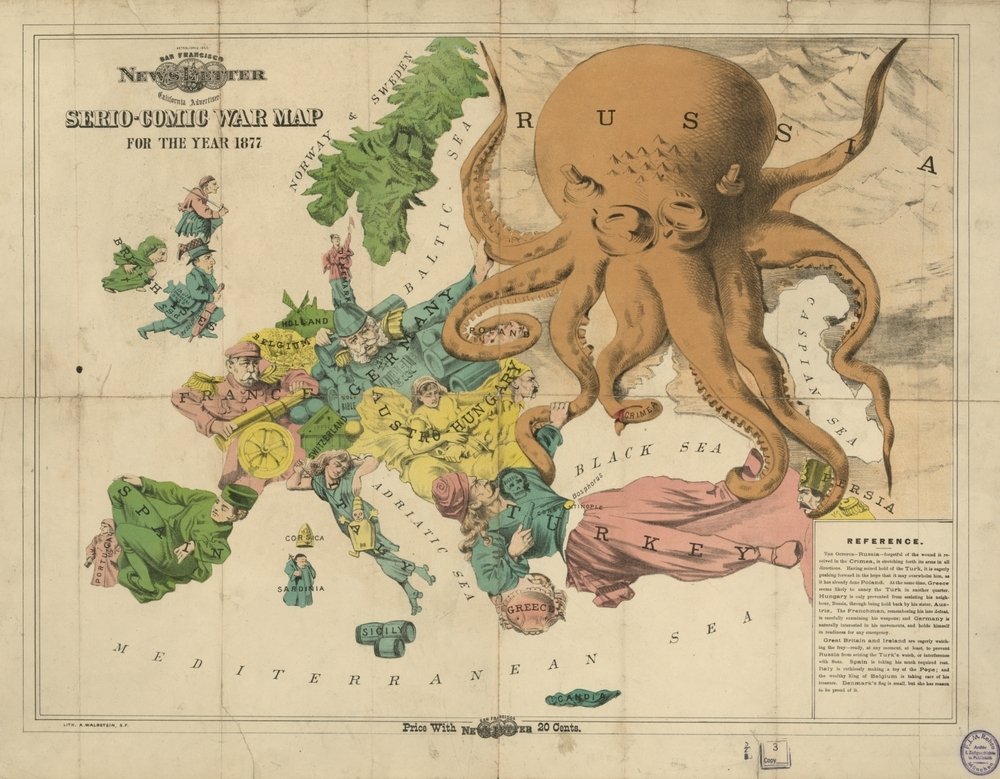
This historical perception of threat is deeply rooted in European political culture. Indeed, in British cartoonist F. W. Rose’s famous 1877 “Serio-Comic War Map,” Russia was depicted as an octopus stretching its tentacles across Europe. It is a representation widely regarded as one of the most symbolic illustrations of Europe’s longstanding fear of Russian expansionism. Today, the renewed security anxieties emerging across Europe in the aftermath of the Russia-Ukraine War are, to a considerable extent, an updated reflection of this historical geopolitical memory.
This shift has also transformed Europe’s perception of Germany’s military rise. For many years, numerous European countries approached German militarism with considerable caution. Today, however, they increasingly call on Germany to assume greater military responsibility. In other words, Germany’s military power is no longer viewed in Europe primarily through the lens of fear but increasingly through the lens of necessity. The fundamental reason for this transformation is that Europe has, for decades, developed a security structure heavily dependent on the United States.
For this reason, Germany’s rearmament process cannot be explained solely by Trump’s rhetoric toward NATO. From Berlin’s perspective, the issue also concerns the re-emergence of a Russia-centered security threat on the European continent. Consequently, the transformation underway in Germany’s defense policy points to a new strategic era shaped by both growing distrust of American security guarantees and Europe’s historical fear of Russia.
Despite all the rhetoric surrounding “strategic autonomy,” Berlin’s objective is not to establish a European army independent of NATO. Rather, Germany seeks to build a stronger European pillar within NATO itself. For this reason, Germany’s rise in the field of defense does not signify a break with the transatlantic system. On the contrary, Berlin is preparing to assume a greater share of Europe’s military burden alongside the United States.
However, Germany becoming Europe’s military leader is not the same as Europe being capable of ensuring its own security without the U.S. Although the military transformation initiated by Berlin today is historically significant, it does not appear likely that the Bundeswehr will evolve into an independent global military power capable of standing entirely on its own in the short term. Personnel shortages, bureaucratic inertia, capacity constraints within the defense industry, and the reconstruction of military infrastructure neglected for decades will all require considerable time.