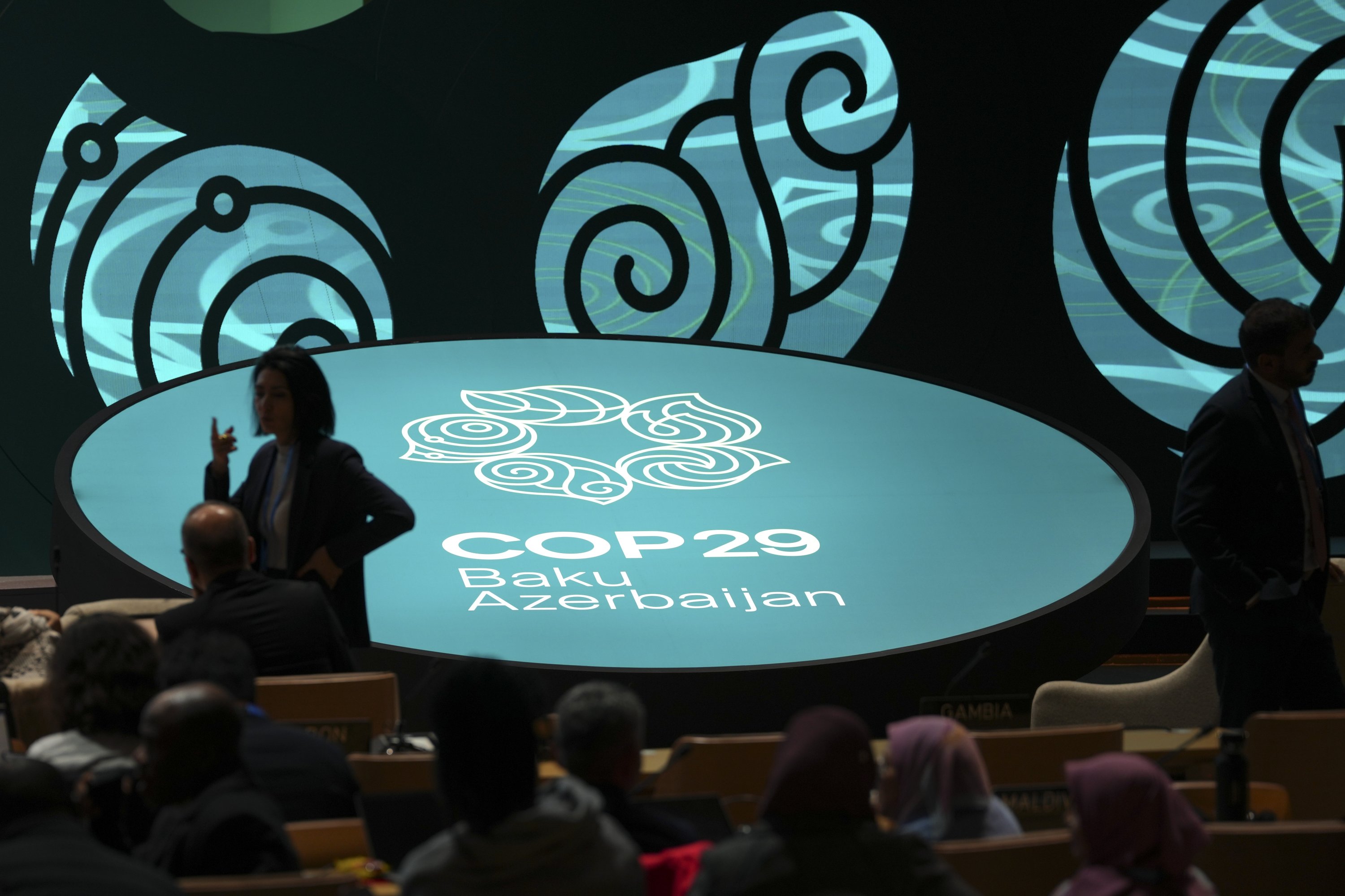
This year's United Nations climate conference, COP29, proved to be a challenging journey. Climate negotiations are always complex, but introducing financial commitments makes them even more contentious. The central issue has been determining how much wealthy nations, historically responsible for a significant share of global fossil fuel emissions, should contribute to helping poorer, more vulnerable countries combat climate change.
Delegates from around the globe worked into the early hours of Sunday after two intense weeks of talks filled with frustration. At several points, it seemed no agreement would be reached. Meanwhile, plenty unfolded on the sidelines, both openly and behind closed doors.
Following the United Arab Emirates (COP28) and Egypt (COP27), Azerbaijan became the next host country, continuing the trend of oil and gas-dependent economies leading the event (in 2022, the sector contributed roughly half of Azerbaijan’s gross domestic product (GDP) and 92% of its export revenues). This time, the organizers, especially Azerbaijani President Ilham Aliyev, were open about their intention to adopt a more "realistic" and pragmatic approach to climate change in their role as COP president.
In his opening speech, Aliyev accused Western countries of hypocrisy and double standards on climate policy, pointing out that the EU proposed to increase gas imports from Azerbaijan to the EU in 2022. France was blamed for keeping Corsica and its remote overseas island territories, like New Caledonia, under "colonial rule,” leading to the cancellation of a visit by the French environment minister.
Azerbaijan used COP29 to bolster its image as a potential producer and exporter of green energy. State-owned SOCAR Green has entered into several partnerships and agreements with Saudi Arabia and China on renewables development, including the construction of 1.2 GW projects and a 3.5 GW offshore wind farm. On the sidelines of the summit, it also strengthened regional cooperation in the Caspian Sea region by signing a memorandum on the development of a “Green Energy Corridor” linking Central Asia and the Caucasus with Europe.
At COP29, negotiators agreed to raise at least $300 billion annually by 2035 to support poorer nations. Developed countries will lead the effort, and developing nations will be encouraged to contribute voluntarily. The funding is expected to come from a mix of public and private sources.
While this target triples the $100 billion annual goal established 15 years ago, it falls significantly short of the $1.3 trillion per year that developing nations requested. However, the final agreement includes provisions for creating a road map to increase funding to the $1.3 trillion target gradually.
Developing nations criticized the final $300 billion agreement, with India’s chief negotiator dismissing it as “a paltry sum.” Supporters, however, argued that securing a deal was better than reaching no agreement at all. Climate analysts noted that while the funding falls short, it also represents a victory for multilateral cooperation despite challenging geopolitical tensions.
Amid the heated debates over climate finance that dominated the summit, countries agreed to implement Article 6 of the Paris Climate Agreement, establishing an international carbon trading market.
This milestone took nearly a decade of negotiations, highlighting the complexities of creating a U.N.-regulated market for trading carbon credits between companies and countries. In contrast, existing voluntary carbon markets have faced criticism, with investigations revealing that many credits failed to result in actual emissions reductions.
Proponents argue that this newly established market could generate billions of dollars to aid poorer nations in combating climate change. While the agreement marks significant progress, campaigners remain concerned about the system’s adequacy and potentially weak regulatory framework.
In the early days of the talks, the prospect of Donald Trump’s reelection as the next U.S. president loomed large. Delegates expressed concern that Trump might once again withdraw the U.S. from the 2015 Paris Climate Agreement, as he did in 2017 during his first term, raising fears that such a move could stall multilateral efforts to address climate change.
The next major milestone for climate negotiators will be in Brazil, Latin America’s largest oil producer, just one year from now.
COP30 in Brazil holds significant importance, as it will focus on assessing countries’ updated climate targets for 2035. Analysts have referred to it as possibly the most pivotal summit since the 2015 Paris COP, where the key climate agreement was established.
All countries are required to submit updated plans by February outlining how they will reduce their greenhouse gas emissions. The United Kingdom, Brazil and the UAE have already submitted their plans.
At COP29 in Azerbaijan, a group of nations, including all European Union member states, Canada, Mexico, and Norway, pledged to set climate targets aligned with the Paris Agreement’s aspirational goal of limiting warming to 1.5 degrees Celsius. The U.S. did not join this commitment.
Experts hailed the announcement as a positive sign, particularly as the pace of the energy transition faces challenges and the world continues to break new high-temperature records each year.