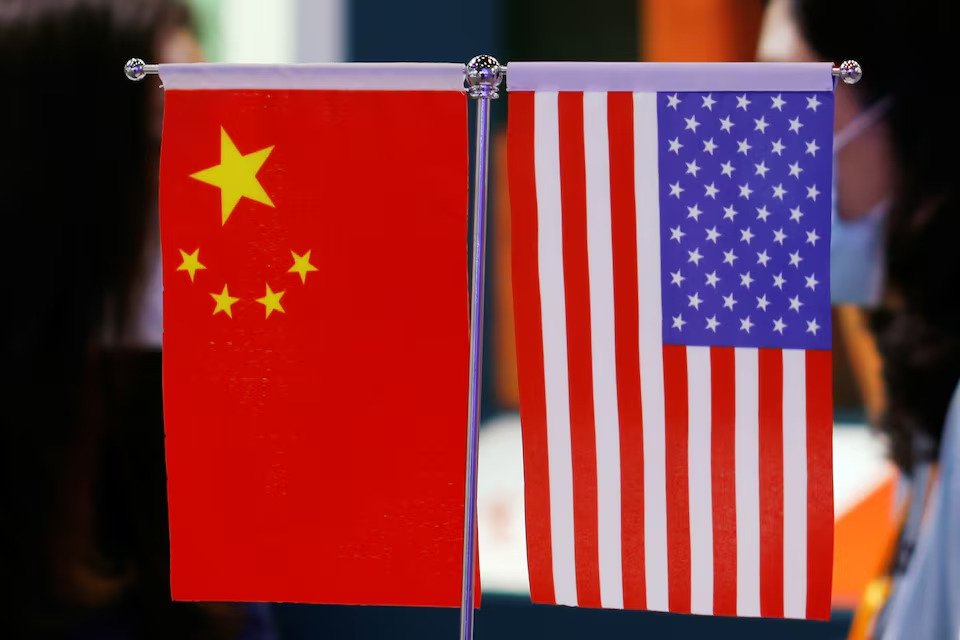
Amid U.S. President Joe Biden's declining approval ratings and his predecessor Donald Trump's legal victories, speculations are rife about a Trump II era, and the million-dollar question is what will be his policy regarding the growing competition with China. While the Republican and Democratic administrations offer contrasting narratives, one undeniable reality is that China has become a strategic competitor, and measures will be taken accordingly, irrespective of the White House occupants. Given Trump's anti-China rhetoric in his first term, antagonism will be the name of the game.
The Taiwan issue will follow similar paths under potential Trump or Biden administrations. Both administrations have handled it delicately, maintaining the "One China Policy" and avoiding major disruptions to the status quo. However, there have been fluctuations during each presidency. For example, under Trump, restrictions on engaging with Taiwanese officials were lifted, and arms sales to Taiwan increased. The United States Navy activities in the Taiwan Strait also intensified. Trump often discussed Taiwan's strategic importance, especially in the semiconductor industry, but no free trade agreement was reached. Importantly, no explicit defense promises were made.
President Biden continued on a similar trajectory. For instance, House Speaker Nancy Pelosi's visit to Taipei in the summer of 2022 stirred controversy. Arms exports to Taiwan also persisted during Biden's term despite angering Beijing, which responded with increased military drills and cyberattacks around the island. While Biden deviated at times from the official line in his support for Taiwan's defense, the White House swiftly corrected his slipups, reaffirming adherence to the One China Policy.
Both administrations aimed to engage with Taiwan while avoiding confrontation with China. In a potential second term for Trump, relations with Taiwan are likely to continue on the same trajectory with a focus on competitive tariffs due to concerns in the semiconductor industry impacting U.S. businesses. The arms trade would likely persist, but high-profile events like Pelosi's visit might be less frequent. Importantly, a reelected Trump would not frame the Taiwan issue using the "liberal democratic values" rhetoric typical of Democratic administrations. Likewise, Trump would not label Xi a dictator, as Biden does. If, on the other hand, Biden managed to get re-elected for a second term, emphasis would once again be on the mission of protecting liberal democracy.
In both scenarios, though, an attack on Taiwan would be framed by Washington as an assault on liberal democratic values and human rights. In reality, a military move by Beijing threatens the power balance the U.S. has constructed in the Asia-Pacific since the post-World War II era. Any all-out attack by China would be a major act of defiance against this system. Whoever presides over the White House tries to avoid this nightmarish scenario by neutralizing it or at least delaying it. Any president's style of communication would stay within this bottom line.
The core of the competition with China lies in preserving Washington's credibility in East Asia and preventing the rise of a peer competitor. This situation involves safeguarding alliance structures, as seen during the NATO summit in Vilnius, where key Asian allies were hosted and a communique labeling China as a global risk was released. Despite potential changes in the presidency, the strategic framework of strengthening alliances in the Indo-Pacific to counter China's influence is likely to persist, as demonstrated during both the Trump and Biden administrations.
For instance, under Trump's leadership, the I2U2 Group framework involving India, Israel and the United Arab Emirates (UAE) was established, while President Biden's term saw the introduction of the India-Middle East-Europe Corridor project within this framework. This means that Biden has again built on Trump's legacy on this subject. These initiatives, focusing on investment and connectivity, can be interpreted as countermeasures against China's Belt and Road Initiative (BRI), although Israel's war on Gaza may have temporarily overshadowed them.
It is important to address Trump's skepticism toward NATO, as some view it as a significant shift in Republican policies, potentially threatening U.S. commitments to global alliances. However, it is essential to understand that NATO's importance and future did not diminish under Trump's tenure. His transactional stance and comments on burden-sharing within NATO originate from a specific viewpoint that does not necessarily extend to non-NATO allies in Asia.
Strengthening alliances in the Indo-Pacific region to compete with (and contain) China will remain a benchmark of U.S. foreign policy, regardless of whether it's under a Trump or Biden. Initiatives like the AUKUS partnership and continued military trade within inter-state security alliances are approaches that resonate well with a business-oriented style like Trump's. Biden would opt for a similar path as it aligns with the U.S.-led multilateralism.
By maintaining the conventional policy line on the Taiwan issue and intensifying alliances in Asia, the U.S. seems poised to continue its geopolitical strategy of channeling China's attention toward its vicinity. As the People's Liberation Army (PLA) enhances its capabilities, neighboring countries are likely to do so, resulting in a region with heightened militarisation and a growing containment of China.