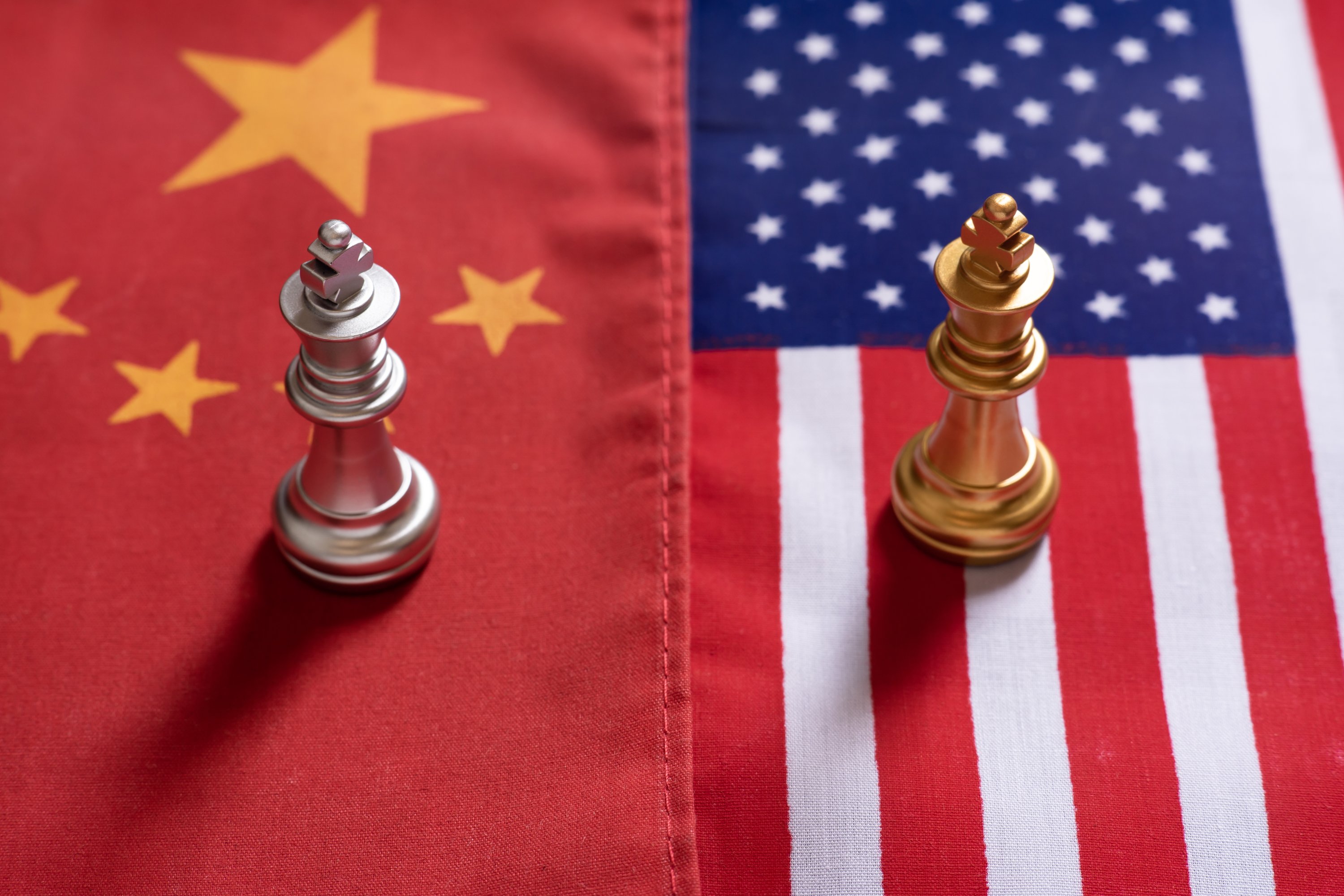
There is a widespread belief that China is establishing itself as a new superpower, displacing the United States from the global power structure. China has undeniably become a worldwide economic powerhouse, and it is anticipated to overtake the U.S. as the world's largest economy by 2028. With increased spending on weapons research and the development of multiple covert weapons, China is on the verge of surpassing the U.S. in military capability.
Significantly, countries that lead in the research and application of artificial intelligence (AI) will determine the future of the technology and increase their economic competitiveness greatly, while those that fall behind risk losing competitiveness in critical industries. AI is set to revolutionize the world, empowering those countries that fully realize its promise. It will be a key driver of future economic growth and national security.
Moreover, AI is sometimes referred to as a general-purpose technology because of its wide range of applications in practically every industry – the GUID Partition Table (GPT). A GPT is a technology with widespread economic implications. Only a few examples exist such as steam engines, electricity and computers. These technologies have had a profound impact on our civilizations by modifying preexisting economic and social systems.
AI is the newest brilliant, dazzling object on the technological horizon. It has grown very popular in today's globe. It's the simulation of human intellect in computers that have been programmed to learn and mimic human behavior. AI will have a significant impact on our quality of life as it develops. It has the potential to significantly boost the economy of a developed country.
For its technological advancements, China has won the AI battle with the U.S. and is on its way to world supremacy. According to Western intelligence assessments, China, the world's second-largest economy, is expected to dominate many major emerging technologies, including AI, synthetic biology and genetics, within a decade or two.
The Pentagon's first chief software officer, Nicolas Chaillan stressed that “in 15 to 20 years, we have no competing fighting chance against China.” It's already decided; “Whether it requires a war or not is kind of anecdotal right now.”
He also claimed that several government departments in the U.S. had "kindergarten-level" cyber defenses. Moreover, Chaillan also criticized the reluctance of U.S. firms, such as Google, to collaborate with the government on AI, and extensive ethical disputes over technology for the U.S.’ delayed innovation. While China was destined to rule the world's future, everything from media narratives to geopolitics is under their control.
One of the reasons China has been able to move more rapidly than the U.S. is that it is not mired in enormous arguments about AI ethics. But partly because Chinese businesses are compelled to collaborate with the government, whereas many American businesses are wary of working with the Pentagon. Google, for instance, halted working with the Pentagon on AI in 2018 after a dozen employees departed after the business assisted the Department of Defense in developing software that could boost drone attack accuracy.
Chaillan, on the other hand, stated that Chinese corporations were obligated to comply with the Chinese government and were making "huge expenditures" in AI without concern for ethical considerations.
Notably, the U.S. has attempted to curb China's emergence as a digital power by prohibiting Huawei's 5G network from operating in the U.S. and establishing a virtual embargo on U.S. companies supplying software and components to Chinese tech firms. Whereas China’s President Xi Jinping is pushing China to establish technological self-sufficiency in fields such as microchip manufacturing to wean the country off its reliance on the U.S.
Significantly, there will always be economic ups and downs, but the underlying drive that's occurring in Chinese culture right now will continue to create new prospects and growth. China has announced a five-year plan worth $1.8 trillion to dominate AI, robotics, 6G and all other technologies by 2035, releasing a five-year plan worth $1.8 trillion.
In comparison to the European Union and the U.S., China's AI capabilities have advanced in several areas. China has surpassed the bloc as the world's largest AI publisher. Moreover, the quality of its AI research has consistently improved over time. Its software and computer services companies have increased their R&D expenditures. China's determination to master AI goes far beyond the recognition that this group of technologies will be the most crucial driver of economic advancement over the next quarter-century. China's data collection and national determination have helped it to close the gap with American leaders in this area over the last decade.
China now has nearly twice as many supercomputers ranked in the top 500 for performance as the U.S., even though the U.S. was once the leader in this category. Furthermore, China is likely to maintain its advantage in terms of data generation. Overall, though, China has not dramatically narrowed the AI gap with the U.S., but its steady growth could eventually erode U.S. dominance over the technology.
Consequently, countries that lead in the research and application use of AI will determine the future of the technology and increase their economic competitiveness greatly, while those that fall behind risk losing competitiveness in critical industries. As a result, China has taken the lead. The Chinese government, rules and regulations, public attitudes toward privacy and strong collaboration between corporations and the government are all contributing to the country's AI progress. At the same time, American AI confronts significant challenges, including a culture that prioritizes privacy over security, distrusts authority and the government; as such, firms are wary of collaborating with the U.S.